18
Nov

Women and their books in the 19thC

   Posted by: rring   in Uncategorized

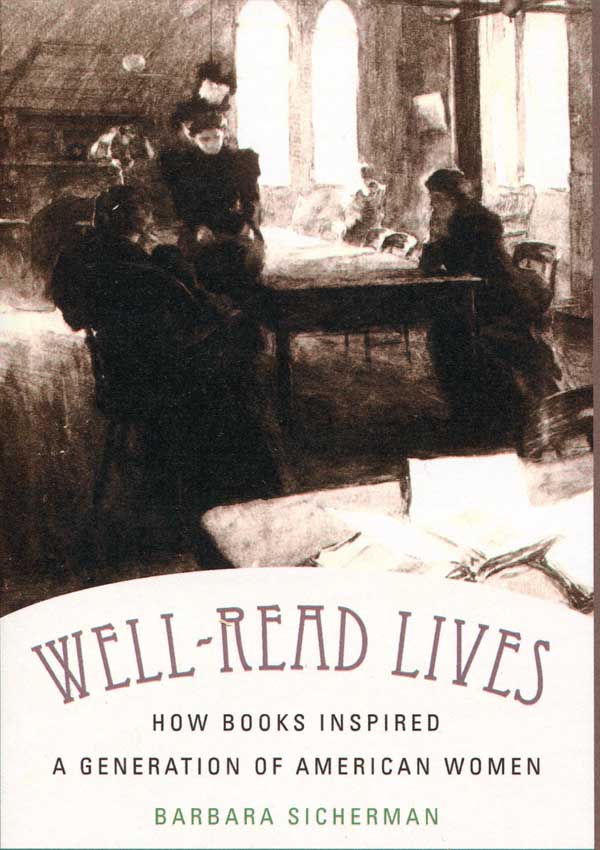
Last night we had a nice group of about 25-30 people at our event, sponsored by the Trinity College and Watkinson Library Associates: a talk and book signing with Professor Emerita, Barbara Sicherman, in celebration of her book, Well-Read Lives: How Books Inspired a Generation of American Women.

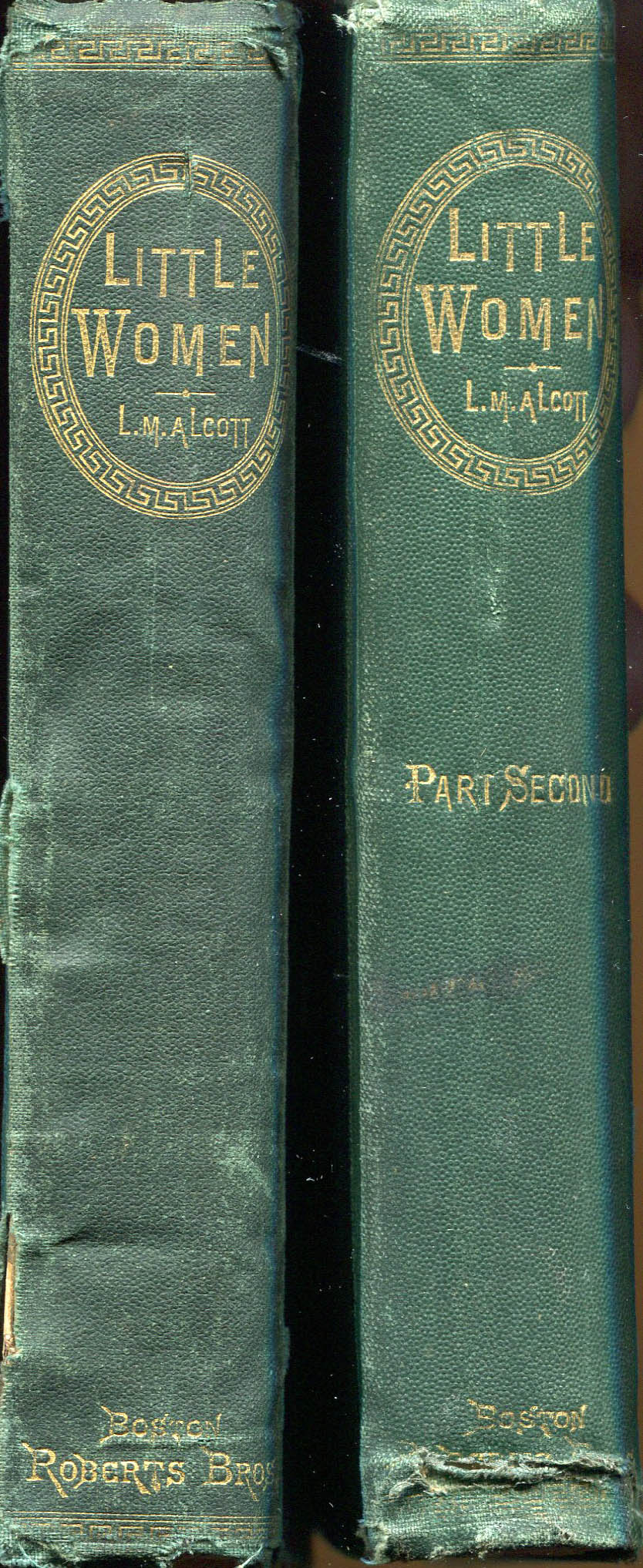
I put up a small display of books that Dr. Sicherman discussed in her book–all first editions.  Here they are (with one exception, all quotes are from Sicherman’s book):


Little Women, by Louisa May Alcott. (Boston: Roberts Brothers, 1868 (part I) and 1869 (part II)).

I read Little Women a thousand times.  Ten thousand. I am no longer incognito, not even to myself.  I am Jo in her ‘vortex;’ not Jo exactly, but some Jo-of-the-future.  I am under an enchantment: Who I truly am must be deferred, waited for and waited for.   —Cynthia Ozick (1982)


“As a character readers imagined becoming, Jo promoted self-discovery, revealing hidden potentialities to those in the liminal state between childhood and adulthood.”  [15]


The Wide, Wide World, by Susan Bogert Warner [writing as Elizabeth Wetherell] (New York: G. P. Putnam, 1851). AND  Uncle Tom’s Cabin, Life Among the Lowly, by Harriet Beecher Stowe.  (Boston: John P. Jewett & Co., 1852).

“[I]t was as fiction writers that women attained their greatest success.  They not only wrote almost three quarters of the novels published in the United States by 1872, but were among the best-selling authors of the era.  Beginning with Susan Warner’s The Wide, Wide World (1851), many “women’s novels” sold more than 100,000 copies.  Uncle Tom’s Cabin (1852), the best-selling novel of the century, sold an estimated 300,000 copies within the first year and half a million in the United States alone by the end of the fifth.  Hawthorne’s dig at the “damned mob of scribbling women” was not just a manner of speaking, but a pained recognition of women’s astonishing popularity—and financial success—in the field of literature.”  [39]


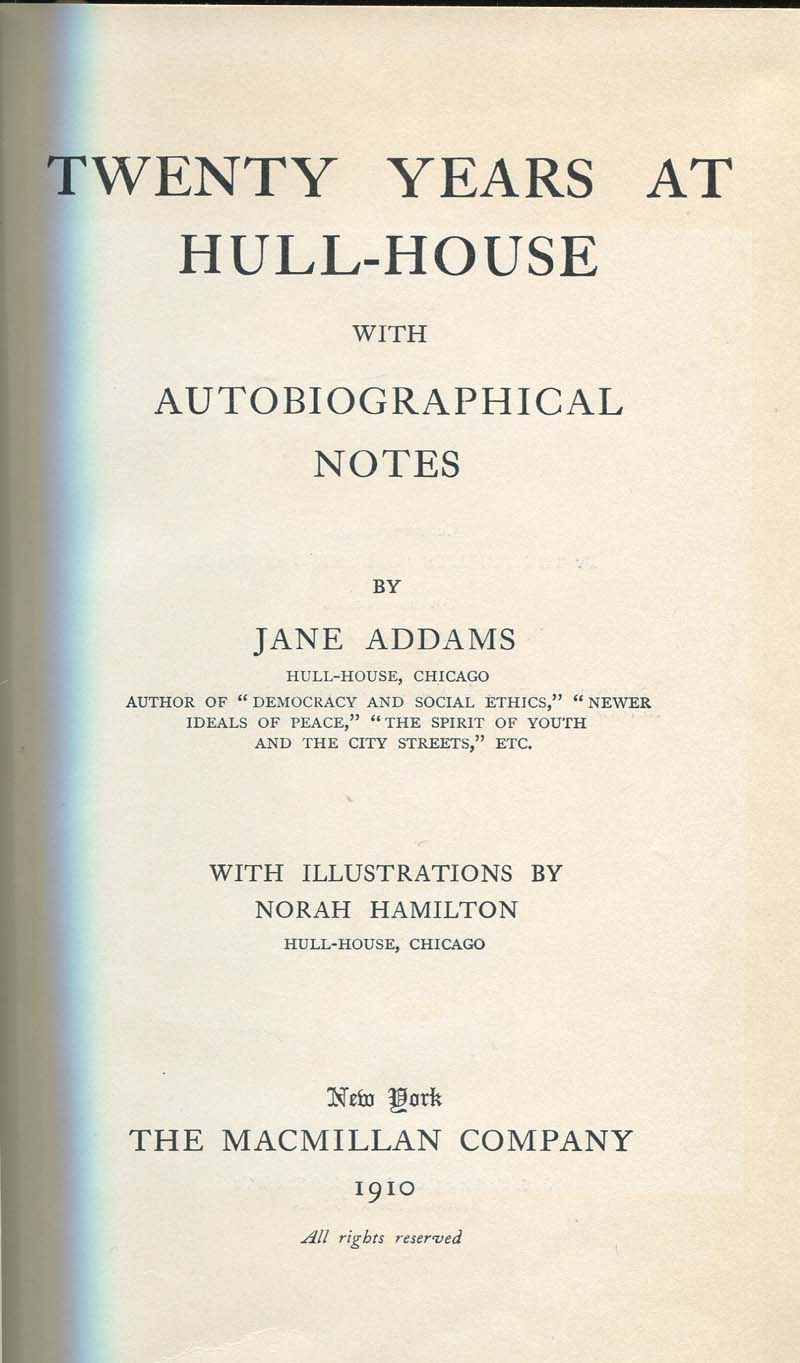
Twenty Years at Hull-House, with Autobiographical Notes, by Jane Addams.  (New York: The Macmillan Co., 1910).

“When Jane Addams and Ellen Gates Starr took up residence at 335 Halstead Street in Chicago in September 1889, they hoped that by sharing their lives with their mainly immigrant neighbors they would find ways to help bridge the gulf between the city’s haves and have-nots . . . The women’s initiative in founding one of the first settlement houses proved to be a harbinger of one of the great social movements of the age:  by 1900, there were more than 100 settlements in the United States.”  [165]

“Like other institutions with a mission to improve the lives of the underprivileged, Hull-House became a sponsor of culture, a term used here to include educational and cultural ventures designed to extend the intellectual and social horizons of local inhabitants.  The expansion of the original mansion to thirteen buildings occupying a full city block gave visual testimony to the settlement’s cultural reach.  At its peak it encompassed three formal theater groups, art and music schools, a women’s symphony orchestra, a chorus of 500 ‘working people,’ and clubs of every description, not to mention girls’ and boys’ basketball teams.”  [166]


The Second Twenty Years at Hull-House, September 1909 to September 1929, with a Record of a Growing World Consciousness, by Jane Addams. (New York:  The Macmillan Co., 1930).

“In The Second Twenty Years at Hull-House (1930), Jane Addams expressed puzzlement at the ‘contrasts in a post-war generation,’ including younger women’s lack of interest in the social ideals that animated her contemporaries and the new emphasis on sex as the most important avenue for fulfillment.  While it is true that young women no longer had the same sense of gender consciousness—in its dual connotation of privilege and obligation—that motivated many women of Addams’s generation, they did not simply opt for exclusively private lives.  But most were unwilling to make the choice between career and marriage that their predecessors took for granted.  Fortified by the vote, and not much interested in female bonding, successive generations of women learned firsthand what the Progressive generation had assumed: that without institutional supports, career and motherhood were difficult to combine.”  [253]


Tags:

17
Nov

This just in!

   Posted by: rring   in Uncategorized

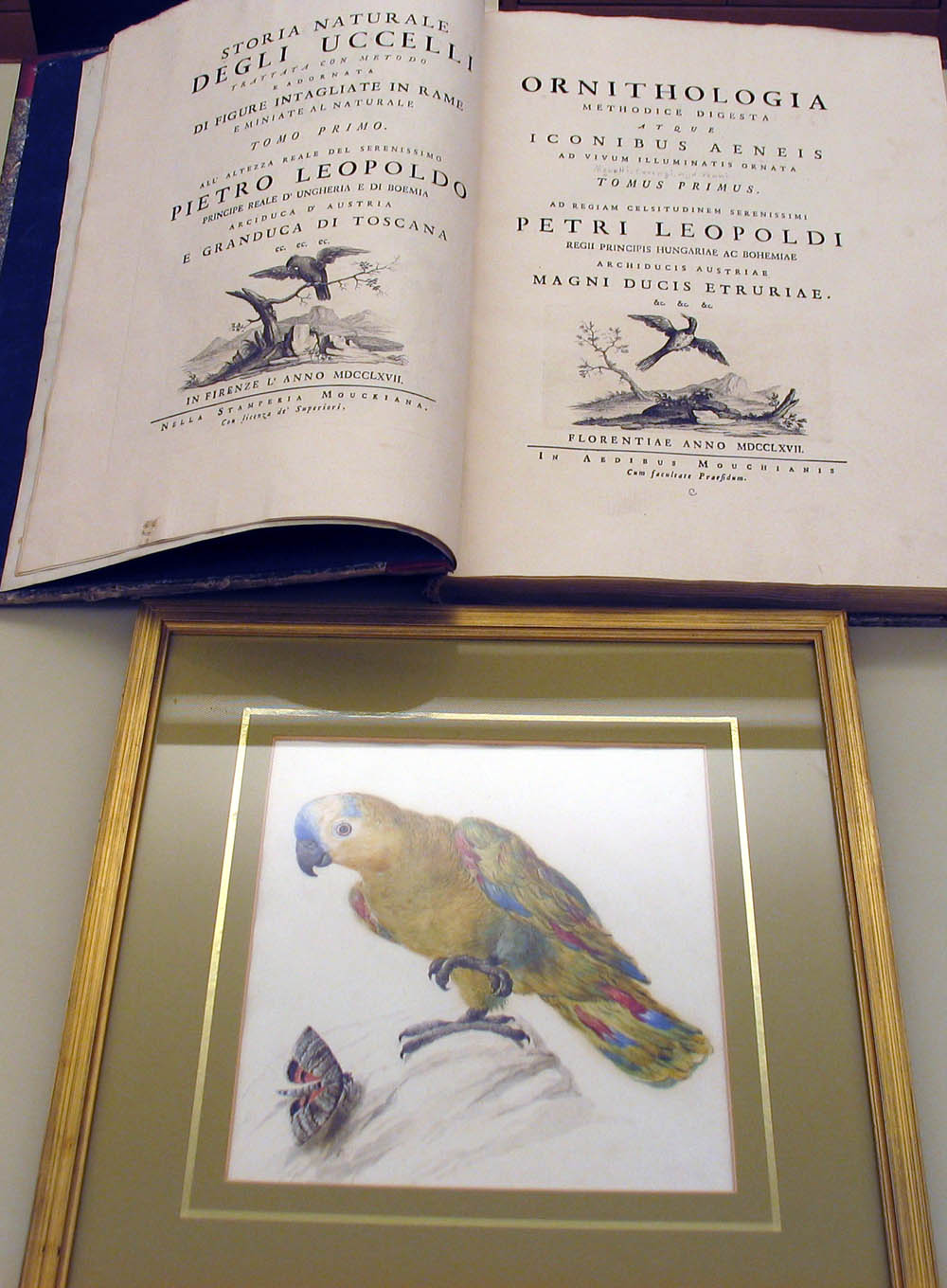
From an antiquarian dealer in Utrecht, we purchased an original watercolor of a parrot perched on a rock with a large butterfly, framed.  This image was intended for Manetti’s Ornithologia methodice(1767-76), which we hold in the Watkinson (shown here with the painting), but it was finally omitted, and never made it into the publication.

Saverio Manetti (1723-1785) produced one of the finest bird books in Italy in the 18th century, a forerunner to the great illustrated ornithological works of the 19thC (Audubon, Selby, etc.).  His plates were larger and more vibrantly colored than those of his predecessors, with an endeavor to show the birds in their natural habitats, rather than on sham branches and such.

Tags:

17
Nov

This week at Trinity, 100 years ago

   Posted by: rring   in Uncategorized

November 18, 1910

[An interesting article by an alum about collegiate sports and their unfortunate focus on star athletes, rather than general physical conditioning for students]

“Alumni Communication”  [Sydney G. Fisher, of Philadelphia, Class of 1879]

To the Editor of the Tripod.  Dear Sir:  I have lately noticed some remarks in the Tripod implying that there was to be an effort to broaden its scope beyond more advertisements and screeching for the football games.  This effort has certainly been fulfilled in the publication of Colonel Cogswell’s admirable and historically valuable Founder’s Day address, and I sincerely hope the effort will be continued. 

When I was at the college a few weeks ago, there were complaints of the small number of alumni that subscribed for the Tripod.  The reason is obvious.  It contains nothing that interests them.  The old Tablet [the Trinity Tabletwas published 1868-1908] always c0ntained a great deal of information about the college, and about the doings of alumni in various parts of the world, and was to my mind a very inspiring and useful college journal.  So far as the alumni are concerned, all of the footbal screeching that interests them could be put in one column, or even in half a column.  We are all very glad that Wesleyan was “done up” the other day, but there are other things of equal importance in the world and in the college world.

Athletics are valuable and necessary, but that particular form of them which consists of eleven men, or nine men, getting all the exercise and the rest of the undergraduate body neglecting exercise and sitting in the grand stand to “root” for the nine or eleven, is not by any means the most commendable phase of the situation.  We may not be able to get rid of it.  It will flourish without encouragement; and it certainly should not be encouraged by those of us who have had experience of life and know the sort of physique required in the commercial and professional worlds.

If I had my way the “rooters” and the “digs” would be all hustled off the benches and compelled to play games and exercise as much as the nine or eleven.  A system of college athletics which makes nine-tenths of the undergraduates ashamed to play games or do anything much but “root,” because they are unable to break records and win distinction, is radically defective[my emphasis].  The craze about records and destruction is, as Colonel Roosevelt once said, the ruination of the general usefulness of sport and athletics in this country. 

The natural athelete, the record man, will take care of himself.  Do not encourage him; for then he overdevelops and carries about for the rest of his days in sedentary life, a muscular system through which the heart finds great difficulty in pumping the blood.  The man to be looked after and encouraged in college athletics is the “dig,” the over-studious, the ordinary chap who after all does the work of the world, or the fellow who shrinks from games and cultivates what he is pleased to describe as his intellect. 

I believe gymnasium exercise is now compulsory for the freshmen.  That is a great gain.  I would go farther and make exercise, either gymnasium or out-of-doors, compulsory for all the classes, including the lordly seniors.  In my time the seniors were regarded as beings who had passed through the drudgery of education and lived a sort of strolling, easy existence among historical and literary studies and the society of young ladies.  They would not have much time for that under my system:  for being older and presumably stronger, the compulsory athletics would be given to them in such doses that every thing that would happen to them in after life would seem easy.

BEST ADVERTISEMENT:  The College Tailoring Co.: “Suits pressed, 40 cents each.  Called for and delivered, 50 cents each.  We clean and press four suits a month for $1.50.”

Tags:

10
Nov

Advice for young ladies (new acquisition)

   Posted by: rring   in Uncategorized

The following is a nice addition to our collection of conduct guides for youth (women and men), which we hope some day to be the subject of a full exhibition:

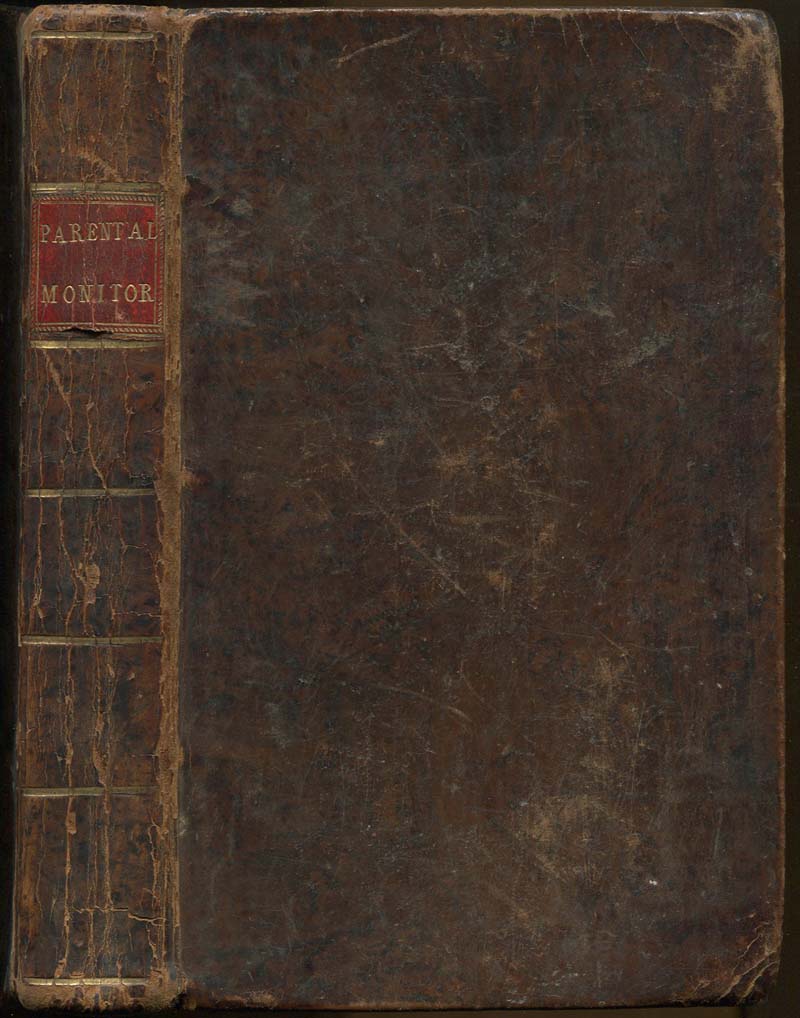
The Young Lady’s Pocket Library, or Parental Monitor (Edinburgh, 1793).  The Pocket Library collects three of the most popular conduct manuals for women in the eighteenth century: John Gregory’s Father’s Legacy (1774), Sarah Pennington’s Unfortunate Mother’s Advice(1761, when she was unfortunate in being separated from her husband and children by unexplained marital discord), and the Marchioness de Lambert’s Avis d’une Mere à sa Fille (1728, translated in 1729). Also present is Edward Moore’s verse Fables for the Female Sex (1744), which is in a different vein, written for amusement but still sometimes moralizing and cautionary.

Here is a quote from the Marchioness to her daughter:

“The world has in all ages been very negligent in the education of daughters . . . they design them to please; they give them no instructions but for the ornament and graces of the body; they flatter their self-love; they give them up to effeminacy, to the world, and to false opinions; they give them no lectures of virtue and fortitude: surely it is unreasonable or rather downright madness to imagine that such an education should not turn to their prejudice.”

Tags:

8
Nov

This week at Trinity, 100 years ago….

   Posted by: rring   in Uncategorized

November 9, 1910

THE STROLLER  [op-ed]

Yale has for the first time been forced to write “no award” after the Greek entrance prize, basing this action on the general inferior quality of the papers presented.  The New York Times, which is authority for this statement, adds that since Greek was made an optional subject for entrance two years ago, the quality of entrance papers in the subject has steadily declined.

It will not be surprising if the publication of this statement shall revive the perennial discussion as to the place of the classics in our educational system.  We shall have grey-headed and high-browed culturalists, unwashed and ungroomed, with frayed cuffs; and we shall hear from the advocates of the “bright, energetic young man” who knows all about carburetors and how to sell insurance, but can’t spell, never heard of the Pantheon, and is altogether as hard as nails.

Now it may be that the dust from the books of the sages is bad for ball bearings; and it is very certain that the fumes and noises of the laboratory and the workshop would be obnoxious in the library.  But the man isn’t chained to the motor, nor need the brain be entirely walled up in books.  Suppose we could realize and engineer quoting Horace, or a poet criticizing highway construction!  Don’t laugh.  I can imagine wilder things than that.  (It is unscientific and illogical to laugh anyway, and some day I’ll prove it to you).

The solution of this whole classical question is never going to be reached by present methods of attacking it, which for the most part consist in expressing one’s own opinions and prejudices and letting it go at that.  It is as if two chemists were to mix the unknown contents of several phials, place the mixture in a safe, and then argue over what the result ought to be.  What we need to do first, is find out what is causing this anti-classical trend, and its probable future tendency; second, what the end must be if the process goes on unchecked; third, if this end is desirable, and if not, how it can be dodged.

The Tripod is glad to offer a valuable prize for the best answer.  Solutions limited to 50,000 words.  Write on both sides of the paper.  After revising your manuscript, put it in the nearest waste-basket.

BEST ADVERTISEMENT:  “Silk Slumber Robes.  We have just received at our Blanket Department a new importation of the exquisitely beautiful Italian silk slumber robes, that are so universally admired.  Suitable for use as couch covers, for extra bed throws, or for the college students’ room–they give a bit of glowing color that adds much to the furnishings.”  (Brown, Thomas & Co.).

Tags:

4
Nov

New Acquisition: British Empire-opoly!

   Posted by:    in Uncategorized

jubilee gamesmallThe Jubilee, an Interesting Game.  (London: John Harris, 1810).

This board game was designed as a jigsaw puzzle, to commemorate the 50th anniversary of reign of King George III. The game highlights the historical events that occurred during George III’s long reign, an important period for both Australia & the United States.  In the South Pacific, James Cook’s voyages yield important discoveries–vignettes include South Pacific natives, a Tahitian woman in a wide skirt, “Botany Bay” (aborigine & a kangaroo), and the Mutiny on the Bounty.  Events of the American Revolution are illustrated at length–“Stamps” being burned; the 1st meeting of Congress at NY; the battle at Lexington, MA; the Declaration of Independence; the Surrender of Burgoyne; the Surrender at Yorktown. Other events include the King’s marriage & birth of his children, riots in London & Birmingham, the Irish Rebellion, wars with Spain & France, and the subsequent peace.  Abolition of the slave trade; Haley’s Comet, Handel, hot air balloon & the smallpox vaccine, etc.  The game was published by John Harris, who took over Elizabeth Newberry’s publishing business in 1801 and worked until it was sold in 1843.  Newberry was part of the famous 18th century children’s literature publishers.  Harris also worked with John Wallis, one of the most prolific publishers of games and dissected puzzles between 1775 and 1847.

jubilee gameHere is a detail of the images.  At some point soon, we will reconstruct the counters and other pieces from the rules, and be able to PLAY this game of history in the Watkinson!

Tags:

3
Nov

This week @Trinity 100 years ago

   Posted by: rring   in Uncategorized

November 4, 1910

Trinity at the Outbreak of the Civil War (Address by Lieut. Colonel William S. Cogswell, ’61 [class of 1861], on Founder’s Day, Nov. 1, 1910.)

I have been asked to speak to you of “Trinity during the war time.”  Although it is not quite fifty years since the close of that struggle, times have greatly changed.  Then events moved slowly; now dynasties are changed in a day without causing more than a passing comment.  Inventions and discoveries that worked revolutions in the fields of transportation and production, and projects once considered the idle dreams of visionaries, impossible of accomplishment, which changed the relations of mankind, are now accepted as matters of course in the feverish pursuit of the age “after pleasure, after gain”–so that it is impossible for you, all born years since the close of that war, to realize the conditions then existing, the all-absorbing interest taken in national politics, the appeals alike to passion and patriotism, to sorrows, devotion, and self-sacrifice with the resultant storm and stress that devoured our country like a flaming sword.  Looking back it seems like a frightful dream; then it was a stern reality that summoned everyone to take his part in the great drama being enacted.  Thanks God the healing hand of time has closed the wounds, discords are forgotten, and from the throes of that struggle has arisen an era of peace and prosperity, of friendly appreciation and good will that is fast making the legends of valor displayed its only memory.

During the fall of 1860 there were about fifty students at Trinity College, then located where the Capitol now stands, gathered from all sections of the country, some eight or ten of whom were from the Southern States.  The professors, with one exception, Professor Edward Graham Daves, were all Northern men.  We were all quartered in Jarvis and Brownell Halls, so you can readily understand that in such a small community the relations between us were very close.  And while of course the issues of the presidential campaign then pending were freely discussed, there was nothing like a separation into factions and no break in the ties which bound us to our Alma Mater and to each other.  None of us realized, in spite of the intense agitation and bitterness attending the election, that the result as determined at the polls would not be accepted.  For a long time after the election and even when in certain of the Southern States action was taken looking toward secession, we could not believe that war was possible.

At this time quite a military sentiment was prevalent in Hartford aroused by the fame attained by the Coly Guard for its proficiency in what was known as the Zouave drill, and, the students catching the fever, in the early Winter of 1860 a company was organized at the college, named, in honor of Professor Daves, the Daves Guard, of which he was a member drilling in the ranks, as did many of the students from the South.  Through the influence of ex-Governor Seymour, a citizen of Hartford, some cadet muskets were obtained from the State Arsenal and drills in the manual of arms and company movements were by permission of the faculty held regularly in the old Cabinet Room in Seabury Hall.  Fowler and Webster of the senior class, who had attended a military school before entering college, were the instructors, and Hardee’s tactics became a well known textbook. 

[This book is in the Watkinson: http://library.trincoll.edu/voyager/shortcut.cfm?BIBID=41198]

Fowler was Captain, Cogswell 1st Lieutenant, and Webster 2nd Lieutenant of the company.  I am afraid that if the truth were told these officers were entitled to higher marks for proficiency in tactics than in the prescribed studies of the senior class.  About February, 1861, in response to invitations from companies organized in the city, these officers acted as their instructors until sometime in May. 

Such were the conditions at the college when word came of the firing on Sumpter, followed by the President’s call for volunteers.  The change in the relations of the students was as sudden and complete as that between the North and the South.  Those from the Southern States left the College almost immediately, and sorrowful farewells were spoken between those who for years had walked together as friends.  Most of them entered the Confederate service, among them Graham, Eborn, Wooten, Bondurant, and the Derosetts.

Of course this was a time of wild excitement.  Probably the fact that a number of students were from the South and possibly some outspoken declaration of sympathy with rebellion in conversation with citizens made by some of them, gave rise to a rumor of threats made by the “Townies,” as they were called, against the College, and of their purpose to “clean it out,” but this was never taken seriously.  It was well known how the College stood.  All of the professors and a very large majority of the students were known to be staunch Unionists and when a meeting of the citizens of Hartford was called to rally the people to the support of the government President Eliot was invited to make the principle address.

The news of the fall of Sumpter and the President’s proclamation was followed by the immediate call for volunteers by the Governor, and Allen of the Seniors, and Huntington who afterwards commanded the Marines that made the landing at Guantanamo in the war with Spain, of the Freshman class at once enlisted in Hawley’s company of the 1st Regt. Connecticut Volunteers, being among the very first to volunteer from this State.  There was much discussion among the members of the Daves Guard about enlisting or tendering their services to the State, but the depletion in its ranks by the loss of its members going South, and the enlistment of others in the volunteers resulted in no action being taken, and before the close of the term it had ceased to exist.

The Sunday following the fall of Sumpter was marked by the passage through the city by train of the 6th Massachusetts volunteers on their way to the relief of Washington.  The railroad station was crowded with citizens, nearly all of the students were there, and the sight of those soldiers, the first to answer their country’s call, speeding to open up communication with the capital, created a profound impression, forcing home a realization of the fact that we were entering upon a contest, the extent and result of which no one could foretell. 

On Monday a meeting of the students was held on the Chapel porch, speeches were made and resolutions declaring the loyalty of the College, appointing a committee to procure a flag and to get permission to display it from the tower of Seabury Hall, were passed.  Then marching in a body the President and Professors were called upon.  They approved of the action taken and at once granted the permission asked for.

At this time when almost every house is furnished with one or more flags, you cannot appreciate how hard it was to procure one then.  There were but comparatively few flags in the country to supply the sudden demand, we could not find one for sale in the city and a like result attended attempts elsewhere.  Then we called on the girls we knew for help, and they did not fail us.  Soon we had the Stars and Stripes floating over Seabury Hall and never was a symbol bestowed by fair hands more heartily prized than that home-made flag presented to the College by the women of Hartford.

Such in brief outline is the story of the College when the war began.  I have not the data from which to give complete statistics of all “Ours” who served on land and sea during the war, nor is there time to follow their careers. 

“They went where duty seemed to call, / They did not stop to reason why, / They only knew they could but die / And death was not the worst of all. / And death was not the worst of all.”

The roll as I recall it is one of which Trinity may well be proud.  Pearce, Hugg, Broughton, Woodin and Mears from the class of 1858; Stedman, Conyngham and Leaver from 1859; Malory, Davies, Gazier and Stodart from 1860; Allyn, Birckhead, Cogswell, Hawley, James, Miller, Morse, Norris, Sumner and Webster from 1861; Penfield, Ellis and Smith from 1862; Clarke, Goodman, McCook from 1863; Huntington, Dewey, Hopson, Wells and Morris from 1864; with Strong, Vincent and Woodward from classes before my time.  Of these Vincent, Stedman, Norris, Smith, Dewey and Hugg sealed their devotion with their lives.

Vincent fell, like Wolfe, in the hour of victorywhile leading his command which saved the day at Gettysburg by capturing and holding Little Round Top in one of the deadliest hand-to-hand conflicts of the second day’s battle.  Stedman, considered one of the ablest officers in his Corps, was killed in front of Petersburg.  Smith yielded his life in the memorable charge made by the First Brigade of the First Division of the banks Corps at Cedar Mountain.  Norris received his death wound during the desperate fighting in the Wilderness.  Dewey fell in the battle at Irish Bend, La., and Hugg died in the hospital from the effect of exposure while a prisoner. 

It can be safely said that no son of Trinity failed to measure up to the full standard of accomplishment which our Alma Mater expects from the training she bestows.  They all quitted themselves like men, giving their best whether of service or of sacrifice.

Best Advertisement: 

“Clothes for College Fellows.  For Classroom. Fore Receptions.  For Romping.  For Motoring.”

Tags:

29
Oct

This Just in! (newly acquired)

   Posted by: rring   in Uncategorized

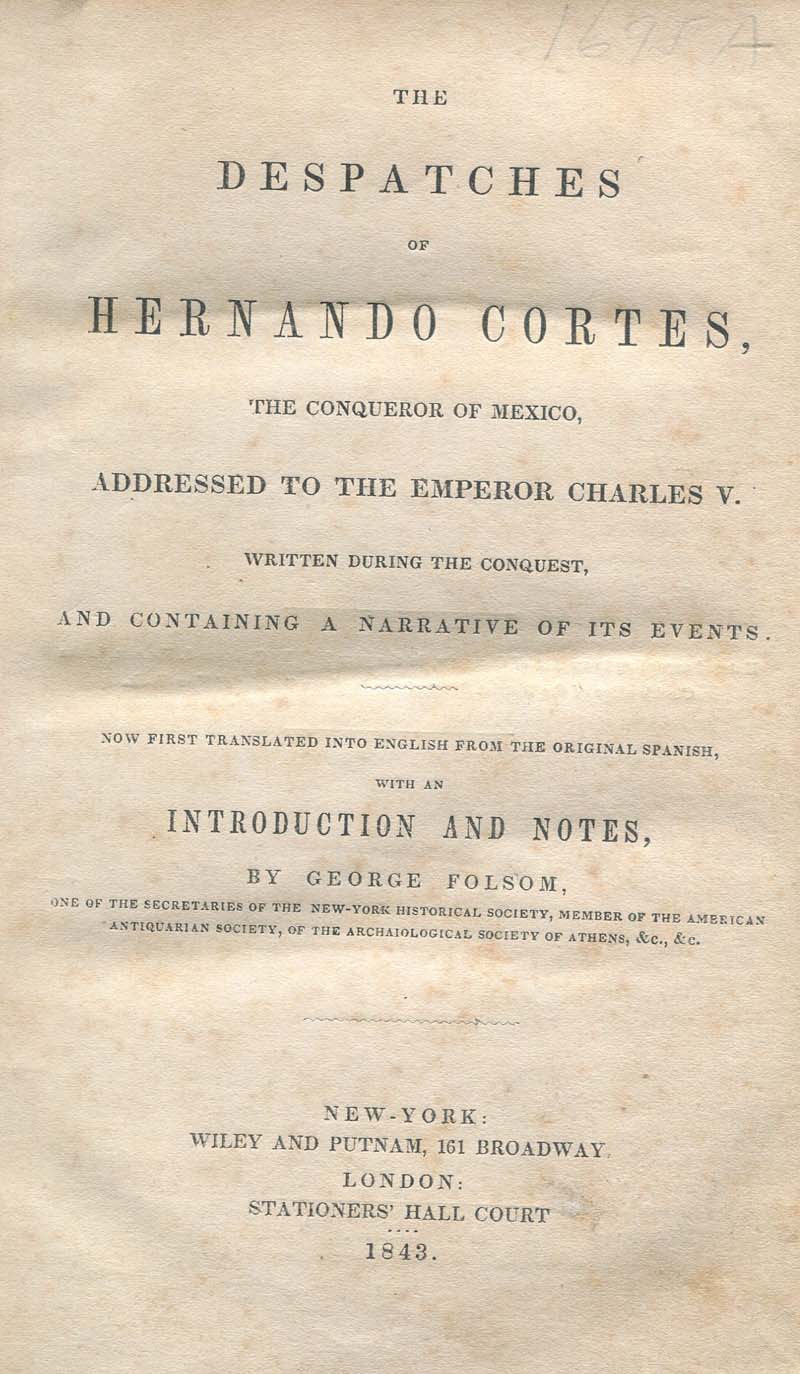
The despatches of Hernando Cortés, the conqueror of Mexico, addressed to the emperor Charles V, written during the conquest, and containing a narrative of its events. New York: Wiley & Putnam, 1843.  This is the first translation into English from the original Spanish of the letters that Hernan Cortes wrote to the Holy Roman Emperor Charles V (King Charles I of Spain) recounting various stages of the conquest of Mexico.  As a first-hand account, these letters are a valuable for what they reveal of the conquistador mentality.   The translator was George Folsom (1802–69), and the work contains the second, third, and fourth letters.

The Introduction is interesting because of its implied sanction of Christin imperialism:

“The conquest of Mexico by Hernando Cortes, at the head of a few hundred Spaniards, forms one of the most romantic episodes in history that give color to the saying, ‘truth is stranger than fiction’ . . . like all conquests in war, it was doubtless stained by acts of gross injustice and cruelty towards the conquered, for which no substantial justification can be alleged.  Some palliation may be sought, however, in the spirit of the age, which not only excused but commended the summary destruction of the enemies of the Christian faith wherever they might be found.”

Purchased from a book dealer in Philadelphia.

Tags:

25
Oct

This week at Trinity 100 years ago

   Posted by: rring   in Uncategorized

October 25, 1910

“Alpha Delta Phi Entertains: Enjoyable Rarebit Party and Dance”

“Last Saturday night an informal rarebit [see http://en.wikipedia.org/wiki/Welsh_rarebit] party was held at the Alpha Delta Phi house, 122 Vernon Street [lists chaperones and attendees] . . . After some time had been spent around the fire singing college songs, the whole party adjourned to the dining room, where several of the young ladies officiated at the chafing dishes.  The rugs and furniture were then removed from the rooms, and the remainder of the evening was spent in dancing.  Excellent music was furnished by Clark, ’11, on the violin; Moore, ’14, on the mandolin; and Adam, ’14, on the piano.”

Best advertisement:  Brown, Thompson & Co.  “For Hallowe’en / You will find in our Corner Store a line of Novelties, very appropriate in the way of Pumpkins, Ghosts, Witches, Cats, Pumpkin Lanterns, etc., for favors and the like.  For table decorations, we have a nice showing of fancy crepe papers and napkins, also Place cards, Tally cards, and everything you need in the way of Hallowe’en appointments.”

Tags:

One of the most impressive illustrated travel books in the Watkinson is by Abbe Jean-Claude-Richard de Saint Non (1721-1791), entitled Voyage pittoresque ou Description des royaumes de Naples et de Sicile (Paris, 1781-1786), bound in five folio volumes.

According to Gordon Ray, The Art of the French Illustrated Book, 1700-1914, “Saint-Non is one of the most engaging figures in the chronicle of the French illustrated book.  A small, almost frail man, he was often referred to as ‘little Saint-Non.’ Unaffected, modest, and amiable, his generosity was prodigal, and his loyalty proverbial.”

“Forced by his prominent and wealthy family to accept the priesthood as a suitable occupation for a younger son, Saint-Non was soon embarked on a significant career as an ecclesiastical official.  Early in life, however, he had acquired a taste for music, drawing, and above all engraving, and when his career met a political check in 1753, he turned his thoughts towards the encouragement of the arts.  Aided by the considerable fortune of his family, he became one of the notable amateurs of history.”

Saint-Non became adept at etching, and on his first visit to Italy in 1759, which overwhelmed his sensibilities with its grandeur, he began furiously sketching, engraving, and painting what he saw.  He toured Naples, Vesuvius, Herculaneum, and Pompeii with the painters Jean-Honore Fragonard and Hubert Robert, and eventually published a set of etchings containing 89 designs on 19 sheets [Suite de nix-feuille d’apres l’antique (Paris, 1762)], which we do NOT have in the Watkinson.  The subjects, as with some in the present work, are classical remains discovered in recent excavations.

Shown here is a view of Naples, and a plan of same.


Tags: