
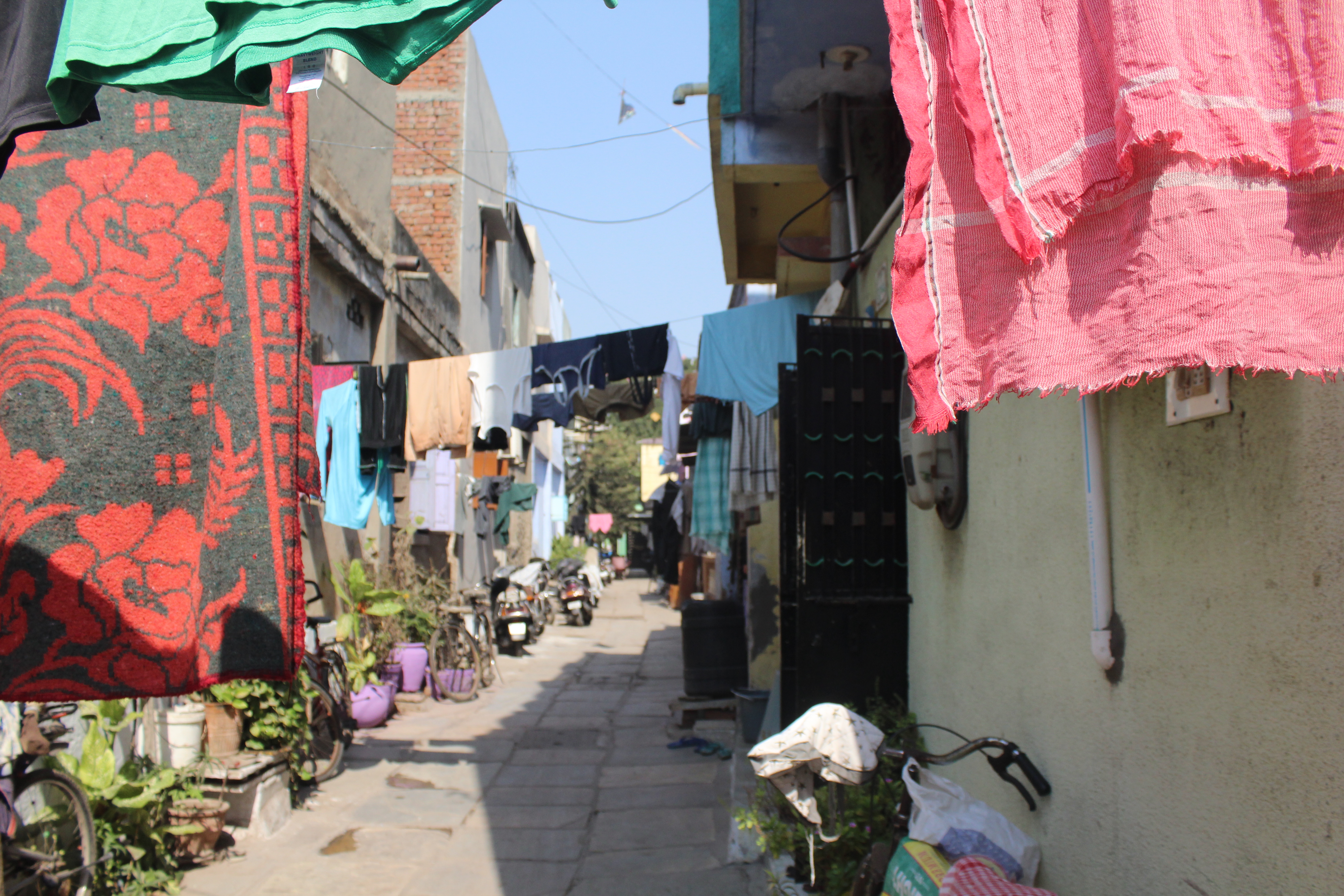
During our first week, our group was split up and we explored five different neighborhoods in the city of Ahmedabad. Some groups went to the western region of the city while others went to the eastern region. Alex went to Rajpur-Gomtipur, a Hindu community that was established to house workers from the textile industries. Many of these people immigrated from rural areas and moved to this area because of work opportunities they might have read on the newspaper or heard from a family member or friend. When the factories were growing, workers were getting a good pay and benefits for themselves and their families. The community was flourishing and the infrastructure was being built such as schools, hospitals, road infrastructure, and food stands. Factories then began closing down and people were losing their jobs. The built infrastructure crumbled and is no longer maintained by the city. The nearby school is not as good and instead parents were sending their children to private schools. On my way there, a water pipe had burst because of a compilation of garbage and flooded the streets. As I walked around with my group, we met a man who worked at an active factory and he hired mainly women in the area to make handkerchiefs to sell in the market. A lot of the people from the community had to work from home to make some income and support their families. One woman had a salon in her home and another woman put buttons on pants.
This community self-sustained itself economically, but its members do not have any benefits in case something happens and there is no social mobility in what they do. In the community, everyone was very welcoming, people’s door were open and kids were out playing in the public spaces. While this community is a predominantly working-class area, many of these families took very good care of their homes and took pride in showing us their homes. The interesting part was that when we asked the kids, some of whom were in college, if they wanted to stay or leave, many immediately said that they wanted to stay in their community. That to me was very surprising, but that area has such a strong sense of community established that many of the people really love where they are from. Even though they are not making enough money, they are all willing to help each other out and would even borrow and lend money to each other because they would trust each other more than the bank.
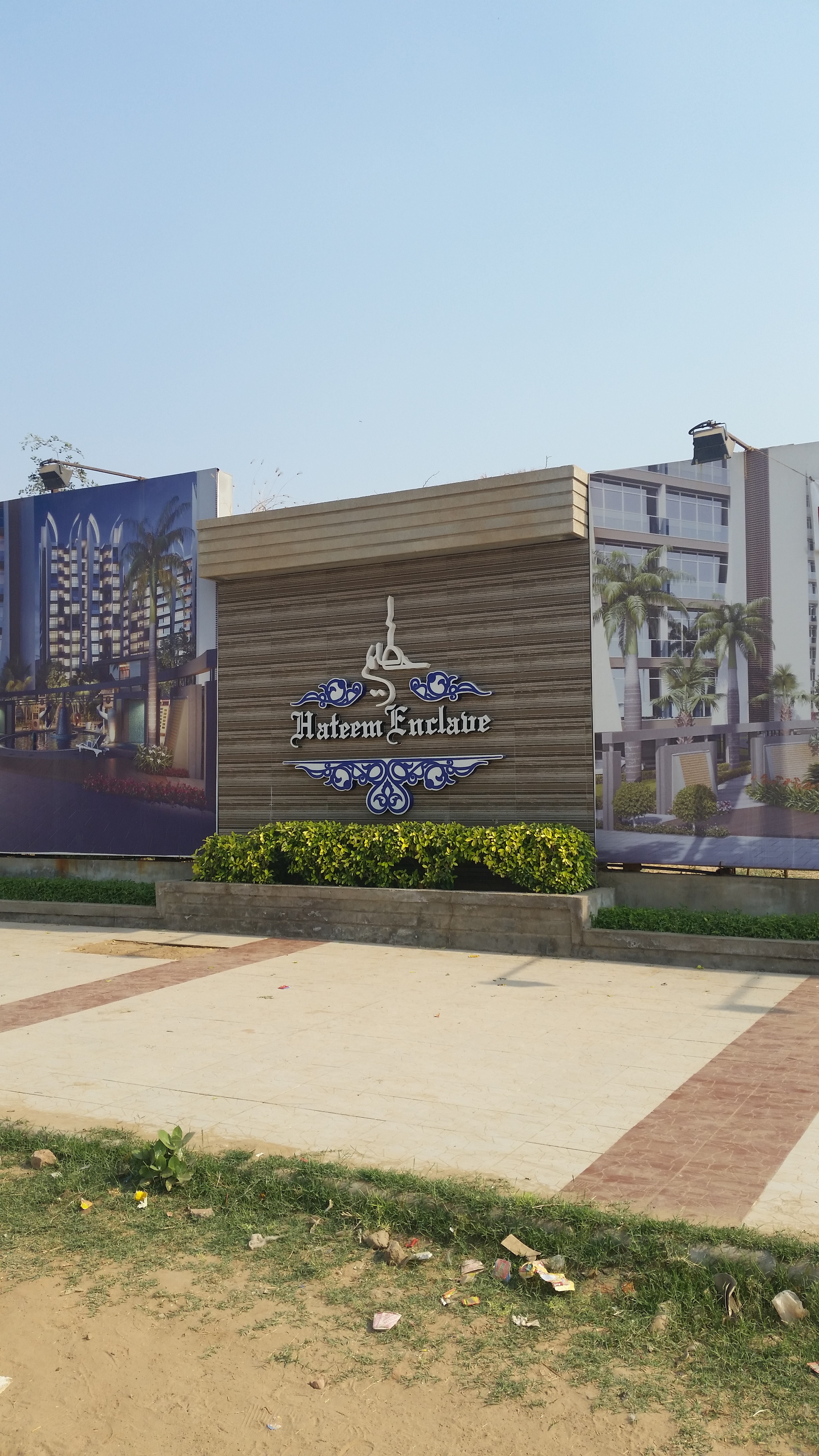
Eli went to Juhapura, a Muslim community in the outer banks of Ahmedabad. She and her group began their visit at a private school, where their speaker shared that Juhapura was established in the 1970s, due to flooding that forced thousands of families to relocate. The neighborhood expanded when riots caused Muslim families to flee their homes in search of a safe haven. Juhapura has steadily continued to expand in recent years because it has the capacity to house growing Muslim families. The neighborhood’s reputation is that it is “mini-Pakistan,” a term that Indian Hindus often attach to predominantly Muslim neighborhoods that they perceive as dangerous. Additionally, this connotates an otherness to the people who live there. It asserts that they are not Indian. Interestingly, Ahmedabad’s Bus Rapid Transit (BRT) system does not stop in Juhapura, reinforcing the idea that this neighborhood is too dangerous to have a stop or too poor to afford it. In reality, families’ income levels there are diverse. During their walk around the neighborhood, Eli and her group saw areas being developed for luxury real estate as well as makeshift homes. Unfortunately, the reality is that there is little unity in the community and the rich do not see a reason to help improve the lives of their neighbors. This is also due in part to the diversity of Muslim sects in the neighborhood. This difference creates dividing lines that keep people isolated from the reality of their community’s needs. Through our speakers we learned that the government does not provide the community with basic services such as water and drainage. People are forced to take toxic water from the ground and create their own drainage systems or illegally tap into surrounding localities’ resources. Additionally, there are no public schools in the area. Continuing tensions between Hindus and Muslims also trouble the people of Juhapura. There is actually a large concrete wall dividing the community from the Hindu neighborhoods that surround it. The police does not protect them, forcing them to defend themselves and then suffer the legal consequences.
Through our visits we observed that when the Ahmedabadi government does not provide communities with basic services, they will often have to create their own resources. One key difference is that the people of Rajpur-Gomtipur are united while Juhapura’s economic diversity and tensions with the surrounding community make unity difficult to achieve. As we continue to learn about communities in the city, it would be interesting to observe how NGO’s supports people like the ones we visit to alleviate the lack of resources.