Week 13: Jews in South Africa

At Trinity, I am actively involved in Hillel. I have learned that the Jewish Diaspora has spread Jews far and wide. Last March, I participated in Hillel’s Alternative Spring Break to Colombia, where I learned that Jewish communities thrive in Medellin and Bogota. When a session was offered about Jews in South Africa, I jumped at the opportunity to attend.

There are 70-80,000 Jews in South Africa. In 1970, there were about 120,000. Numbers have declined because of emigration to the U.S., Canada and the U.K. Jews first arrived in the 1820s, when the British sent settlers to South Africa. In 1841, seventeen Jews founded the first Hebrew Congregation in Cape Town. Today, it stands at the entrance to the Jewish Museum in Cape Town’s downtown. When diamonds were discovered in South Africa, more Jews arrived from Europe. Many became extremely wealthy and founded successful companies. One of these was Sammy Marks, who eventually served as senator for the first Parliament in South Africa.

Successful Jewish business in South Africa

Successful Jewish business in South Africa

Between 1880 and 1914, the Jewish population grew from 4,000 to 40,000 with the arrival of immigrants from Lithuania, who were escaping pogroms. Because of their similar cultural backgrounds (they spoke Yiddish and were generally pro-Zionist, for example), they were quickly able to create a tight-knit Jewish community in Cape Town. Despite discriminatory policies that labeled them as “aliens,” Jews became involved in South Africa’s industrialization. They worked in clothing, textile and furniture manufacturing; hotel management; advertising and entertainment. In most cases, they were able to rise to middle class or upper-middle class status.

When apartheid was instituted in 1948, many Jews supported the anti-apartheid movement. In fact, Jews were largely represented among the white citizens who were arrested for involvement in anti-apartheid activities. Nelson Mandela wrote: “I have found Jews to be more broadminded than most whites on issues of race and politics, perhaps because they themselves have historically been victims of prejudice.” His defense attorney, Isie Maisels, was Jewish.

Today, the South African Jewish Museum and Holocaust Center stand as sites that commemorate Jews in Cape Town. Together they help keep Jewish history alive in the Mother City.

Week 12: Equal Education Law Center fights for justice in South Africa

Our final Social Justice Panel included a number of impactful organization leaders who spoke about their work in improving South Africa’s education system, bringing more effective sanitation to informal settlements and ending gender violence. Amanda was a speaker from the Equal Education Law Center. She has been involved in the Equal Education (EE) movement since her days as a student at the University of Cape Town. This movement fights for quality and equality in the South African education system. Amanda shared shocking statistics with our group: across the country, there are nearly 4,000 schools with no electricity, 2,000 with no water, 22,000 with no computer access and 11,000 with no toilets. The movement was born out of the need for infrastructure in schools but also works toward improving the general state of education.

Poster highlighting inequality in education

Poster highlighting inequality in education

EE’s primary strategy is to protest. We learned that in 2011, EE held a three-day sleep-in outside of Parliament to demand the implementation of minimum norms and standards in school infrastructure. The Law Center was born out of the movement’s need to protect people’s constitutional rights through litigation. Amanda shared that the Center handles many cases of discrimination, especially against African foreign nationals who are denied access to public education because they do not speak Afrikaans or cannot pay school fees (in South Africa, there are types of public schools that ask for school fees; if families cannot pay these, they can ask for government waivers). They also work with single mothers, who are harassed by school administrators when they cannot pay entire school fees. The Law Center is fighting for single mothers to be more easily exempted from paying school fees. Finally, they recently worked on a case in which a teacher hit a thirteen-year old student with a metal pipe, causing her to lose movement in her right arm. This teacher was found guilty of using corporal punishment (outlawed since 1996) and let off with a warning. She was thereafter allowed to return to the school where she worked, causing the student secondary trauma. EE is working to bring justice to this young student.

Protest by Equal Education

Protest by Equal Education

Amanda said, “Poor people are not voiceless; their voices are simply not heard. We work alongside people to give them a space in which they can take up their issues.” This statement was very impactful to me because across the cities we have traveled to, we have visited a number of communities where people are facing diverse urban struggles. Before this program, it would have been easy to say that people facing these kinds of struggles are “voiceless” but after meeting them, it is clear that they do have a voice – they are simply ignored by those in power. Additionally, in many cases, members of these communities cannot protest, either because of a very real fear of oppression (as I learned in Ahmedabad) or because of time constraints posed by responsibilities to work and family. The organizations I have met with have worked with these communities to provide them with a platform, which has helped put them on the path to accessing a more equal citizenship.

Week 12: Empower Shack offers a new vision to informal settlements in Cape Town

An important component of IHP has been housing site visits, during which we learn about struggles marginalized communities face when attempting to secure housing. In South Africa, housing is a constitutional right. When democracy was established in 1994, the new government guaranteed everyone access to adequate housing. However, for millions across the country, this promise has not been delivered.

Aerial view of Khayelitsha

Aerial view of Khayelitsha

In Cape Town, twenty percent of the population lives in over two hundred informal settlements. I visited Khayelitsha, the largest and fastest growing township in South Africa for my site visit. Khayelitsha was the result of one of the apartheid regime’s final attempts to enforce the Group Areas Act, a law that assigned racial groups to different residential and business sections. The government saw the community as a solution to two problems: the growing number of migrants from the Eastern Cape and overcrowding in other Cape Town townships.

Khayelitsha is divided into several sections and subsections, with special assignations for housing meant to be temporary. I visited Section C’s BT area, where an organization named Empower Shack is working with community members to upgrade their living conditions. Their models are fire and flood resistant, which is significant since these are real threats for Khayelitsha residents. They are also affordable, since their market price is heavily subsidized by non-profit organizations. Additionally, Empower Shacks have toilets. Before the new homes, three hundred people shared fifteen toilets in the BT section. According to the community leaders we spoke to, walking to these toilets at night was very dangerous because the darkness made it more likely for residents to become victims of robbery or sexual assault.

Empower Shack we visited in the BT section

Empower Shack we visited in the BT section

The vision of the BT community is to use Empower Shacks to re-block their neighborhood. The new layout will include clear-cut roads, which will allow for emergency services to access the area with ease and more lighting, which will help to prevent crime at night. Since many of the residents moved to the area in the 1970s and 80s after migrating from the Eastern Cape and have lived in difficult conditions since then, Empower Shack is giving them a platform on which they can self-organize and make decisions that contribute to the overall improvement of their section of Khayelitsha.

Week 11: Cape Town’s current politics and spatial segregation


Upon arriving in Cape Town, I was shocked to learn that in this country, as in Brazil, people are crying out for the president’s impeachment. Jacob Zuma, leader of the African National Congress (ANC), has been President of South Africa since 2009. While he has faced a number of corruption scandals over the years, his political career may have just hit an all-time low: the high court recently ruled that he had violated the Constitution in his handling of a case accusing him of using millions of tax dollars to renovate his private home. This led the opposition party, the Democratic Alliance, to begin impeachment proceedings against him. However, the ANC defeated their effort by claiming that Zuma had acted illegally because he had received poor legal advice. The leader of the Democratic Alliance said: “Today it will be recorded that A.N.C. members of this Parliament chose to defend a crooked, broken president instead of the Constitution and the rule of law. Today will signal once and for all that the A.N.C. has lost its way, and that there is no way back.”

Political cartoon depicting President Zuma being chased by his corruption charges

Political cartoon depicting President Zuma being chased by his corruption charges

This introduction to South African politics definitely left an impression! But of course, it is important to rewind. I will focus on the lessons I learned regarding Cape Town’s spatial segregation, because I have always been interested in the ways in which the legacy of apartheid has shaped the city’s urban landscape. When apartheid was established in 1948, the government sought to separate people along color lines. Thus, neighborhoods were designated for whites, coloreds (mixed race people) and blacks. The darker people were, the further they were pushed outside of the city. In post-apartheid South Africa, urban planning has failed to undo what was established before democracy. Why? For one, the re-organization of the government led to administrative and legislative turmoil. New national policies were eventually written for every sector, except planning, which came years later. This meant that planners were in limbo until new urban planning policies were decided. Additionally, housing policies under the new democratic government have largely failed to support the implementation of mixed-use housing, which would allow for integration. In other cases, they have reinforced apartheid era segregation. For example, while Mandela’s Reconstruction and Development Programme (RDP) has led to the construction of 3.6 million new homes for the poor across the country, the majority of these have been built at the edges of the cities. This has forced South Africa’s most vulnerable members of society to remain in the undesirable corners of the urban landscape, far from the center, where opportunities lie.

Thus, during my first week in Cape Town I became painfully aware of the city’s spatial segregation. I visited neighborhoods in the Southern Suburbs that are nearly entirely white. I lived in Bo Kaap, a neighborhood that is largely Malay, or populated by descendants of South Asian Muslims. It was declared an exclusive area for Cape Town Muslims during the apartheid regime. I also learned that “townships,” or areas designated for black, colored and Indian people, remain disadvantaged to this day because of their location on the periphery (which limits their access to transportation and causes them to have longer commutes to work in the city center, for example), lack of quality infrastructure and ongoing issues with gang violence and crime.

Bo Kaap neighborhood

Bo Kaap neighborhood

As Alex and I complete the final leg of our program, we are interested to continue observing the spatial segregation patterns we see in the city as well as compare those that we see in our homestay neighborhoods, Bo Kaap and Langa, a black township.

Week 10: Farewell, São Paulo

Alex and I bid farewell to São Paulo with heavy hearts. Not only because it is an amazing city but because we there during a historic time of political unrest against the current government. In fact, on the first night we arrived in our home stays, there was a ruckus of pots and pans being banged to protest President Dilma. Two weeks later, when ex-President Lula da Silva was taken in for questioning in connection with charges of corruption, the neighborhoods audibly rejoiced. While it seemed that there was a united front against the government, our middle-class neighborhoods only told one side of the story. When we met activists, such as those involved in the Black Movement, they did not share the same disdain for Dilma. To them, the impeachment proceedings against her were a reaction against strides made by the Worker’s Party. Although as IHP students we were prohibited from participating in political protests or rallies, there were two major ones that took place while we were in São Paulo. One was against Dilma’s administration and the other was for it. The turnout for both was over one million and chanting could be heard across the city. With the city as politically charged as it was, it was truly an interesting time to be there.

Protest against President Dilma

Protest against President Dilma

Rally in support of Dilma

Rally in support of Dilma

During my last week in São Paulo, I also became familiar with the Black Movement through my case study. I learned that it is very difficult for black students to reach top universities such as the University of São Paulo (USP) because of an admissions process that favors the rich. In Brazil, it is usually the case that public universities are the best in the nation but that students can only reach these once they have had a private education that has prepared them for the rigorous admissions exam that these require. Thus, those who attend public high schools, such as poor black youth in the periphery, are at a disadvantage. In the case of the students I met, they said that it is very unlikely to find black people at universities like USP because of the hierarchy created by the admissions exam. Yet, they had made it. But once they were in, they faced explicit discrimination. Whether it was because of racist graffiti in the bathrooms or comments made by professors, the students I spoke to found it necessary to create a Black Occupation at their university in order to call attention to the conditions at USP. Their tactic was to occupy classrooms in order to make the majority white students and white professors aware of the lack of diversity at their university, both in student and faculty demographics. When asked about their vision for a just city, they responded that a just city was one in which there was no need for Black Occupation.

"Group invades Administration class at USP to debate over racist quotas at universities"

“Group invades Administration class at USP to debate over racist quotas at universities”

As we prepare ourselves for Cape Town, Alex and I carry the conversations and experiences we had in São Paulo with us. Although Cape Town is a city with its own political, economic and social issues, we are curious to learn about connections between the two.

Week 10: Case Study: Graffiti, Pixacao, and Skateboarding

During my case study I got the opportunity to meet a graffiti artist, a pixador, and a skateboarder. All three had very interesting stories and motives for the art. The graffiti artist was a female, Carol, who goes by the street name “skinny”. She likes to represent the war between men and women. She sticks to painting mainly women and she has artwork throughout the city. Bruno, a pixador, goes by “Locuras”. He originally started as a pixador and now he makes documentaries about pixacao. Daniel went professional in skateboarding five years ago and is working with the city to increase access to skateboarding in the city. They all love doing what they do because they are able to express themselves freely throughout the city. Each person is able to explore new parts of Sao Paulo that they would not have been able to if it was not for their skills. Also, these three forms of expressions encounter a lot of restrictions from society.

Graffiti has become more acceptable throughout the years. Graffiti artist are getting approval from city hall to paint murals on public space. When they want to paint a wall, they have to ask the owner for permission. Other than that, graffiti artists are limited to where they can express what they want to say. Carol started at a young age and learned about social injustices through the artwork she would come across in Sao Paulo. She also got involved in a community of other graffiti artist and expanded her network. As a women she felt she has less to worry about with policing and can get away when doing a piece without any permission.

Graffiti

On the other hand, pixacao has not been so acceptable by society. Pixacao has been identified as unpleasing and criminal related. Pixacao can be found all over the city. Especially high up in buildings, where others can see how high somebody got put their tag. Pixacao is done more for recognition. Pixadores are generally people from the periphery and they come into the city and claim empty walls. Bruno showed me one of his tags he did on the side of a high building near downtown. He is not from Sao Paulo, but he prefers to come and tag places in the center of the city because then his work is visible to a larger range of people. He gets more recognition. Pixadores bring the messages of the periphery into the city and reclaim spaces where they are not welcomed. The police harass them frequently and pixadores put their life on the line when climbing high up. Regardless of the consequences, pixacao has taken over the streets of Sao Paulo and the messages people mark are there for a reason. Pixacao is a movement that is pushing for equality and justice and this form of art is informing the inside of the city that they also exist.

Skateboarding is popular for the youths of Sao Paulo. Skateboarders overtake a public space and use it as their skating ground. I got to meet with Daniel at a skatepark that is in a central location of the city, plaza Roosevelt. This plaza was originally for people and skateboarders began using the space. Residents nearby were unhappy with the amount of skateboarders in the plaza. Skateboarders do not have many places where they can skate freely around the city. A common problem is that they are loud and disrupt the community. These people just want to skateboard in the city, they use places and objects that are hardly used and they have fun with the space. Plaza Roosevelt installed a semi skatepark near the street about four years ago to satisfy the needs of skateboarders. Daniel enjoys skating at new places and meeting new people. People come from all over to skateboard and it is what makes them feel free in the city.

Graffiti, pixacao, and skateboarding do have similarities, but they are each different. Each of these groups want to express themselves and the art behind what they enjoy. Whether they do it legally or illegally, they want to be visible in the city. They do not want restrictions from what they love to do and want the city to be open for such uses and much more. Neither are going to disappear and even though the city does not fully approve of the practices, spaces in the city will be taken over and the people will continue to express themselves. 

Week 9: Pixacao and Graffiti in the city of Sao Paulo

Graffiti

Pixacao can be seen all around Sao Paulo. It is very different from tagging and graffiti. Pixacao has its own symbols and people who do this type of artwork are usually from the peripheries. They use this art form to go into the city and express their minds. The messages are political and pixadores are making it noticeable that their neighborhoods do not have the same resources compared to the people inside the city. Pixacao is not meant to be a beautiful work of art, instead it is intentionally unpleasing to make city officials aware of their existence.

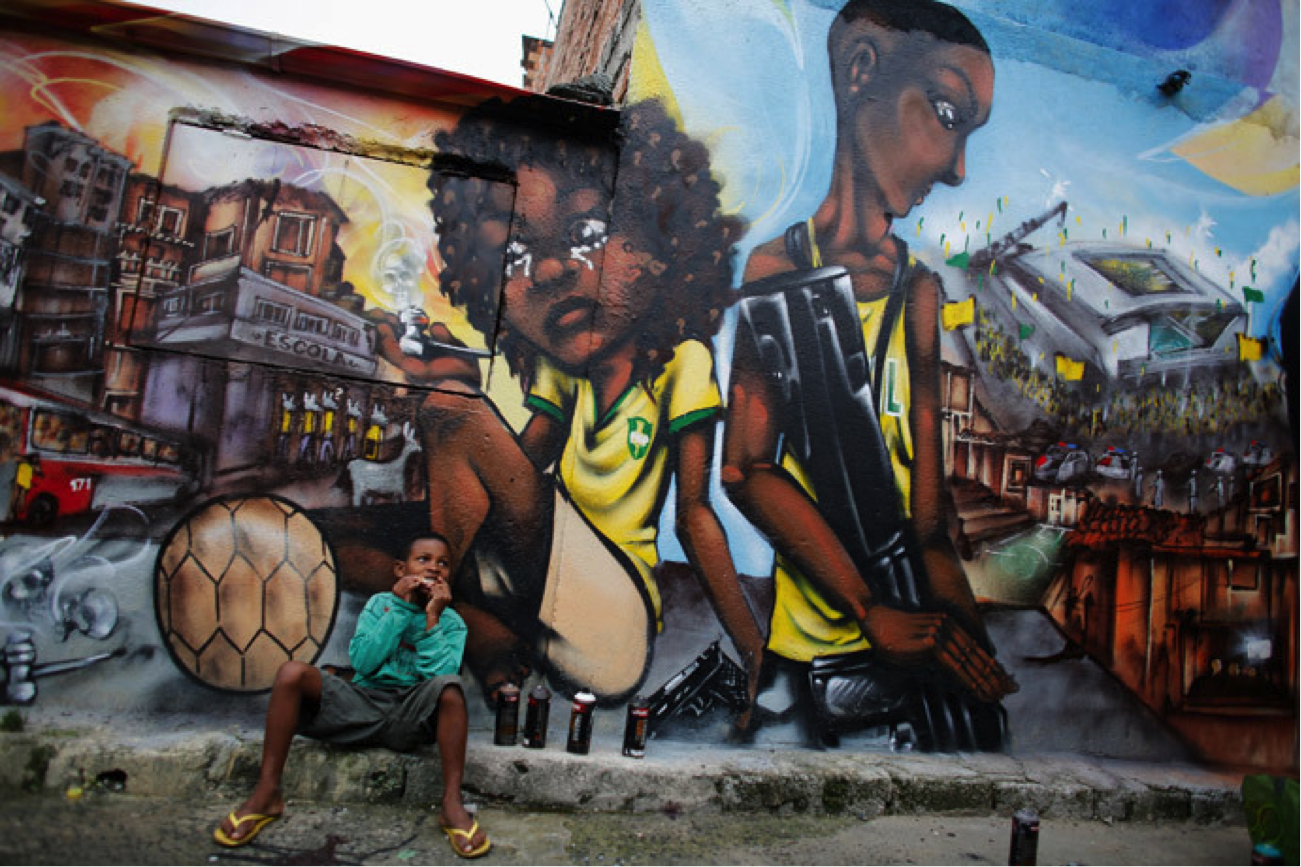
Alex went with Fernando who is a painter, rapper, and actor. Fernando began as a pixador and was a part of the pixacao movement. Fernando took me to Vila Flavia where the neighborhood is filled with amazing murals all around. The murals conveyed all types of powerful messages. There were murals about FIFA and how none of the residents in Vila Flavia were benefited in the new soccer stadium that was built nearby. Many murals were of single mothers who struggle everyday to raise and feed their children. Other graffiti artists from outside the community have came in and contributed their art skills by putting up murals that told a story from within. A graffiti artist from Brooklyn, New York drew a child from the community he met with his dog on a huge wall. Others from Toronto, Canada and other parts of Brazil have collaborated together to bring new artwork into the community. Many of the artwork is done from people who started as pixadores. Some of the houses are completely covered in beautiful murals and it brings a colorful vibrancy to the community.

I got to learn about the project Sao Mateus Movimento, which is a group of young guys who made all the artwork possible. The project has an office in Vila Flavia and aside from the powerful murals, they also create programs to get the community involved. They focus on the children and teach them art and music. One of their goals in the future is to cover a full block filled with murals. As more people start to come into the community, they want outsiders to see the truth of living in the poor conditions they do, but also that the importance that art can have to bring hope to the residents.  

Week 8: Neighborhood Day in Bom Retiro and Heliopolis

Heliopolis

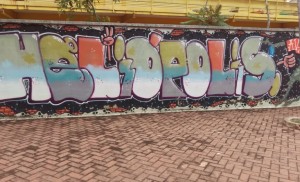
For Alex’s neighborhood day, he explored Heliopolis, which is in the southeast end of Sao Paulo. This neighborhood is the largest favela in Sao Paulo and second largest in Brazil with around 200,000 inhabitants. The people built their houses illegally and as the population grew it became a neighborhood. Heliopolis was known for being a dangerous area, but then slowly that perception has been changing. The government bought a piece of land that was used for parked trucks and dumping waste. In 2004-2005, an architect came into Heliopolis and asked the community what they wanted in that space. He donated the project to the community and even helped with giving extra materials for people to use to build their houses. The land was transformed into a public space for the community and the walls were lowered down. The process was participatory and residents were even able to choose the colors of the walls. Within this public space there is a primary school and middle school. From walking around, the space was well maintained and respected by the community members. A technical school and sports facilities like swimming, basketball, and soccer were also built. City Hall funds the schools and the facilities and since this transformation the quality of the residents has been increasing. Recently two students from Heliopolis were recognized for completing medical school.

An NGO called UNAS also contributes to the community as well. The organization helps students stay away from the streets and get more active in school or sports. The organization built a soccer and basketball facility next to their office for the community to use. Also, UNAS helps fund and collaborates with the only public library in the community who encourages young children to read more. There is a computer lab for residents to learn how the basic of using a computer and they also help with legal issues like divorce. We encountered a project of thirty teenages who have decided that it is okay to go to parties and not drink. They take responsibility of the problems alcohol causes and they speak with each in a safe space.

About ten years ago, the houses finally received legal light and water services from the government. Before it was illegal and residents would have to steal these resources from nearby neighborhoods. The community is growing and most of the families know each other. As I walked around, people would wave to each other and help each other out. A lot of local owned businesses were in the neighborhood and whatever is needed in terms of food, clothing, house materials or mechanics were found within Heliopolis. The neighborhood has gotten a better reputation and it aims to keep progressing forward.

Bom Retiro

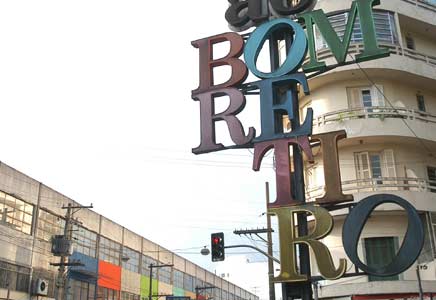
For Eli’s Neighborhood Day, she visited Bom Retiro, a neighborhood that has traditionally been immigrants’ first stop in the city. In the 1960s, Orthodox Jews were the neighborhood’s main residents. Koreans comprised the next wave and now Bolivians. She first learned about the neighborhood through a movie titled “The Year My Parents Went on Vacation,” which took place in the then-Jewish neighborhood when Brazil was under military dictatorship. Because of this film, she was excited to explore Bom Retiro and learn about how today’s immigrants and new political landscape shapes the neighborhood.

When Eli’s group arrived in the neighborhood, they met Angela, a Bolivian woman who immigrated to Brazil nine years ago. She told them that Bolivian immigrants like her typically work in sewing workshops six days a week, working long hours and receiving little pay. She explained that the majority of workshop owners are Korean and that before they began exploiting Bolivian arrivals, Jewish workshop owners exploited them. She also mentioned that today, a handful of Bolivian immigrants, have become workshop bosses, indicating a continuing cycle of exploitation by the exploited. Angela no longer works in a sewing workshop but shared that the most difficult parts of the experience were the effects her work had on her health and her family. Today, Angela suffers from poor vision, back and kidney pains because of the long hours she spent bent over fabric. As for her family, she feels that her children were neglected. She spent little time with them because her priority was earning money for their survival in Brazil. However, Brazil’s economic recession has made it impossible for her to continue living here and she plans to return to Bolivia with her children next month. She does not see this as a happy return but as a defeat. She is unsure of the work she will do in Bolivia, but hopes to open a bakery with her husband. The reason she shares her story with groups like ours is to raise awareness about the conditions immigrants work under in the city.

Week 8: The fight for social justice for the LGBT community in São Paulo

In each city we travel to, IHP hosts a social justice panel featuring men and women who view social justice as a core component of their work. In São Paulo, one of our speakers included Paulo Giacomini, the organizer of the first Gay Pride Parade in São Paulo.

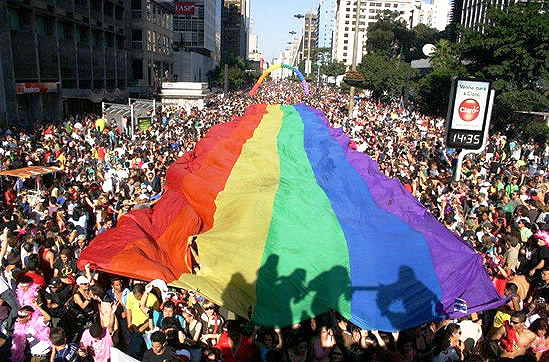
In 1997, Giacomini organized the city’s first gay pride parade. As someone who had been involved in the National Network of People Living with AIDS and HIV since its creation two years earlier, he realized that São Paulo’s LGBT community needed the support of the city at large. The first parade he organized had an attendance of five hundred people. Just three years later, over one million Paulistas attended. In 2006, São Paulo’s Gay Pride Parade was named the largest in the world. However, these accomplishments came with struggles along the way. Giacomini said that in the early years of the parade, religious fundamentalists mobbed supporters. Today, members of the LGBT community have become more widely recognized as actors in the city. According to our speaker, their political involvement is large. This is partly due to their occupation of positions that place them near the city’s most powerful leaders.

Although Giacomini is proud of his achievements and those of the LGBT community, he recognizes that disparity exists between the LGBT community living downtown and in the periphery. He said that because those in the periphery are more likely to be poor and black, young black gays are the most vulnerable to AIDS. Although the health system in Brazil is public and free (meaning that expensive HIV medication is readily available to those who need it), those in the periphery struggle the most to benefit from it because of their distance from health care facilities. Giacomini recognizes this and fights to include the voices of the voiceless through his work with the National Network of People Living with HIV and AIDS.

SP Gay Pride Parade 2016

SP Gay Pride Parade 2016