Week 7: São Paulo, Brazil and the Fallacy of Racial Democracy

After a long journey from India to Brazil, Alex and I landed in São Paulo. Our senses quickly picked up on differences between the two; from rapidly spoken Portuguese to the smell of meat and coffee to tall concrete buildings squeezed together on every block, it was clear that we were no longer in Ahmedabad. We soon learned that the city of São Paulo has a population of eleven million people. The size of the population combined with that of the city contribute to make São Paulo a city of gross inequality. For example, millions of residents live in the periphery of the city and must travel two to three hours a day in order to reach their jobs in the center of the city. This greatly affects their quality of life in comparison to those who have the means to both live and work downtown. During a lecture titled “Race: the Brazilian Perspective,” we learned that those who live in the periphery are more likely to be black. This present reality that often goes ignored has partly been constructed by Brazil’s political history.

Map of São Paulo City

Map of São Paulo City

In the 1930s, racial democracy emerged as a term used to express the idea that people of all races live under social equality. Brazil was under authoritarian rule when the term surfaced. In reality, the government used it as a means to further stifle Brazilians’ rights. This was because when the idea that everyone was Brazilian, no matter their race, was in place, there was little room for people to claim that they were being treated unequally. Later, when authoritarian rule came under attack, so did racial democracy. This was partly due to a study conducted by UNESCO, wherein the organization found high levels of inequality between whites and non-whites across Brazil. Sadly, the total overthrow of racial democracy took decades because the government had successfully made it so that criticizing racial democracy became an expression of anti-Brazilian sentiment. A victory came in 1988 when the new constitution strengthened anti-discrimination provisions. Although racial democracy is recognized today as a fallacy, there continue to be persistent differences between white and non-white educational and occupational attainment levels, especially in São Paulo. As mentioned, this is best exemplified by racial patterns across the city.

As we continue to explore São Paulo, from its center to its periphery, it will be interesting to learn more about challenges faced by the periphery and forms of resistance used to combat these challenges.

Week 5. The Controversy with Tata Motors Factory in Gujarat

Tata Motors moved to Gujarat with the plan of manufacturing the world’s cheapest car, Tata Nano. The government allowed the factory to move as a plan of Chief Minister Modi to transform Ahmedabad into a car manufacturing hub and bring in other car companies as well. The factory was built in an agricultural village called Sanand. Many farmers feared the government was going to take away their land without compensation. Tata Motors currently uses land from Gujarat Agricultural University which was in the name of the Gujarat government. The villagers depended on the land to sustain their livelihoods. The villagers were forced to give 1,100 acres of agricultural land for industry. The government gave the farmers a reasonable amount of money for the land (It was sold at 1,200 rupees per square mile or $108,000 per acre). The issue there was that many farmers took the money and moved out of the village and the government easily reclaimed the land. Visiting the village and speaking to some of the people who still live in the area, they were saying that the government was not giving them an option. Either they took the money or the land was going to forcefully be taken from them. Many of the farmers spent their money right away on a new home, new car, or anything they could buy. A lot of those families are poor again and the villagers have lost their livelihoods.

tata_motors

In return for selling the agricultural land, the village was told they would get employment but in reality only forty to fifty of the people are employed by Tata. There were about ten thousand people who were working on the farms and now majority of them are jobless. The jobs at Tata are high skilled positions and the villagers do not have the skills to apply for the jobs. A lot of the villagers do not get employed because of the fact that the local village workers might form a union. Instead Tata was hiring people from outside the area to prevent a union from forming.

Tata cars were catching on fire and the factory closed down as a result. The vision of Ahmedabad being a car manufacturing hub was no longer a reality. Tata is not reaching the demand it hoped and therefore no other car companies are interested in moving to Gujarat.

The conditions of the villagers became more difficult to live in once the factory moved in. There once was a bus station that went into the village, but was then disconnected. They lack a source of clean drinkable water, which harms the overall health of the village. All they knew was farming and now that their land has been taken away, they do not know what to do. The community was left to be destroyed and they are neglected by the government and the factory. Thankfully, NGOs are working with the villagers to ensure that the ones who stayed do not sell their land. The NGOs help inform the people of their rights and help with getting access to basic amenities.

NGOs serve a critical need in poor communities. These villagers were forced to give up their land and at the end had everything taken away from them. The money perhaps sounded like a great deal, but now the villagers are economically and emotionally unstable. They need help to get back on their feet when they have no fault for the results of an unbroken promise from the government.

Week 4. Labor Issues in Ahmedabad

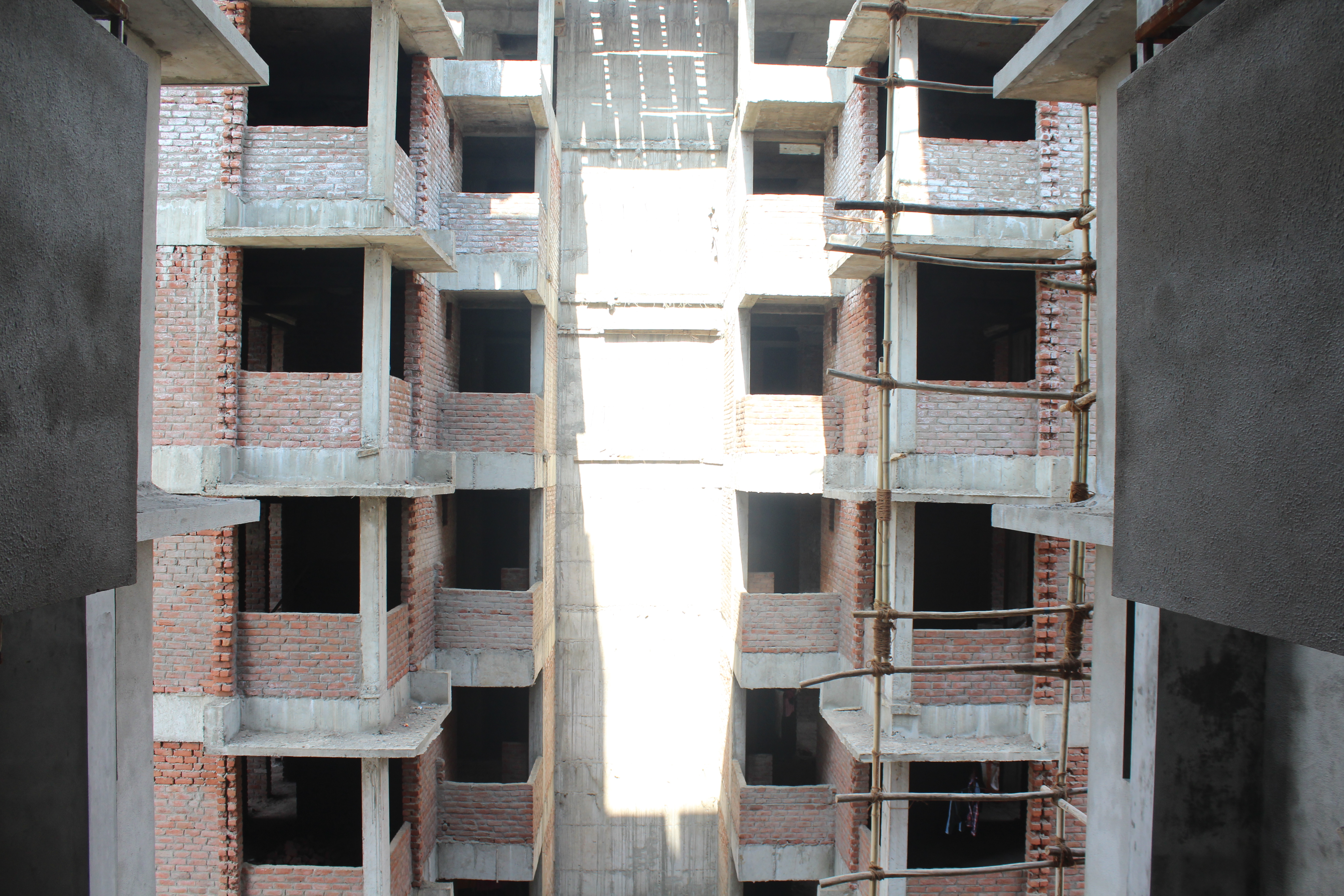
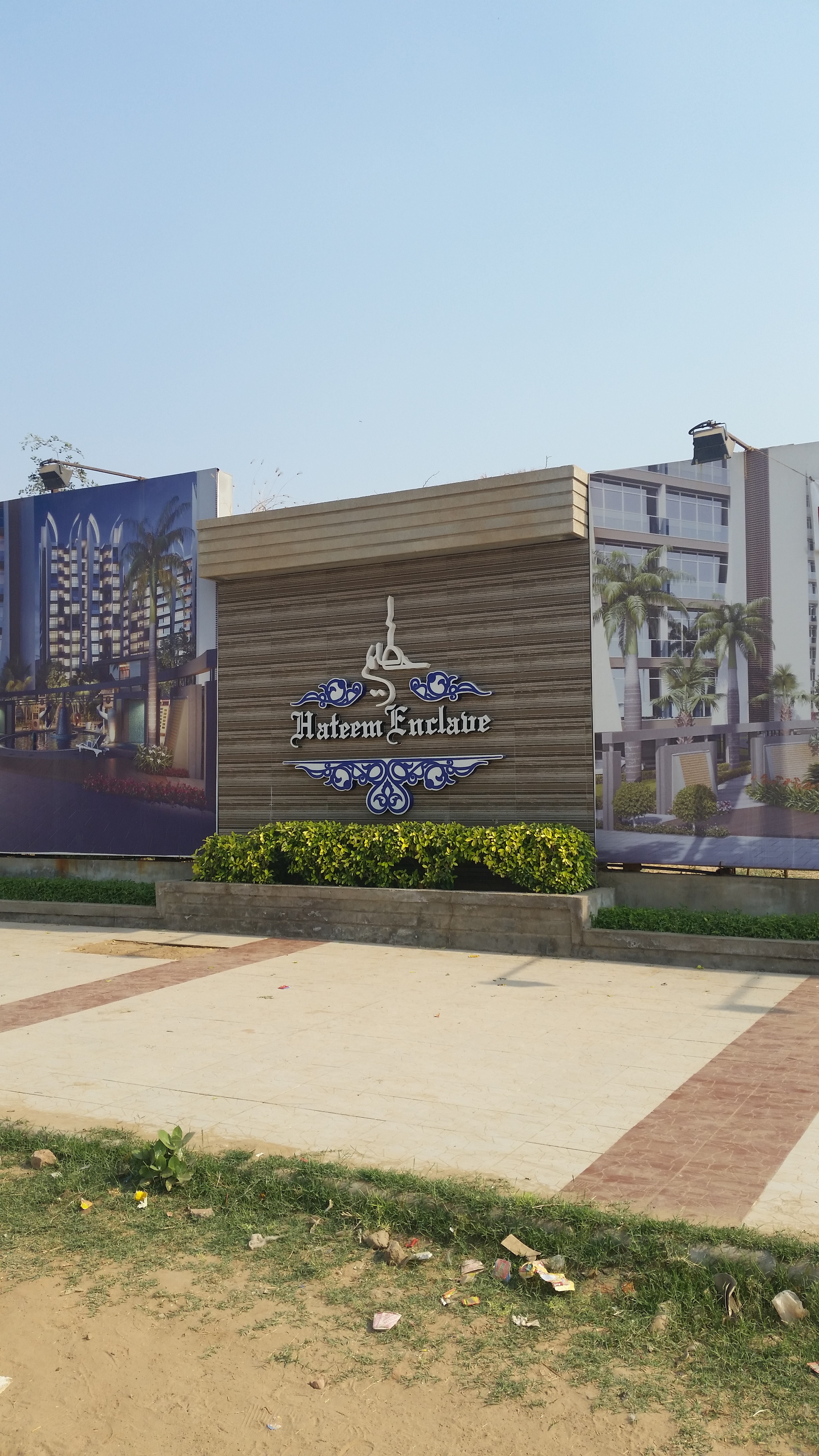
Construction workers working on a luxury residential complex

Construction workers working on a luxury residential complex


Different kinds of labor issues were explored this week in Indian society. The group learned about different groups, including sanitation workers, constructions workers, shoe makers, street vendors and teachers. Alex went with a group to observe the conditions of construction workers. We went to an intersection where about one thousand people having minimal skills to high-end skills stand starting at 8 am to find informal work for the day. They generally live close by so they walk to this area and wait until around 11 am. The workers wait for a contractor to come and pick them up and give them a job for the day or a few days. The majority of them are from a working class background and have minimal skills and education. As we stood, we talked to some of the workers waiting and learned that some of them started working the way they do since they were teenagers. Some of them actually prefered working informally because if they were to do formal work with a contract, they would have to work harder even though they would get a better pay. Skilled workers get 700 rupees per day (about $100) and unskilled workers get 350 rupees per day (about $50). The downside to informal construction work is that it is not guaranteed that they will find work every day, some people work for only half the month and the other half doing whatever they can to make some sort of money. Another issue is that they receive no benefits for doing informal work. After meeting construction workers, we met with someone who advocates for the rights of these workers. He wants more workers to be registered as construction workers and helps them with the registration process to achieve this. There is also a union, which is 20 rupees to register with plus an annual fee of 60 rupees. Another thing he does is helping workers get trained to improve their skills, but not many people do so because they lose days of work through training. Programs range from three days to three months and offer a small stipend of 150 rupees per day. About twenty percent do not make it through the training because it is physically and financially too difficult. Even if workers are trained, there is still no guarantee that they will get permanent work or even a higher pay.


Eli and her group visited sanitation workers. In Indian society, sanitation workers typically have this occupation because they are Dalits, or belong to the lowest class. Moreover, they are typically Balmikas, or belong to the lowest sub-caste within the Dalit caste. Sanitation workers perform an array of jobs, including street sweeping and drainage cleaning. In the community we spoke to, speakers shared that the government often takes them on as contractors. Similar to construction workers, their work is not guaranteed every day and their wages are not secure. Additionally, they are not provided with protection (such as face masks and hard hats) for their jobs, causing many to be hurt while working (in which case they do not have benefits to tap into) or die (in which case their families cannot claim widow pensions). Thus, sanitation workers feel that despite the outlawing of the caste system, the government reinforces this hierarchy in their lives every day. Sadly, the community feels that their future is bleak because of these conditions. Moreover, they said that they do not have time to unite as a community to form a union. Additionally, a large segment of the population does not see education as the solution because parents are not able to pay for private school beyond middle school. It was also commented by our guide that most individuals’ wages go to alcohol and temples. They drink to sedate themselves to do their work and donate to temples to pray for better conditions in their next life.


Interestingly, the central and Gujarati government has allocated a budget for the welfare of the Dalit community. But this is mostly on paper. In reality, this money is often re-routed to parks and other projects that contribute to Ahmedabad’s ambition to become a World Heritage site.
As with Neighborhood Day, a common theme has been that people in the lowest castes are those who are most disadvantaged by the government. As the construction workers and sanitation workers taught us, the government purposefully takes them on as contractor employees in order to pay them as little as possible. Moreover, in most cases these workers do not receive benefits and lack access to social mobility, essentially causing them to be stuck in their occupations. These cases have taught us that the government’s promise of a “developed” and “modern” Ahmedabad has further marginalized the poor.

Week 4. Exploring different neighborhoods in Ahmedabad

20160129_104845 IMG_4816

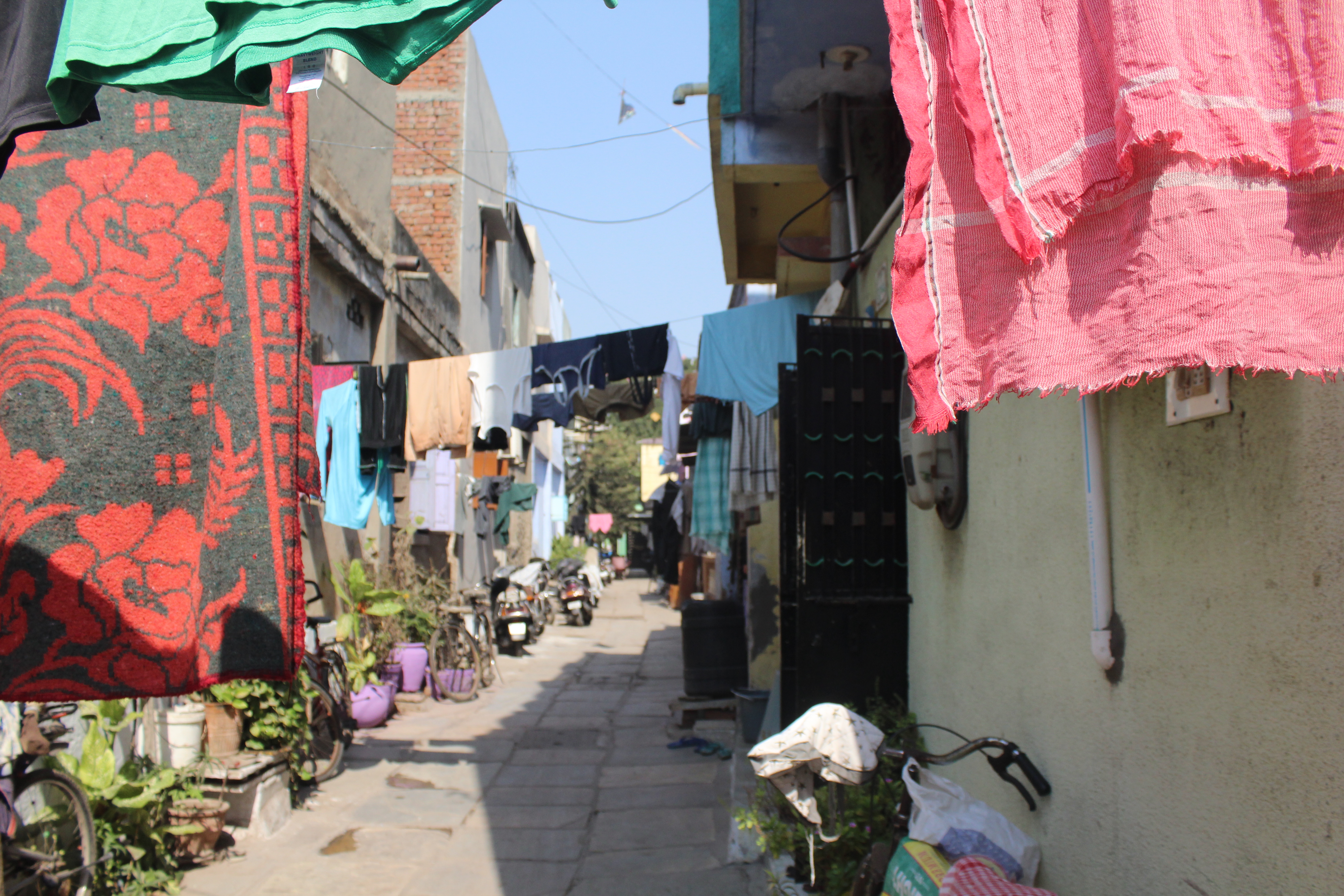
During our first week, our group was split up and we explored five different neighborhoods in the city of Ahmedabad. Some groups went to the western region of the city while others went to the eastern region. Alex went to Rajpur-Gomtipur, a Hindu community that was established to house workers from the textile industries. Many of these people immigrated from rural areas and moved to this area because of work opportunities they might have read on the newspaper or heard from a family member or friend. When the factories were growing, workers were getting a good pay and benefits for themselves and their families. The community was flourishing and the infrastructure was being built such as schools, hospitals, road infrastructure, and food stands. Factories then began closing down and people were losing their jobs. The built infrastructure crumbled and is no longer maintained by the city. The nearby school is not as good and instead parents were sending their children to private schools. On my way there, a water pipe had burst because of a compilation of garbage and flooded the streets. As I walked around with my group, we met a man who worked at an active factory and he hired mainly women in the area to make handkerchiefs to sell in the market. A lot of the people from the community had to work from home to make some income and support their families. One woman had a salon in her home and another woman put buttons on pants.


This community self-sustained itself economically, but its members do not have any benefits in case something happens and there is no social mobility in what they do. In the community, everyone was very welcoming, people’s door were open and kids were out playing in the public spaces. While this community is a predominantly working-class area, many of these families took very good care of their homes and took pride in showing us their homes. The interesting part was that when we asked the kids, some of whom were in college, if they wanted to stay or leave, many immediately said that they wanted to stay in their community. That to me was very surprising, but that area has such a strong sense of community established that many of the people really love where they are from. Even though they are not making enough money, they are all willing to help each other out and would even borrow and lend money to each other because they would trust each other more than the bank.


Eli went to Juhapura, a Muslim community in the outer banks of Ahmedabad. She and her group began their visit at a private school, where their speaker shared that Juhapura was established in the 1970s, due to flooding that forced thousands of families to relocate. The neighborhood expanded when riots caused Muslim families to flee their homes in search of a safe haven. Juhapura has steadily continued to expand in recent years because it has the capacity to house growing Muslim families. The neighborhood’s reputation is that it is “mini-Pakistan,” a term that Indian Hindus often attach to predominantly Muslim neighborhoods that they perceive as dangerous. Additionally, this connotates an otherness to the people who live there. It asserts that they are not Indian. Interestingly, Ahmedabad’s Bus Rapid Transit (BRT) system does not stop in Juhapura, reinforcing the idea that this neighborhood is too dangerous to have a stop or too poor to afford it. In reality, families’ income levels there are diverse. During their walk around the neighborhood, Eli and her group saw areas being developed for luxury real estate as well as makeshift homes. Unfortunately, the reality is that there is little unity in the community and the rich do not see a reason to help improve the lives of their neighbors. This is also due in part to the diversity of Muslim sects in the neighborhood. This difference creates dividing lines that keep people isolated from the reality of their community’s needs. Through our speakers we learned that the government does not provide the community with basic services such as water and drainage. People are forced to take toxic water from the ground and create their own drainage systems or illegally tap into surrounding localities’ resources. Additionally, there are no public schools in the area. Continuing tensions between Hindus and Muslims also trouble the people of Juhapura. There is actually a large concrete wall dividing the community from the Hindu neighborhoods that surround it. The police does not protect them, forcing them to defend themselves and then suffer the legal consequences.


Through our visits we observed that when the Ahmedabadi government does not provide communities with basic services, they will often have to create their own resources. One key difference is that the people of Rajpur-Gomtipur are united while Juhapura’s economic diversity and tensions with the surrounding community make unity difficult to achieve. As we continue to learn about communities in the city, it would be interesting to observe how NGO’s supports people like the ones we visit to alleviate the lack of resources.