I now have finished my first semester at Trinity College and I am going on break knowing a lot more about life in college than I did a few months ago. I have learned the best study and organization habits for myself and I now know exactly what I need to do next semester in order to do even better academically. In Andrew Roberts’ The Thinking Student’s Guide to college: 75 Tips for Getting a Better Education he gives incoming college students helpful advice on how to succeed in college. One of his pieces of advice that I think is very important after going through one semester of college is tip 45: ‘Manage your time’. He says that rather than trying “to sneak in five minutes of studying here and ten minutes there” that students should “set aside several hours each day that you devote fully to your classes” [1. Andrew Lawrence Roberts, The Thinking Student’s Guide to College: 75 Tips for Getting a Better Education (University of Chicago Press, 2010)] if you want to succeed academically in college.
Although managing your time as explained in tip 45 is a big part of succeeding I have learned that it is not enough if you wish to excel in your classes. Studying the material that you learned in class right after you leave the class helps it become engraved in your brain while the topic is still fresh on your mind. Studying in between classes is a great compliment to managing your time. Other than the fact that it helps you understand the material better it also allows you to do it much faster because everything you were just taught in class is still in your mind so you do not have to spend any time re-teaching yourself anything when you go to study. From my experience as a freshman at Trinity when I study material from class right after I leave the class I always know that information much better than when I wait and go to the library at night or the next day. Then when I go to the library to study further at night I feel as if the subject matter clicks much quicker than if I hadn’t studied in between my classes.
In my most difficult class of my first semester, comparative urban politics, I had a lot of trouble getting good grades during the first few weeks. I thought that I was studying really hard for all of my tests and in reality I was but the problem was that I just wasn’t studying the right way for me to able to retain as much information as possible. What I would do is go to class and then either study later at night or the next day and I realized that although I spent a lot of time in the library trying to study everything that happened in class I couldn’t remember certain specifics that had happened in the prior class. Once I started studying directly after class and before my next class for only about a half hour I noticed that when I went to study at night that much more of the information that was taught in class was still in my head. As a result of following up the initial class with a short study period I was able to remember a lot more of what happened in that class when I went to study again at night and it showed on my next tests. My grade started to drastically improve and I accredit it all to my new study method. If only I had figured it out sooner.
By studying in between classes more you will find that you will have much more free time because though you will not be studying for as much time the quality of your studying is significantly better. You will be able to have your nights free to do things like workout, hangout with friends, or participate in school clubs is an added benefit on top of increasing your grade point average.
After reading Andrew Roberts’ book I have really come to appreciate the advice that he gives and the majority of what he says is actually very useful in order to be a successful college student. I agree with many of the things he said and have adapted to make them a part of my academic life so that I can better myself academically. However, one thing that I disagree with about the book is that it should be read before school. Personally I am big believer of learning from experience and that’s what I did my first semester at Trinity and although I may have done slightly better academically if I had read the book earlier I would not change what I did. My advice to any students would be to learn from your mistakes in your first semester in college and if you still have not found a good way to achieve academic success then to read Andrew Roberts book. But be warned, once you read this book you will have all the knowledge you will need in order to succeed in college so you have no more excuses for doing poorly in school.
Andrew Roberts, author of The Thinking Students Guide to College: 75 Tips for Getting a Better Education, gives advice to college students looking to fully utilize all that their college has to offer. Roberts talks about choosing majors, interacting with professors, being successful and so on. What I believe that Roberts does not talk about is how to utilize the physical campus itself and its surroundings. Trinity College is located in the city of Hartford, Connecticut. Hartford is a very diverse city and gives opportunities to any Trinity student who wants to experience activities beyond this campus. It is an open campus which allows the local residents to enter on their own free will but this also allows the students to explore beyond the college campus. When I first arrived on campus I did not understand where anything was except my dorm and Mather hall. I am an out-of-state student and was unfamiliar with Connecticut. Due to my lack of familiarity, I did not take the initiative to learn about the campus and the surroundings and decided to learn only about the essential buildings: Mather Hall, Little Dorm, and Seabury.
I wish that I had utilized the campus more during my first semester at college. My advice would be to learn about the campus and its important buildings. There are many advantages to knowing your campus and important buildings in the campus. As you learn more about the campus you may find new interests that you may not have had before; many different buildings on campus are themed such as the social sciences, humanities, language, math, science buildings and much more. If you were to learn about them and the events they may offer they could provide unique learning opportunities find new interests, or even meet people that you would not have had the chance to meet. As a freshman you may not know what major or classes you want to take but if you were to just take a walk and enter a random building there is a variety of things you could find. Many buildings have bulletin boards that hold event posters or contacts for people with questions, comments and concerns. You can walk into almost any building to find and learn about what it’s used for and for what you could utilize it.
During my second week on campus I needed to find Trinity Commons. I went to the Welcome desk in Mather Hall and asked for a map, however, I am not very good at reading maps. I tried following the map and went to many buildings that were not Trinity Commons, but along the way I found many other buildings. I was forced to explore the campus so I could find Trinity Commons. Along the way I found the Ferris, which is where school dances, sports events and the gym are located. If I had not stumbled upon the building I may not have had the motivation to ever use it. I also found the buildings and grounds office. This is the building that you go to if you have any problems with your dorm. We had a broken blind and heating problems and when the time came to find buildings and grounds it was an easy trip. Knowing about the campus is very helpful for many reasons but one that many may overlook is the social aspect.
College is not only for academics but it is a very social experience. Knowing where buildings are on campus is very important when trying to attend events or looking for space to hold an event. Getting to know people at college could be one of the most important college experiences because not only will it help you during college, but it could help you after when trying to find a job. There are buildings that were built on campus that are geared to people’s specific interest. There are cultural houses such as, AASA (Asian Student Association), UMOJA (African American Student Association), and LVL (La Voz Latina, Latino Student Association). These houses are important because they hold events weekly; not only can you learn from these events but you may also be able to make connections with people that are similar to you or have similar interest. I am an African American student and have an interest in Asian studies. I decided to find the Asian American Student association house, AASA, and introduce myself. By the end of the meeting I did not know that I would be running for freshman correspondent, and no sooner become a member of their executive board. Taking chances, learning about the campus, and finding important buildings may be scary at first, but it may help you embark on an unexpected journey.
Andrew Roberts’ The Thinking Student’s Guide to college: 75 Tips for Getting a Better Education provided insights into how to get the best education out of the college experience. Roberts is an assistant professor at Northwestern University and a fellow at the Institute for Political Research, so his tips come from the standpoint of a college professor, and allows for us students to see how a professor would think about different types of students and situations. Many of Roberts Tips were very helpful, such as Tip 48: Ask for help or Tip 36: Choose a Major that you love, but the most helpful tip for me was Tip 46: Show the professor that you are working hard. In this tip Roberts describes how there is a difference between just working hard on assignments and showing your professor that you’re working hard, and how it will help the perception that your professor has of you as a student. When describing professors Roberts says, “They are not against you. In fact, if you give them a reason to reward you they probably will. So give them a reason to reward you.”[1] Professors give the students everything they will to succeed as long as the students put in the work. The best teacher I have ever had was my high school science teacher freshman, junior, and senior year, he taught me physics, chemistry, and environmental science. He would give us just enough help to get us to the brink of finding the answer, but he would leave enough room for us to have to work out the answers ourselves, and forced us to show him that we were working hard. Roberts also says that showing the professor your work ethic can have a direct effect on your grade in the class. Roberts says, “I have been in many situations where a student’s grade has rested on the borderline of an A and a B or a B and a C. The determining factor was often my perception of how much effort the student was putting into my class”[2] Many of my high school teachers told me that they had the same philosophy. Why would a teacher help a student whose grade is half a point away from going up if the student doesn’t listen during class or take notes, when they can help the student who goes to office hours regularly and visibly shows that they are putting in all their effort into the course?
Andrew Roberts covers almost all aspects of college academics with his tips, but I would add one more. Tip 76 should be about learning how to handle college level reading assignment. The first reading assignment I received at Trinity College was around 150 pages long and I was completely overwhelmed. In high school teachers will assign 20-30 pages due the next day, but since college classes rarely meet on daily basis the professors will assign more, and expect more from you. The reading load for most classes will be far too much to read the night before class, especially if you have other work to accomplish. You must learn to do break down the readings in more manageable size and read them over the two or three days in between the class. There will be classes you will take that you will be able to get away with not doing the reading, and just skimming the book and listening in class. There will come a time though when the professor calls and you for an answer from the reading, and you will not know the answer. There is no easier way to lose the professors respect and trust then showing him that you did not do the work he assigned, and as Roberts has already said things such as showing you did the reading factor in come grading time. There is another more important reason to manage your time so you can accomplish your readings. Many of the lessons the professor wants you to learn will come from the readings, so skipping the reading means your not learning what you should be and you’re cheating yourself out of a good education. One morning I woke to my roommate looking at his computer. I asked him what he was looking at and he said that the bill for the semester was released. He said the semester cost 27,000 dollars. He then looked at me and asked, “Have we really learned 27,000 dollars worth of information?” I was not sure and I couldn’t give a yes or no answer. I would like to think that I had learned as much as I possible could this semester, but I kept thinking about whether there was more that I could have done. So if you don’t find a way to do your reading then not only are you cheating yourself out of the education you deserve by getting into Trinity College, then you are also cheating you parents out of over 200,000 dollars over your four years in college.
[1] Andrew Roberts, The Thinking Student’s Guide to College: 75 Tips for Getting a Better Education (University Of Chicago Press, 2010). P.96
I’m halfway there! Well, I’m halfway there of finishing my first year in college at least. I’m still 3.5 years away from my college graduation, so I still have a long way to go. Looking back on my first semester at Trinity, there are a couple of things I would have done differently if I could redo my whole first semester. However, I am extremely proud to be the student I am today: a student who has successfully completed his first semester at Trinity, a student who has endured struggle after struggle and learned from his mistakes, and a student who is ready to make his second semester at Trinity better than his first. College is a whole new world. The transition from high school to college is very difficult. You are entering a new social environment and a new academic setting that takes time to accustom. What can I do to make the transition from high school to college easier and smoother? Take advice and tips from those who have experienced the difficulties of acclimating to the college’s atmosphere. Here is my advice to anyone who is about to start college: Read Andrew Roberts’ The Thinking Student’s Guide to College—specifically his tip #46 which I found to be the most valuable—and consider taking my advice of utilizing all available resources on campus—specifically the counseling center which I found to be the most helpful.
Adolescents never listen or take advice until they experience struggles in a situation where they are forced to take it. I ignored and pushed away all the people who were trying to give me advice about college before I headed to Trinity. “I got this” is what I told them. However, I realized that I didn’t “have it” when I started struggling with both academic and personal problems. I wished I could go back in time and listen closely to the advice I was given from my family, friends, and teachers. Rereading The Thinking Student’s Guide to College by Andrew Roberts made me realized how helpful his tips would have benefited me if I applied them earlier in the semester. In this book, Roberts introduces 75 tips for getting a better education. This book gives excellent advice, and I believe that these tips will help any freshman achieve his or her educational goals for next four year at Trinity College. This prestigious, private, and small liberal arts school has a very challenging and high-quality academic curriculum. Therefore, expect to work hard because nothing will be easy.
Graduating top five from a college prep high school with a G.P.A above a 4.0, I thought I had nothing to worry about, which gave me the confidence of saying, “I got this.” Achieving the grades I wanted in high school was extremely easy. I easily earned straight “A’s” by independently working hard without asking help from my friends and teachers. I thought I could earn straight “A’s” in college by following the same academic routine I had in high school. My obsession with getting straight “A’s” in my first college semester was a mistake because I kept getting paranoid when I get a “B” or a “C” on an assignment or test. I didn’t seek out help when I really needed it because I thought it showed a sign of weakness. However, now I know that asking for help is showing your professors that you care about your education and that you are an extremely hard worker. I learned this precisely by reading tip #46 in Andrew Roberts’ The Thinking Student’s Guide to College
“Show Professors That You Are Working Hard” is what tip #46 states. Andrew Roberts mentions, “By attending class, by completing your assignments on time, by participating in class discussions, and by showing up at your professor’s office hours” shows your professors that you are working hard and care about the class (96). I never went to my professors’ office hours, not even once. Looking back, I wished I would have gone regularly because it would have shown a sign of strength and dedication—and not weakness. If I would have attended my professors’ office hours and participated more in class more, I am positive that I would have earned the straight “A’s” I wanted. However, my obsession with “the perfect grades” soon changed when Jack Dougherty said, “It is not all about the ‘A’ you get in class; it is about what you get out of it.” I stopped being overly obsessed with my grades and started focusing more in class. I am not saying that getting straight “A’s” is impossible, but it will be hard work and reading some of Roberts’ tips will make things easier because you will have a map that will help you have a valuable educational experience. If a freshman wants to have the best educational experience here at Trinity, I recommend reading some of Andrew Roberts’ tips in order to have a successful four years in college.
“Freshmen year of college is always the hardest one” is what everyone says. I say that it all depends on the student. I have met students here at Trinity who came from boarding schools who found the transition from high school to college to be very easy. However, I also came across students who struggle in acclimating to the college life here at Trinity, much like me. In reality, there are going to be students in college who are more academically and personally prepared than others. Even though my classmates learned the material quicker than I did, I still felt I was academically prepared to handle all of the academic challenges that I came across. I never really encountered personal problems back home in Chicago. However, I found myself personally struggling here in Hartford, Connecticut on an emotional level.
Homesickness, depression, and guiltiness are uncontrollable emotions. I never experienced feelings this strong that invoked sadness, discouragement, despair, and hopelessness. I thought that these emotions were temporary, but they got worse the longer I waited to seek help. As days passed, the further away I was from myself. I found myself locking myself in my dorm room; I found myself sleeping more than usual; I found myself not eating; I found myself losing weight; I found myself getting extremely sick; I found myself crying; I found myself having trouble concentrating; I found myself not doing work or studying; I found myself not going to class; I found my grades slipping in all my classes. Most importantly, I found myself losing all the energy and motivation I had when I first arrived in Connecticut.
I was foolish enough not to seek out help when I was at my worst. I am very lucky to have a caring advisor like Stefanie Chambers who took me to the counseling center. At first, I didn’t want to go to counseling because I didn’t want help and because I thought only “crazy” people went to counseling. However, I soon discovered that many Trinity students go to the counseling center to deal with their stress and their other problems. Looking back, I am so happy that I gave counseling a chance because it really did help control my emotional distress. I felt more relieved, and I learned how to control these intense feelings. I wished I would have gone to counseling earlier, so it wouldn’t have drastically affected me physically, academically, socially, and personally. You don’t have to experience the same feelings as I did to go to counseling. Many Trinity students—freshmen, sophomores, juniors, and seniors—have struggles. Dealing with stress is overwhelming and seeking out help is the wisest decision you can make. Going to the counseling center will help you cope with your stress. Most importantly, counseling is free here at Trinity. You have nothing to lose if you try it. Please, take advantage of this resource and use it. Trust me, you won’t regret it.
How is going to counseling going to help me get a better education? The key to a better education is having a healthy body, mind, and soul. I had trouble concentrating, studying, and completing homework assignment when I was dealing with my depression, homesickness, and guiltiness. As a result, my grades slipped. When you first identify a problem, do not be afraid to seek out help. Yes, it will be hard at first to get help when you never received help in the first place. However, do not hesitate to make an appointment at the counseling center. I was absolutely sure I wanted to leave Trinity after this semester when I was coping with my feelings. Nevertheless, counseling made a huge difference in my life, and I am extremely proud of myself that I decided to stay here at Trinity College to receive the best education I deserve. Utilize all resources on campus and seek out help when you are having trouble because only the strongest and dedicated of students will try their greatest to have the best educational experience.
Here is the current information of Trinity College’s Counseling Center:
135 Allen Place (Right on Vernon St. behind the Campus Safety building)
Phone: (860) 297.2415
Fax: (860) 297.2428
Email: Randolph.lee@trincoll.edu
www.trincoll.edu/studentlife/healthwellness/counseling/pages/
Bibliography:
Roberts, Andrew Lawrence. The Thinking Student’s Guide to College. ; 75 Tips for Getting a Better Education. Chicago: University of Chicago, 2010. Print
About the Author: Tommy is a Hispanic male from Chicago, Illinois. Tommy graduated from Noble Street College Prep ’11. He is a student at Trinity College ‘15, and he is a Posse Scholar. Tommy is in Professor Jack Dougherty’s first-year seminar, “Color and Money.”
My first semester as a student at Trinity College has presented its fair share of challenges and victories, defining moments and shameful slip-ups. Yet, despite the multitude of late nights and “homework emergencies,” every second of this semester has brought me a step closer to satisfying my objective of developing a distinctive level of ambition and maturity. Whether one attends a large university or a small liberal arts college, every first-year student shares a similar objective. Andrew Roberts’ The Thinking Student’s Guide to College provides sufficient guidance in this regard. Complete with 75 tips concerning everything from choosing a major to exploring post-graduation options, Roberts’ Guide presents the anxious first-year student with everything he or she needs to know to enrich his or her academic experience at an undergraduate level.
Of the 75 tips, I found the most truth in Tip #48: “Ask for Help,” in which Roberts advises students to seek out extra help from professors, TAs, and campus tutoring programs. According to Roberts, “not only will you get help, but you will distinguish yourself as a student who cares about the class.”[1. Andrew Lawrence Roberts, The Thinking Student’s Guide to College: 75 Tips for Getting a Better Education (University of Chicago, 2010).] Coming from a highly competitive high school, asking for help was certainly not something I was comfortable doing. I was strongly opposed to the idea of “admitting defeat” by letting someone know I was having trouble understanding a concept. Asking for help was equal to owning up to a failure, an insufficiency, a defect. However, Trinity College’s small class sizes and slim student-to-teacher ratio guarantees that faculty will have the time and energy to assist students on a level that is far more intimate and thorough than faculty at larger institutions.
My perspective changed this past semester, after taking an educational studies course. With a little over twelve hours left until my first paper of the semester was due and no solid strategy for how to tackle it, I reluctantly attended a session with one of my TA’s. She let me do all the talking at first, asking me about what ideas I was considering including in my paper, in no particular order. After listening patiently to my jumble of thoughts, she asked me follow-up questions like, “Your idea reminds me of this theorist. Have you considered that?” and “Your observations are interesting. What theories can you recall that could explain some of those?” My choice to reach out resulted in a very helpful brainstorming session—much more productive than if I had spent hours stubbornly trying to de-tangle my own ideas. With my TA’s help, I had structured and organized my entire argument in thirty minutes, and not once did I feel inferior.
Tip #48 promotes personal responsibility and encourages students to hold themselves accountable for their learning. Thus, I would propose the addition of a similar tip—“Tip #76: Learn Your Learning Style.” The rigor of a high school curriculum and that of a college curriculum are completely different, so it is expected that your study habits will evolve as well. Try out different study spaces, note-taking methods, and organizational tools during the first few weeks to find what works best for you in each of your classes. In high school, I was an aural learner. In those classes, I benefited most from listening to lectures and engaging in class discussion. However, at Trinity, I found that just listening to a lecture was no longer sufficient in some of my classes. It was not until I re-took an online assessment about learning styles from high school that I realized that I am “multi-modal”, meaning that of the four existing modes of learning information—Visual, Aural/Auditory, Read/write, and Kinesthetic—students do not rely upon just one. There is no one mode of studying that suits all subjects.[1. Neil Fleming, “The VARK Categories,” VARK: A Guide to Learning Styles, 2001, http://www.vark-learn.com/english/page.asp?p=categories.] Likewise, it is likely that one mode must be supplemented with another. For instance, in my educational studies course this past semester, I was a kinesthetic and a visual learner. Simulations and other practical activities relating to real-life examples helped me grasp concepts. However, when it came to understanding theorists and their ideas, I found it helpful to prepare charts to categorize information. I eventually learned that, in addition to adjusting socially to college, academic adjustment was necessary as well. With the wide range of courses Trinity offers as part of its liberal arts curriculum, knowing how to maximize your potential for success in each individual course can truly be beneficial.
As precious as it is to discover yourself in college, it is equally valuable to know how to adapt. Roberts’ advice aims to help students learn to do so, particularly in regards to academics. Understanding the active role you have in making the most of your educational experience is the key to succeeding during your undergraduate years. However, such a responsibility can definitely be intimidating. Though Roberts’ intent is to ease the majority of a first-year student’s worries, no solution can truly prepare you for a fail-proof college experience. Rather, the only way to fully access your potential, both inside and outside of the classroom, is to approach situations head-on with the willingness to adapt if necessary. Such is the most genuine strategy for handling this new transition, as well as the one that will inevitably prove to be the most rewarding.
About the Author:
Nykia L. Tanniehill, a Chicago native, is a member of the Class of 2015 at Trinity College and a student in the “Color and Money” first-year seminar.
The transition to college is one that not everyone is ready for; while it may come easy to some it may prove difficult to others. Even though everyone handles the transition to college differently, the one challenge that most if not all students face is time management. Since the transition to college not only comes with new challenges, but also comes with new found liberties a lot of students get caught with that excitement. In Andrew Roberts’s book The Thinking Student’s Guide to College, he gives advice to college students on how to make their college experience one “where professors challenge you to do the best you are capable of, provide you with personalized feedback on your work and show you new ways of understanding the world” (Roberts,1). Unlike other advice books on college, Roberts is not interested in giving college students tips regarding their social life, he is more interested in giving advice on how to get the best possible education out of the college you decided to attend.
During your first semester at Trinity, you will encounter many new things but the one that will probably attract you the most is the new found liberty I mention earlier. For most people this is probably the first time they will be away from parents and even if you attended boarding high school, the college experience is nothing like the high school experience. In college you are completely responsible for your decisions and you will not have anyone telling you what to do with your time or making sure that you have done all your work, that is why it is very important for you to manage your time. One of Roberts’s most useful tips is the importance of time management. Roberts says that “the real problems in selective schools show up only with students who do not manage their time” (Roberts, 96). He also goes on to explain the importance of devoting large blocks of time to studying and ways to keep track of where your time is going. If you want to succeed academically at Trinity and want to make sure you’re not the student that is stressing out about a paper or test because your waited until last minute to get your work done make sure to manage your time wisely.
Coming into a liberal arts college like Trinity, you are expected to be involved in every extracurricular possible. You hear everyone around you telling you to take classes that you’ve never taken before, to participate in clubs and to do everything that is in your hands to become a well rounded individual, after all that is the purpose of a liberal arts college education. Coming to a college like Trinity can be overwhelming especially if you’ve never been expected to do all these things, or if you’ve never been in a place where you had all the opportunities Trinity has to offer. When I arrived at Trinity, I was overwhelmed and nervous about the expectations the college had from me. In my personal experience college wasn’t the only thing I had to worry about, I also had a job and most of my free time was dedicated to that. I found myself frustrated most of the time because even though I wanted to make time for the college experience I was supposed to be getting I couldn’t because I had other responsibilities I had to take care of.
Many of you may have the same problem I had, due to the fact that you may find yourselves with more responsibilities than just being a college student or because of the fact that you feel that handling your work is what takes up most of your time. One of the most important lessons I learned during my first semester at Trinity was that I had only so much time in my day and responsibilities that I had to take care of but that there was also a balance I needed to have. I had to make sure that I made enough time for my academic life in order to succeed and that I challenged myself as much as I could even if I couldn’t take part of the extracurricular activities that Trinity had to offer. I had to understand that not because everybody around me was doing all these extracurricular activities meant I had to. It is also important to understand that even though you may not have the time to take part of the opportunities offered at Trinity outside of the classroom means you shouldn’t challenge yourself at all. Regardless of the fact that you may not have enough time to truly take advantage of these opportunities make sure you take classes that you truly enjoy and ones that are going to challenge you rather than taking classes because that is what works best with your schedule. You may not always have the time to take part in clubs or community service but just remember the reason why you are in college and the fact that your education should be one of your top priorities!
Bibliography:
Roberts, Andrew Lawrence, and ebrary, Inc. The Thinking Student’s Guide to College 75 Tips for Getting a Better Education. Chicago: University of Chicago Press, 2010. Print.
About the author: Evadne Coache is a first year student in the Color and Money seminar. She is from Hartford.CT and is a graduate from Miss Porter’s School ’11.
After completing a semester at Trinity College, I have gained a new type of knowledge regarding college life. This has allowed me to better understand the atmosphere on college campuses, which is helpful when giving advice regarding how to better improve your college education. Andrew Robert’s book, The Thinking Student’s Guide to College, addresses key pieces of advice that are helpful for college students. This advice ranges from tips on how to choose your college, all the way to being successful at college. Robert’s most valuable piece of advice is found on page 95: “Manage your time.” He highlights the importance of setting aside at least a couple hours each day dedicated to studying in a location with minimal distractions. This tip is crucial in order to get the most out of your education. If you manage your time well, you will have a greater amount of success in the classrooms and will find yourself with more time on your hands. This tip is particularly important for freshman to keep in mind because for the most part it is their first time really being away from home. With this new independence, it is completely up to the students to decide when they should complete their work, as they have no one making sure that it is completed. Further, college professors tend to be less understanding of excuses and if something is incomplete they will penalize you based on this.
Specifically for me, coming to college was a big step in terms of independence. Within the first few months of being here I had to figure out what worked and what didn’t and what the best way was to ensure all my work was complete. I am also on the ice hockey team, so I had one more thing I needed to keep in mind when managing my time. I found study hall, a set period of time where as a team you are forced to do work, to be extremely helpful and allowed me to get into a routine. No matter what it is, students need to decide what works for them and from there, use these strategies to ensure that their schoolwork is done and that it is their first priority.
Although Robert’s tips found on page 113, “Be Curious about the Subject,” and on page 115, “Visit All Professors during Office Hours at Least Once,” are strong suggestions, I would change these tips to include to importance of attending extra-help sessions and completing extra-credit assignments. These tips not only have direct benefits on getting a better education, but also have indirect benefits. Directly, going to extra help sessions will broaden your understanding of the course material and allow you to understand the topics better. Also, completing extra-credit assignments are always worthwhile as they directly increase your mark in the class. Indirectly, these tips show your professors you are interested in their class and care about succeeding. Although this does not guarantee you a better grade, teachers like to see that you want to be in their class and will keep this in consideration when they are interacting with you and grading your work. Working with these benefits it is clear that these tips will better your overall college education, and for the amount of effort you need to put into these tips, it is clearly worth completing. These tips are particularly useful at Trinity College because of the small campus size. Since teachers do not have an overwhelming amount of students, they are more likely to host extra-help sessions and offer extra-credit assignments. Students at Trinity are also given a unique opportunity to get to know their teachers on a more personal level. These tips allow students to do that, while still improving their marks, and demonstrating a high level of interest in the subject matter.
This semester I was in a Biodiversity class, where I felt these tips were particularly important and I wish I had been advised of them before the semester started. In the course, we had a quiz every Monday on the week’s material. Our teacher always mentioned that she was available for extra help sessions, but I never thought anything of this until my friend starting attending. My professor e-mailed my friend, who had not been doing well on the quizzes, to request to start meeting with her for extra help. Immediately after she started attending these meetings her quiz marks increased dramatically. Once I saw this happening I started going in as well and I was surprised with the same results. It is not fair to say that just because we showed up for extra help, she started marking us easier, but that, combined with having a greater knowledge of the quiz material, were both factors that contributed to the increasing grades and overall better education within the course.
After reading Robert’s book and actually experiencing a full semester at college, it is evident that all students should be given some advice before coming to college. Although Robert’s advice is strong, I believe that, while some advice can be generic, the most valuable tips you can receive are those specific to the college you are attending. This is because different advice is more relevant on some campuses then it is on others, as schools vary so greatly in size, education, and campus life. Specifically, at Trinity College, seeking extra help and completing extra credit assignments are both valuable pieces of advice. Using this advice, students have the ability to better their college education, which will help them in many perspectives, way beyond just their college experience.
The Thinking Student’s Guide to College by Andrew Roberts is not just any book that will tell you how to get good grades, how to socialize with others or how to manage your workload, it discusses more than that. Rather than focusing on general areas such as these, Roberts mainly focuses on 75 tips to help students benefit the most from their education. The book is broken up into sections that include topics such as, “Choosing a College”, “Choosing Classes”, “Learning Outside the Classroom”, “Interacting with Professors” and even “Being Successful”. As a first year student at Trinity College I have already experienced some of these topics myself. The section that interested me the most within the book was titled “Being Successful”. This is because of the fact that I obviously want to be successful throughout my years at Trinity and in life after college. One of Roberts’ main points, which I found most appealing was his statement, “getting good grades is related but not equivalent to learning the material and getting the most out of college” (95). If you truly enjoy learning what you are being taught, good grades will naturally follow as a result of hard work and deep interest in your education.
I also feel that Tip 46 best represents how to get the most out of a college experience and has personally helped me succeed in my first semester at Trinity. Tip 46 states, “Show Professors That You Are Working Hard”. This section then discusses how to go about making sure your professor knows that you are working hard and the potential benefits that may arise. Roberts’ strategies consist of attending class, completing your assignments on time, participating in class discussions and by showing up at your professor’s office hours. Although these bits of advice seem like common sense, it is very easy for first year students to overlook the importance of each pointer. I am currently on Trinity’s Varsity Football Team and when I first arrived on campus upperclassman and coaches gave me and my fellow first year football players the same advice that Roberts shares in his piece.
Since then I have made my best effort to abide by all of these tips and it has paid off. For example, I received a grade on an exam for my Economics class that I was not satisfied with. I used the advice that I was given and decided to go to my professor’s office hours to review the exam. I arrived on time with a couple other students from the class. As we waited for the professor to arrive we discussed the exam ourselves to review where we went wrong. The professor was 45 minutes late to his own office hours but in the time spent waiting the other students and I were able to learn from the mistakes we made on our exam. As expected the professor was very apologetic but as a result he gave the students who waited for him four extra points on the previous exam. As explained by Roberts, displaying extra effort does not mean you are guaranteed better grades but rather “it makes professors look on you more kindly” (97). From this experience I not only was able to boost my test grade but more importantly I learned from my mistakes and my professor saw that I cared about learning the material he taught. There are some other tips that have also helped me show my professors that I work hard and care about learning. Tips such as emailing your teachers about the material or questions you have did not make this section.
However, one piece of advice that I would add to this section would be to sit in the front of every one of your classes. You may have been told this before and like me maybe you did not think sitting a couple rows closer towards the front of the classroom would really make you a better student. However, it is not this action alone that will make you a better student but the effects of being closer to your professor will benefit your learning experience. Some of these effects include the professor noticing you, forcing you to attend the class and having to pay attention. Because in some larger classes in college it is easy for a student to get lost in a class and a professor to not know who you are. Following Roberts’ advice of attending office hours will ensure that the professor knows who you are. Yet, you want to be noticed in class in order to show your professor that you are tentative and care about the course. This comes with some other obligations that you must follow through with. If you decide to sit in the front row this means that you cannot skip a class. Since the point of sitting up front is to be noticed, you will also be noticed if you are absent. This will force you to always go to class. Even when you are debating not going, which should never be considered anyway, you will have to go to avoid being noticed for not attending. Also by sitting in the front row you are forced to pay attention. In my Intro to Psychology class that had close to fifty students, I have decided to take this advice since day one. I have friends in the class who I would normally sit with a couple rows back if it were not for this tip. These students were often the ones talking to each other, using their phones and even falling asleep. By always sitting in the front row it is easy to avoid being apart of these disturbances and to focus on the material presented in class. After spending a semester with these tips in mind I clearly saw a difference in grades and the professors’ attitude towards my friends.
Even though these tips from the author and myself may seem obvious, they highlight the importance of taking full advantage of your education. From sitting in the front of the classroom to going out of your way to demonstrate your interest in the material you have learned are just small examples of things to do that will be beneficial to your education in college. There are plenty of other helpful tips besides these, but it is you who will ultimately make the decision to take advantage of the time you have in college.
About the Author: James DiBlasi is currently a first year student at Trinity College. Apart from being a player on the Varsity Football Team, he is also an active student in the Color and Money Seminar with Professor Jack Dougherty. He is from Winchester, Ma and a graduate of Buckingham Browne and Nichols School in Cambridge, Ma.
Bibliography:
Roberts, Andrew Lawrence. The Thinking Student’s Guide to College. ; 75 Tips for Getting a Better Education. Chicago: University of Chicago, 2010. Print.
At the end of a very interesting first semester of college, there are many parts of school to reflect upon. The social night life, cafeteria food and being away from home are all changes that students must get used to. However, all those aspects of college revolve around the main reason students attend a college or university after high school. Your education and the college degree that comes with it is the most important tool to success for anyone in the real world. To help new students take advantage of these opportunities and privileges of college, Andrew Roberts in his book, The Thinking Student’s Guide to College: 75 Tips for Getting a Better Education, discusses his top seventy-five tips that a undergraduate in college should think about throughout their college experience. He covers topics that discuss the ideas of choosing challenging courses, managing your time and interacting with foreign students. However, I believe one of his most influential pieces of advice is something simpler than some of his other tips. He recommends students to “write emails judiciously and to answer them promptly”. The tip he mentions applies well to the way students interact and the way in which the world works today. E-mail allows students and faculty alike to respond at the most convenient times in their schedules.
The most vital point of Robert’s tip is the second part of his advice; responding promptly. He states, “If you receive an e-mail from a professor, it is best to answer immediately. Not only might you forget about it as it drops down your e-mail queue, but you are potentially annoying a professor who has taken the time to think of you personally” (Roberts, 120). Responding to e-mails quickly and in a professional manner depicts your character as both a person and student. Nowadays, students send e-mails with grammar mistakes and abbreviated vocabulary in their messages. In the world after college, these characteristics of an e-mail portray a lack of professionalism. They are changes that have to be made to demonstrate that you both care and can be taken seriously.
An additional reason why I respect this tip so much is because it fits into a vague piece of advice that I would encourage many incoming students to think about. I would suggest students to follow through. Although short and basic, it entails a great amount of experience. Like responding or writing e-mails, people depend on you to get things done in an efficient and professional way. As a student athlete at Trinity College, I so often find myself affiliated with the word commitment. Whether it is maintaining good grades, meeting students and teachers for scheduled appointments or being on time, others expect you to have the maturity to follow through.
I recall the first time I had scheduled an appointment with a teacher to seek additional help for a class I was struggling in at the time. Beyond the flexible office hours and tutoring sessions set up by the teacher’s assistant, my schedule did not match up to allow me to find extra help. However, because of a commitment to teaching and to providing all students to get help, my professor designated more time slots to fulfill my personal need to learn outside of class. To make this additional session useful, I was assigned a lengthy packet of material to review before my meeting. This packet was intended to help myself realize the problems I was having with the material and to provide extra exercises outside of the homework. Regrettably, the packet remained untouched while I focused on other work and hanging out with friends. When the time came to meet with my professor and fix the problems I had been having on exams, I had no understanding of what I had to accomplish. I failed to hold my end of the deal up. Rather than following through on my responsibilities, I wasted not only my time but the time of someone who made an effort to assist me personally.
I can tell you the obvious lessons from my mistake but the general point is college itself places more responsibility on students than they are used to in the past. Being able to take account for your own actions and behavior is critical throughout your four years at a university. Without the constant supervision of a parent or long time friends, responsibility to get things accomplished and to stay out of trouble becomes a one person job. Simple tasks such as completing you part of a project or making a phone call on the behalf of someone else are minor scenarios you will find yourself in all the time. Following through not only does you a favor, but it helps others as well. One of the best qualities in a young individual is the ability to be depended upon. Follow through.
Bibliography:
Roberts, Andrew Lawrence. The Thinking Student’s Guide to College. ; 75 Tips for Getting a Better Education. Chicago: University of Chicago, 2010. Print.
About the author: Casey Tanner is a first-year student in the Color and Money Seminar. He is from Wellesley, Ma and has created this work to help the incoming class of 2012 have a smooth transition into the college lifestyle.
“Go for variety, especially early on.” [1. Roberts, Andrew. The Thinking Student’s Guide to College: 75 Tips for Getting a Better Education. Chicago, IL: The University of Chicago Press, 2010. Print. Pg 49.] To me personally, tip number twelve was the most valuable piece of advice that I had read in The Thinking Student’s Guide to College: 75 Tips for Getting a Better Education. As the title states, this book is a collection of a total of seventy-five “tips” that the author Andrew Roberts has collected. He believes that the entirety of these “tips” along with other advice are what students should adhere to in order to maximize their learning experience during college. The author has tips from how to choose a college, choosing classes, a major/s, to learning outside the classroom. Among those categories and others unmentioned, as explained earlier Robert’s twelfth tip was what really helped me.
During this first semester at Trinity College, I arrived at the College like many other students with a set idea for the range of classes that I would be taking at Trinity College. As an incoming college freshmen from my senior year at my High school, I came believing that certain classes would be absent from my studies at the college. However, at the beginning of the year due to unfulfilled requirements, I was required to change those same classes that I was so set on taking during my first semester. Learning this fact only during the first week of school when the majority of students filled up various classes, I was forced to enroll in a variety of classes in a range of subjects as well as having to prepare myself for other classes. In the end, I ended up enrolling in entirely different classes than the ones that I had originally chosen other than my seminar class. For example, my choices had me taking Introduction to Ethics, one such class that I did not think that I would be taking in college. That class in association with Introduction to Creative Writing and Physics, has exposed me to subjects, techniques of learning and ways of thought which have had a significant influence on my choices. In my experiences in my classes I was not angered at the situation that I was in, but at the conclusion of my first semester at Trinity College I felt encouraged to take more classes in those subjects I had not given much thought to before. However, my first semester was not all sunshine and no rain. There were mistakes that I made coming into Trinity College, that I feel other students could possibly learn from.
In the same situation where I took classes that I was not expecting to take, as soon as I was enrolled in those classes I was set. I convinced myself that no matter what, I would stick through these classes and take them until the end of the semester. Even when I started to experience trouble in one of my enrolled classes, I was steadfast and said that I would “stay the course.” That was the mistake that I made this semester. In all colleges, less so in high School there is a period of time called the Add/ Drop Period. This is when during this time students can drop classes and enroll in new ones if their chosen class isn’t compatible or it just isn’t working. I however, made no use of this time period, too stubborn to drop out of the class. Waiting for a break of some sort. If I was able to add a new “tip” to Andrew Roberts list of seventy-five, I wold add one about the Add/ Drop period. My tip would state, Utilize the Add/ Drop Period. This is because this period is during a optimal time because at the time that it starts, students usually have a inkling of an understanding of how a class suits them. Me however, possessed a stubbornness that would allow me to take this route.
In the end of my first semester of learning at Trinity College, I have learned many things academically. This comes from the four classes that I have taken this semester and the subject matter that accompanies them. However, as I have enjoyed what I have learned, I have also experience things I did not desire. This is because I did not utilize the opportunities available to me to facilitate my learning experience. As a result, at times it has been a difficult semester because of an avoidable problem. I advise students who can be stubborn, to not ignore to level of difficulty that a certain class will give them. Unlike me I experienced troubles in both High School and this first Semester when I did not use this opportunity. The Add/ Drop Period is there to ease certain stresses while learing and should be used by students when there is a need.
The transition from high school to college can be one of the most trying periods in a student’s life. Having recently experienced this shift in lifestyle, I can personally attest to the fact that major adjustments both academically and socially need to be made during such a time. Andrew Roberts, assistant professor of political science at Northwestern University, is author of the widely known book “The Thinking Student’s Guide to College: 75 Tips for Getting a Better Education.” Throughout this book, Roberts divides his advice for college students into seven categories: choosing a college, choosing classes, choosing a major, being successful, interacting with professors, learning outside the classroom, and going to graduate school. However, in my opinion the category most relevant to incoming freshmen at any college is “Being Successful.” Reflecting back on my first semester at Trinity College, the most useful tip in Roberts’ book has been “Tip 45: Manage Your Time.”
Throughout high school I had my routine firmly established. I went to school, participated in my after school activities such as sports practices, then I came home, ate dinner, and dedicated the two hour block from 8pm to 10pm specifically to my studies. However, upon arrival at college, I realized that I needed to establish a new routine. Instead of being in school seven hours a day with each hour of my time clearly structured until it was time to go to sleep, I found myself spending three to four hours a day in the classroom with free, unstructured time in between. In the beginning I did not know what to do with myself during those idle hours in the middle of the day because they were a foreign concept to me. I found myself using that time for socialization more frequently than schoolwork because I was not accustomed to studying in the middle of the day. However, the issue with not utilizing those hours productively in terms of homework is that directly after dinner most of your friends will be around, thus opening up many more opportunities for socialization than earlier on in the afternoon. As a consequence, I frequently found myself wondering where the day went. In reference to this issue, Roberts writes “The key to success is to set aside several hours each day that you devote fully to your classes.” [1. Andrew Roberts, The thinking student’s guide to college 75 tips for getting a better education (Chicago : University of Chicago Press, 2010) page 96.] In order to take advantage of your education, it is imperative that you possess self-discipline and force yourself to delve into your studies for the appropriate amount of time each day based on your personal workload. It is true that it is hard to factor enough study, sleep, and social time into your day in college, but if you establish a routine for yourself that you follow religiously, balancing these three aspects of daily activity will become much more tolerable.
After reading through Roberts’ 75 tips and experiencing my first semester of college, I believe a critical piece of advice is missing from his book. Based on my experience, I would add “Tip 76: Be Open to Constructive Criticism on Essay Drafts.” One of the advantages unique to Trinity College, an intimately sized private liberal arts college in Hartford, Connecticut, is the First Year Seminar program. In our writing intensive seminar, “Color and Money,” we wrote multiple papers and had our essay drafts reviewed by our peers both within our class, and in another seminar we partnered with throughout the term. In high school I never took peer reviews as seriously as I could have. However, I realized that college is a prime opportunity to improve your writing skills. First year programs such as this require you to have your work read over by other students. Nevertheless, even if it is not required, I highly recommend you find someone to constructively criticize your writing in order to improve its impact on the intended audience. Taking full advantage of your liberal arts education means opening your mind to new ideas, and demonstrating the willingness to admit that there is always room for improvement.
The most critical part of a paper is frequently the thesis statement. The thesis statement usually sets the tone for the rest of the paper while serving as a means of judgment for the effectiveness of the supporting details. Therefore, having a well-developed, clear and concise thesis is essential to every valuable essay. Before my paper on perceptions of race and social class on Trinity’s campus was edited by a peer within my seminar, my thesis statement was as follows:
Our study of Trinity sophomores’ perceptions of race and social class on campus revealed not only that most students categorize themselves as middle class, but also that when asked to describe their racial backgrounds, white and non-white students respond in very distinctive ways between the two groups.
Clearly, this thesis is lacking in clarity and effectiveness. Undeniably there is plenty of room for improvement. However, after the essay was edited and I took my classmate’s advice into careful consideration, I was able to improve and therefore further develop my thesis into:
Our study of Trinity sophomores’ perceptions of race and social class on campus revealed not only that most students categorize themselves as middle class, but also that when asked to describe their racial backgrounds, non-white students generally provided more elaborative information than whites.
The revised thesis provides the reader with much more clarity and precision, thus setting a more persuasive and informative tone for the rest of the paper.
After a full semester at Trinity College, I feel like an improved student. With Roberts’ advice on time management and my own tip regarding openness to constructive criticism on essay drafts, I am confident that a student at any university can find academic success. College is a time for exploration and development, so it is crucial to take full advantage of the multitude of opportunities you will be offered to improve your writing. No matter what field you choose to dedicate your professional life to, the ability to be a concise, effectively persuasive writer is a highly regarded skill.
As the first semester comes to a close, I look back and reflect on the first three months. During this short time my knowledge about Trinity College has grown. I have become more accustomed to the every day life of a college student. Trinity College, located in Connecticut, is a small liberal arts school with a rigorous curriculum. Trinity pushes its students to strive for excellence while balancing the thriving social life. Andrew Roberts, a professor at Northwestern University, in his book The Thinking Student’s Guide to College provides readers with insightful tips on how to better your education at colleges like Trinity (Roberts back cover). Roberts’ provides readers with a list of 75 tips that cover topics from choosing a college to learning outside of the classroom (Roberts Index), in hopes of preventing students from falling into the trap of receiving an average education. Roberts’ tips, provided in this book, apply well to Trinity College. Trinity College can be a place where you can definitely get the most out of your education, if you follow some of Roberts’ tips. Many tips that are presented in this book I found overwhelmingly interesting, and helpful to my personal experiences here at Trinity College. Although there are tips that are undeniably useful for Trinity College, I feel that I could include tip number 76 to better Roberts’ guide to Trinity College.
Although the majority of tips in Roberts’ guide apply well to Trinity, there is one tip in particular, I feel, is the most valuable, tip number 48, which reads, “Ask for Help.” Trinity provides its students with so many opportunities to seek out help. Some of these programs include, the Supplemental Instruction Program (S.I.), Teachers Assistant Program, Writing Center, and varieties of teacher’s office hours are available to the entire student body. These programs are run by upperclassmen that, as a credit, hold tutoring sessions for any student who wished to attend. The help needed is available and all students have to do is ask for it. From my experiences here at Trinity students should just “go to their office house when you have a problem and even before” (Roberts 99). In this quote by Roberts’, office can be used as a variable for any form of help being providing, but the biggest emphasis I would like to put on this small excerpt is “even before.” I started of my Chemistry 101 class with a 95 on my first test, but that did not stop me from going to my S.I. sessions. It is not just about going to get help when you are struggling. Through my S.I. sessions I have learned new ways of solving Chemistry that the professor did not teach. Going to these sessions has expanded my education because; I am not only learning methods from one educated professor, but also many other individuals. The grades increase is probably one of the last reason’s why asking for help is important. Although my grades have gone up since attending these sessions, I feel that I have grasped the material better than ever before. On top of this, if a student is struggling in a class, why would they not use these resources? I have watched friends pay hundreds of dollars for tutors in high school, and now you get to a college that offers you “free” tutoring you must take them up on that offer. There is no point to waste opportunities to get the most out of your education, and with the resources provided here at Trinity, I feel this tip is the most valuable for this college.
Roberts’ does a great job in providing successful tips for Trinity; however I have come up with a tip that I feel would significantly help an incoming student. When it comes to choosing classes I feel students should choose classes that are challenging, yet not overwhelming. When students choose classes that are too difficult, and they struggle just to pass that class their hopes of getting a better education dwindles. Students become aggravated with their schoolwork and shut themselves off from learning. Students who struggle mightily with a class that is too advanced, they begin to focus on just that particular class. This prevents them from gaining the best education possible because they are so caught up on passing this class, that is out of their reach, they block themselves from getting a better education. This has happened to me in my first semester at Trinity College. As of now I am struggling to maintain a C- average in my current Calculus class. On the days that I have gotten back tests and quizzes from Calculus that have low grades; I do not feel any motivation to learn the rest of the day. This prevents me from getting the most out of my education from my three other classes. In order to pass my Calculus course, I have to spend hours studying for one quiz. This prohibits me from learning new things outside of my four classes because I have to devote my extra time in order to pass one class. In order to get help for my Calculus class, I am forced to sacrifice review session in my Psychology course. Alternating once a week would be suitable, but if I don’t go to these review sessions for Calculus I am in danger of failing. My experience shows that picking class that you are struggling to pass is going to lessen your education. If I had picked an easier mathematics course I feel I could have definitely gotten more out of Trinity College in my first semester.
The Thinking Student’s Guide to College, by Andrew Roberts provides many tips that fit into bettering a student’s education at Trinity College. College is quite expensive, and it is advised that you do not go through the motions just to earn a degree. By following the majority of Roberts’ tips, students at Trinity College can strive to gain the best education possible. “Ask for Help” is just one of many tips that apply here at Trinity College. Through my experiences in my first semester there are many ways that students can strive for a better education at Trinity College. Roberts’ book, on top of other tips such as choosing challenging, yet not overbearing classes, are just some ways in which a student can get the most out of their education at Trinity College.
Works Cited
Roberts, Andrew Lawrence. The Thinking Student’s Guide to College: 75 Tips for Getting a Better Education. Chicago: University of Chicago, 2010. Print.
About the author: Sean Meekins is a first year student at Trinity College and is writing this for Jack Dougherty’s first year seminar Color and Money
Trinity seal (Source: http://en.wikipedia.org/wiki/File:Trinity_College_Connecticut_Seal.svg)
President James Jones of Trinity College issued a white paper and used the quote, “Everything changes except the need for change” (Jones 34). The quote may first have one believe that change is not worth the effort but the quote is saying the exact opposite. This quote is the answer to many if the questions that student leaders on campus struggle with every day; “How am I supposed to get people to come?” “Why does it matter if no one else cares?” Trying to get people to come to cultural events is constant struggle on campus. Student leaders are constantly trying to figure out creative events that will bring in more student participation. There will always be a need for change, there is doubt about that but what is there to change on Trinity’s campus? The one problem to focus on is the issue of race and social class on campus; it is not often brought in small conversation but in large forums when there is an incident. That’s the problem race and social class are not talked about until something bad happens.
Race on campus is a problem because we make it one. The fact that people are taught to accept different people’s races instead of the person themselves. Although race plays a factor in a person’s upbringing it does not always define a person. People on campus are taught to watch what they say, to not ask ignorant questions or to not say anything at all. I believe that is the problem, everyone is taught to keep it inside, but how do you learn without asking any questions? The problem on campus is that there are many people who are ignorant to other races and are taught not to ask but to just accept without reason. It’s hard to accept the person if you are not able to see past their skin color. Humans are naturally curios, and often one would not be able to know anything without experience or asking questions. People are scared to ask questions for fear of being judged so they remain ignorant, which is the cause of most racist comments.
Race is such a big deal on campus but it is not often spoken about. It can be the white elephant in the room at times. In the documentary by Alfonso Bui (Trinity Class of ‘08), Some Place I Call Home, there were multiple forums documented in 2007 where students spoke out about the hate on Trinity campus and the possible solutions. When students spoke about the problems and solutions they spoke only about the Fraternities on campus. During the forums there were many people that spoke about Trinity and its problems on a broad scale, the school as a whole. But as the forums continued people began to analyze the root of the problem and some began specifying where the problems were. Many students specified that it was the fraternities on campus, or they mentioned Vernon street as a whole, but when they mentioned Vernon street no one spoke about the cultural house; Vernon street was known only for the fraternities. There was no statement about the cultural houses on campus, which are located right next to the fraternities on Vernon Street. The main job of the cultural houses on campus is to spread awareness of different cultures and answer questions that may help lessen racial discrimination on campus. One student said that the fraternities were the center of Trinity that brings everyone together as well as the most vital part of Vernon. The cultural houses were not even mentioned as a part of Trinity’s campus. The lack of acknowledgment shows that the cultural houses are not doing their jobs; they are not even being recognized on campus. There needs to be a general agreement that there is a problem and then the cultural houses can become the popular solution. It is hard to force a person to learn about a culture unbeknownst to them or where there is a general lack of interest. It is the hope of the cultural houses that people would attend in the hopes to learn new things about the specific culture affiliated with the house. But from experience people seem to just come for the food. They eat then they leave, often not caring to ask where the food has come from. It is then up to the cultural houses to find a medium where they don’t only enjoy themselves but learn something new as well.
Asian American Student Association Cultural house Source:http://www.facebook.com/photo.php?fbid=101105096576087&set=a.154782304541699.31853.100000297922200&type=3&theater
Cultural houses are not exclusive at Trinity College they are done at many colleges around the country such as, University of Pennsylvania, Stanford, and Cornell. There was an article commenting on the addition of new cultural houses to Duke University which states, “Cultural houses have been successful at peer institutions, such as Stanford University, Cornell University and the University of Pennsylvania” (Koelsch). Although the institutions mentioned above are not a part of the NESCAC community they are institutions of higher learning. Many would say that you cannot compare a small liberal arts college to a large university but with this comparison this shows how far trinity has come. But this does not mean Trinity should stop, the presence of the houses is not enough they need to be more involved in the community. The cultural house’s location is on Vernon Street which is popular for its fraternity parties. It would help if the cultural houses were making their existence known on campus. There are many ways such as tabling at Mather Dining Hall. This is an easy way to let people on campus know about the existence of the cultural houses on campus. When I talked to some students about two months into the semester there were freshman who didn’t know there were cultural houses on campus let alone where they were. Freshmen are the easiest people to talk to because they are the most eager to learn about the campus. If there were information sessions that focused on the student activities and resources on campus there would be more opportunities for the houses on campus to make themselves known.
It is easy for frats to attract a crowd with alcohol and music; it’s hard to attract a crowd with any less than that. You can lead the horse to water but you can’t make them drink. But what the cultural houses need to do is make more events that happen on the main side of campus. Many dormitories are closer to Mather Dining Hall which is on the other side of campus when compared to the culture houses. If the culture houses would hold events in the spaces provided in Mather, Rittenburg Lounge and the Washington room, the horse wouldn’t have to go as far and may have more incentive to drink, or in other words attend an event. If you want to push someone past their comfort zone more often than not you must do the pushing yourself, you cannot rely on the person to do it themselves.
There needs to be more communication between the houses and other clubs and organizations on campus. Recently there has been more incentive for cultural houses to come together to create events to drawn in a different crowd, but if it’s not mandatory for the cultural houses or monitored by a superior there is plenty of room for failure. It should be mandatory for each culture house to plan an event with another club, organization, fraternity, or sorority at least once a semester. It is easy to suggest but it is the follow through that is often left behind. The multicultural affairs office needs to take more responsibility of the houses to ensure that they are doing their jobs, or to make sure they are getting the support they need to be successful. If the multicultural affairs office could be involved it would create a whole new networking system that could also include the faculty and admissions.
Sources:
Alfonso Bui (Trinity Class of ‘08), Some Place I Call Home, Kingsbridge Productions video, 2007,
Jones, James F. Jr., “To Reweave the Helices: Trinity’s DNA by Our Two-Hundredth Birthday” (2011). Trinity College Archives. `
Koelsch, Anna. “Three cultural houses form for Fall 2012 | The Chronicle.” Duke Chronicle. 10 Nov. 1930. Web. 1 Dec. 2011.
About the author: Saida Harpi attends Trinity College where she is a First Year. This article is based on her findings and research in her first year seminar “Color and Money” taught by Jack Dougherty.
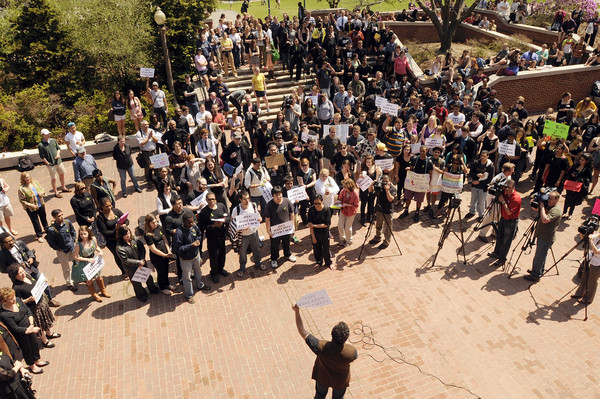
Hate crimes occur all over campuses on the U.S. and Trinity College is not the exception. Even though, on many campuses, measures have been taken to try to prevent these incidents from happening, they are not always successful. Trinity has had several incidents regarding hate crimes regardless of the attempts in trying to stop them. In 2005, minority students were targeted and discriminated, when derogatory terms where written on their dorms doors. After this incident took place, Trinity held open sessions to discuss this issue and held conversations regarding discrimination, however a few weeks after the incident took place everything was back to normal as if nothing had happened. In 2011, another hate crime took place at Trinity. On April 22nd, 2011 “a white male threw a cup of beer at a student of color’s vehicle and yelled racially charged statements to that same person” (Protesting Hate at Trinity College, 2011). After this incident took place, Trinity once again stood up for what they believed, by holding conversations and holding a race rally. Even though it is important and relieving to see that Trinity will try to do something when these acts take place, it is extremely sad to see that we wait for these incidents to happen in order for us to do something about them. It is important for Trinity to continue to take steps toward stopping these incidents from happening and to support and make minorities feel like they are part of the community. It is also vital that Trinity implements a zero-tolerance policy regarding hate crimes.
Hate Crimes at Trinity College http://hatecrimesattrinitycollege.wordpress.com/
One of the things that hate groups do in order to show their negative feelings toward minorities are hate speeches. A hate speech is defined by Kaplin as “verbal and written word, and symbolic acts, that convey grossly negative assessment of particular persons or groups based on their race, gender, ethnicity, religion, sexual orientation, or disability. It is limited to face-to-face confrontations or shouts from a crowd. It may appear on shirts, on posters, on classroom blackboards, on students bulletin boards” (pg. 3). Allowing hate speeches to occur on campuses “may lead perpetrators to more aggressive tactics, as they perceive an environment accepting of bigotry” (Downey & Stage 3).Even though hate speeches should not be allowed on campuses, laws exist that protect offenders from being punished in a way that minorities feel is fair. For instance, the First Amendment which states that “Congress shall make no law restricting the freedom of the press, freedom of speech, or the freedom of religion” protects these offenders from being punished. “Institutions must continually balance the rights of all individuals to be free from racial and other forms of harassment and the rights of members of the academic community to express themselves freely, regardless of the content of their expressions” (Downey & Stage, 6). This issue is a conflict between the First and Fourteenth amendments. While the first amendment gives everyone the freedom of speech, the Fourteenth Amendment states that “the states shall provide equal protection of all citizens under the law”. Because of this controversy, groups on campus may think it is okay for them to commit hate crimes, and they will continue to believe this as long as this is allowed.
Another possible reason why hate crimes continue to occur is because those who are targeted do not speak up. The most common reason why groups that are being targeted will not speak up is because they feel that the incident “was not serious or important” (Downey & Stage, 5). They also feel like they are not part of the community in the college/university they attend. When the incident in the Spring of 2011, regarding the minority that had a cup of beer thrown at him took place, many minorities spoke about their true feeling regarding these incidents. “Many women on campus and many gay and lesbian students on campus, feel that acts of sexual violence, misogyny and homophobia/heterosexism are routinely dismissed” ((Protesting Hate at Trinity College, 2011). The fact that targeted groups do not feel like a part of the community says something about the colleges/universities where these incidents are taking place. In order to try to stop these hate crimes from happening, it is important for targeted students to demand respect and actions from the administration when these events take place. If the targeted groups want to see change regarding hate crimes and the way they are treated, they must do their share in this issue.
Students standing up against hate crimes http://www.realhartford.org/2011/04/26/trinityprotest/
Even though the issue of hate crimes is a complex one, it is really important that the institution where this issue is taking place does everything that is in their power to try to get rid of it. The most important factor in solving these issues are the community standards. If the institution made it clear from the beginning to all applicants that those types of acts would not be tolerated, then maybe they would not occur. If the college upheld the standard of respect for everyone in the community to its highest, then these issues would be less likely to occur. In the student handbook for Trinity College, there is a section regarding sexual harassment and discrimination, but nowhere in that section does it say that discrimination is something that will not be tolerated. If Trinity wants everybody in the community to understand that hate crimes is something they are serious about, then they should talk about zero-tolerance towards these incidents somewhere in the student handbook.
Even though some measures have tried to be taken at Trinity, it has obviously not been enough. Alfonso Bui’s film Someplace I call Home documents the state of the Trinity community in 2005, when some students had derogatory terms written on their dorm room doors. Although the college did not tolerate the incidents that occurred in 2005 and in the Spring of 2011, it is sad to see that the only time when these issues were talked about were when these incidents took place. Trinity must make the time to talk about these kinds of issues and the ignorance that exists on our campus in order to make it a better place for everyone. Even though we have come a long way, there is still a long road ahead regarding discrimination in our campus.
Bibliography:
Downey, John P. “Hate Crimes and Violence on College and University Campuses.” 1999 40.1 (1999): 3-9. Print.
Trinity College (Hartford, Conn.), and Kingsbridge Productions. Some Place I Call Home. Trinity College, 2007. Film.
Trinity Student Handbook
“Protesting Hate at Trinity College, April 2011.” College Archives – Documents (2011): n. pag.
Racial differences are more complex than class, religion or ideological differences because race can be determined before ever having talked to a person. It is one of the only differences that is visible—skin color can be physically seen, but class differences or differences of opinion cannot be. Making students aware that they are different racially in any way can create a larger racial divide than may already exist. At Trinity College there is a visible divide between Minority and Non-minority students that is very visible. Orientation programs, fraternities, misconceptions, and a lack of understanding all contribute to the divide, but they can all be changed to be part of the solution.
Orientation programs are present at every college throughout the country, and many colleges offer orientation programs specifically for Minority students separate from the regular orientation. Many of these orientation programs were designed in the 1970s and 1980s and have seen little, if any, broad reforms. Marking students differences right from the start, especially the racial differences, creates a gap between students from the start of the school year. Some minorities feel that the orientation programs are somewhat insulting, because they assume that since they are a minority, they do not know how to perform tasks that White college students can do. Yale’s Minority orientation program, PROP, requires Minority students to spend a certain amount of logged hours working on writing, reading, and computer skills during the orientation. One Minority student from the suburbs who attended PROP named Victoria said, “It is a little bit insulting. But I think they mean well.”[1] The Yale Dean thinks that PROP is not as successful as is suggested and said, “Any program powerful enough in one week to alter the way people think about things would have to be one hell of a good program”[2]. Many school administrators have thought about revamping their programs, or getting rid of them all together. In 1997, Amherst College did away with a two-day orientation program for minority students that had been around since 1970. Tom Gerety, Amherst President at the time, said, “Amherst risks a serious misunderstanding of our principles by asking students to arrive on campus in the first instance on the basis of differences among them”[3].
In contrast there is also the group of people who claim the Minority Orientation Programs they participated in were vital to their development as a student, and that they could not imagine their college experience without them. The defenders of these programs explain that they create an environment for minority students to talk about issues that they would normally not get an opportunity to address in a general orientation session. Many administrators feel that Minority students would be uncomfortable to bringing upissues of race in a general orientation setting because, in most cases, a majority of the students they would be talking to would be White. At the Minority programs, they are surrounded by students who have more then likely experienced the points they are trying to make. Many Minority students feel uncomfortable talking about issues of diversity in a group of predominantly white students because white students cannot always see things from a minority’s perspective. Ryan Jean-Baptiste was a PROP counselor and his used this metaphor to describe what adding white students to the program, “If you are a professor and you are discussing your research, it would be a hindrance if you had somebody who had never heard of your field trying to understand what you are saying. That’s what it would be like.”[4] Ryan does make a good point, but how will White students learn of Minority issues if they are not involved in the conversations.
Another viewpoint is that the Orientation programs do not create segregation, but rather subtle misconceptions toward Minority students throughout campuses across the nation are the cause. For instance, security will stop a minority student at a school play or sporting event to make sure that they are actually a student. This is also a problem at Trinity due to our urban neighborhood surroundings. The Raether library staff has been known to do “random ID checks”[5] on minority students to make sure they are students. The strings of recent robberies on campus that are becoming more frequent and bold are not helping the racial climate. More and more students are jumping to conclusions when seeing a minority student they do not recognize walking towards them, or taking the same path, and the students who say they are not are more then likely lying.
Many solutions have been proposed to fix the schism in Trinity’s racial relationships. One has been to make PRIDE a part of the general orientation rather than a minority pre orientation. If PRIDE was a mandatory part of the normal Orientation it would force both minorities and white students to talk about social issues on campus, and how they would want their next four years at Trinity to be. In a circumstance like this, the minority students would feel more comfortable bringing up racial issues and the white students would become more aware of issues that have unfolded on campus. As freshmen on campus we are basically oblivious to racial incidents around us unless we learn about them in class, such as our seminar. If PRIDE was a part of Orientation, they could give a history of things like the protest last spring and the incidents that occurred further in past, so students do not make the same mistakes twice.
Trinity’s orientation is only one factor of the problem. The racial divide shapes the entire social scene at Trinity. There has been a lot of talk recently about the possibility of getting rid of the Fraternities and replacing them with theme houses. President Jones describes doing away with the Fraternity and sorority scene in his White Pages, which he sent to all students earlier this fall. President Jones makes the point that Trinity is one of only three NESCAC schools to still allow Greek organizations on campus, and that the list of schools that have dropped Greek organizations is a very prestigious one.[6] President Jones goes on to argue that the themes houses, that take the place of the on campus fraternities, will be less exclusive then the fraternities and bring more of the campus together. I don’t feel that getting rid of fraternities is the answer, but there are changes that can be made to Greek life that can help lessen the racial divide. The allure to Greek life at Trinity is the connections that it forms, whether is be to students at other colleges in the same organization, or the connections to potential employers who were in the same organization. When describing fraternities at Dartmouth college Ben O’Donnell said, “Fraternities bolster collegiate friendships more than any other social organization…That type of immersion—usually not at the expense of extra fraternal friendships—does create a special type of camaraderie.”[7] Theme houses would not create the same connection because they do not have the national recognition that Greek organizations do. Fraternity also has members in the sophomore, junior and senior classes. Themes house will most likely only be made up of the few students that actually live within the house. The cultural houses that do exist on campus now are barely relevant to the social scene at trinity and very few students actually attend the events they have.
I suggest that instead of adding theme house we add more fraternities and sororities. This way more minorities cannot only experience what it is like being a brother or sister of a Greek organization, but they will also benefit from the connection that are formed from being a member. When Jenny Stuber, author of Inside the College Gates: How Class and Culture Matter in Higher Education, visited my first year seminar to talk about her book; she said the through her research for her book she found that the students she talked to who were involved with Greek Life had a better college experience then those who did not.
Fraternities should not be looked at as part of the problem, but a vital tool that can be utilized to help bring about the solution. With more Fraternities on campus made up of both Minority and Non-minority students, they could be required to partner with different community service, and racial groups on campus, and hold certain number of joint events to make sure that they are helping close the divide. Greek life clearly holds a lot of influence on our campus, and its reach and resources would go to waste if Trinity decided to do away with them.
The Racial schism at Trinity is not going to disappear overnight. It will only be fixed through hard work and making the whole campus aware that there is even a problem. Through adjustments to the social climate and administration understanding the gap can begin to be lessened. There is a way to make Minority and Non-Minority students come together in harmony, and the PRIDE program, Greek Life, and more racial education need to be utilized correctly in order to reach our goals.
[1] Ben Gose, “Do Minority Orientations Encourage Segregation?,” The Chronicle of Higher Education, September 4, 1998, sec. Students, http://chronicle.com/article/Do-Minority-Orientations/2236/.
[5] Alfonso Bui, Some Place I Call Home (Kingsbridge Productions, 2007).
[6] James Jones Jr., To Reweave the Helices: Trinity’s DNA by Our Two-Hundredth Birthday, 2011, Trinity College Archives, http://digitalrepository.trincoll.edu/trinarchives/5.
[7] Ben O’donnell, “What’s Right With Fraternities,” The Chronicle of Higher Education, December 6, 2009, sec. Commentary, http://chronicle.com/article/Whats-Right-With-Fraternities/49331/.
Each consisting of a small group of incoming first-year students, a faculty advisor, and an upperclass mentor, First-Year seminars acquaint students with one another through the exploration of an academic topic. Seminars are meant to be “academically rigorous, limited in size, and designed to enhance the new student’s abilities in critical analysis, writing, discussion and debate, and research and information literacy.”[1. Trinity College First-Year Program, “Starting Out: The First-Year Seminar Program”, 2011, http://www.trincoll.edu/Academics/FYP/Starting/Documents/SOfirstyearseminar.pdf.]However, though this required course succeeds in helping students hone the necessary skills to survive the rigor of a college curriculum, it does little to introduce new students to their role as active members of the Trinity community. Also, few First-Year seminar advisors facilitate dialogue that explores first-year students’ perceptions of race and social class. Because of these shortcomings, students lack knowledge about how to bridge racial and socioeconomic gaps, as well as the kind of responsible attitude that would motivate a student to care about improving student interactions in this way. Such is the cause of issues involving race and social class among Trinity students. In order to reach the level of acceptance and understanding that must exist in an ideal campus environment, first-year seminars must be re-vamped to include components that actively engage them with the campus community. Additionally, they must collaborate with other seminars to learn how to constructively discuss the issues of racism and classism that undoubtedly plague our campus.
Though topics studied can be as complex as “Modern Classical Liberalism” or as casual as “Beatles and the 60’s,” few have the objective of exploring their topic in the context of the campus community. Of the 36 seminars offered in the Fall 2011 semester, only two seminars—“Color and Money” and “Dangerous Decisions or Cheerful Choices”—explicitly mention using situations specific to Trinity as a framework or actively collecting data from students to enhance their research. Additionally, a third—“We Don’t Need Your Education”—requires students to study student movements in preparation for a culminating activity where individuals must conduct their own campus demonstration[1. Trinity College, “Course Schedule”, Fall 2011, http://internet2.trincoll.edu/ptools/CourseListing.aspx.] In his recent “white paper,” President James F. Jones Jr. expresses his desire for every Trinity student to “recognize the intrinsic merits of the diversity of humankind in the broadest possible connotations of the word” after four years.[1. Jones, James F. Jr., “To Reweave the Helices: Trinity’s DNA by Our Two-Hundredth Birthday” , 2011. College Archives – Documents. Paper 5. http://digitalrepository.trincoll.edu/trinarchives/5, pg 7.] The small First-Year Seminar groups are meant to establish an environment within which students can comfortably challenge or embrace an array of new ideas. It is here that students should begin to discover what it means to be the open-minded, active community members that Jones envisions. However, with only three of 36 seminars broadening their focus to the college and its inner-workings, many students are missing out on opportunities that could engage them with the campus in meaningful ways. Additionally, without a basic understanding of how to respectfully acknowledge different cultural and socioeconomic perspectives, students cannot interact with their peers in ways that contribute to the development of an inclusive student body.
Despite the lack of many seminars that introduce students to the realities of campus culture, a complete reconstruction of each seminar’s curriculum is not necessary. Rather, the addition of a component that focuses strictly on each topic’s connection to Trinity and relevant campus issues such as race and social class should be considered. For example, seminars like “Global Challenges of the 21st Century” or “T-Lab: Technology for International Development” that focus on global issues could also consider studying how certain international issues compare to the issues that members of different cultures in the United States face. Students can also draw parallels or make distinctions between the areas they studied and those that exist in the city of Hartford or in their own hometowns. Students could even survey students around campus and ask them to do the same. In this way, students in these seminars would be actively engaging with campus, as well as enhancing their study of their topics by using students as first-hand resources. Similarly, role-playing seminars like “Athens and Rome” and “Religion, Politics, and Power” could enrich their knowledge by exploring what vestiges of the historical eras they study still exist today. Between the amount of United States citizens and international students who attend Trinity, a rich discussion of how political, social, intellectual, cultural, and economic components of those areas might have influenced other cultures to which Trinity students might belong could result.
In addition to promoting more peer-to-peer interaction, seminar advisors could also promote an intrapersonal approach to bettering the Trinity community. President Jones follows his wish to nurture an attitude of acceptance amongst students with an expressed desire for each student to fulfill his or her duty as “an integral, contributing member of a small, tightly-knit college community founded upon shared meritocratic values”.[1. Jones Jr., 8.] This desire necessitates the addition of a component that teaches students what it means to be an active member of the campus community. Such a program proves to be successful at the University of Washington, where every first-year student is required to take “General Studies 199: The Campus Community.” Much like Trinity’s first-year seminars, first-year students participate in discussions, on-campus and off-campus projects and activities that assist them in their transition to college. However, this course exceeds our program in that it leads students in “beginning to understand their role as learners within the larger university, and how that role compares with their previous educational experiences, and understanding the value of being an active participant in the campus community and beyond”[1. University of Washington First Year Programs, “General Studies 199: The University Community Course Materials” (University of Washington, Autumn 2010), http://fyp.washington.edu/figs/downloads/coursepack.pdf.]Activities include reflecting upon one’s personal goals for academic and social success and completing a project that involves exploring a Seattle neighborhood and comparing it to one’s own racial and socioeconomic experience. Briefly stepping away from the seminar topic to engage students in curricular activities that mirror that of the University of Washington’s course could effectively introduce students to the idea of being more than just another face on Trinity’s campus.
The University of Washington's required General Studies 199 course promotes cross-cultural interaction, as well as the duty of the individual as part of the campus community (Source: University of Washington)
The responsibility of introducing students to the idea of social accountability on campus rests primarily on each seminar’s faculty advisor. However, the fact that each faculty member is at liberty to decide upon his or her own seminar topic could mean that sensitive topics like race and social class might be easily avoided if it is not regarded as a priority by the majority of faculty members. As it stands, though the majority of faculty members desire a cohesive campus, the amount of passion they have towards the subject differs. Thus, their resulting approaches differ, as well. While some side with students in favor of an active response, others have a fear of overreacting. For instance, in the wake of an incident that occurred in Spring 2011, where a White student allegedly threw a beer can and shouted racial slurs at a minority student, Professor Samuel Kassow highlights a tendency for faculty to label students as unruly and close-minded and voiced his preference for a more careful, reflective approach. “Careful policy, based on facts, will achieve much more than jeremiads about racism or frog-marches into courses about “diversity,” Kassow wrote. “We need to look at our peer colleges and carefully assemble data”.[1. Kassow, Samuel. “Halt! Let’s Understand This FIRST! by Professor Kassow.” 4legs. 29 Apr 2011.http://www.4legs.org/2011/04/halt-lets-understand-this-first-by-professor-kassow/] In contrast, Professor David Cruz-Uribe suggested action as an alternative to Trinity’s usual research-driven response strategy. Cruz-Uribe wrote, “I believe that Professor Kassow’s assertion that we need further studies to determine what “factors contribute to tension and alienation” only contributes to the problem…I believe that the college needs to confront it head on”[1. Cruz-Uribe, David, SFO. “BASTA! Enough!” 4legs. 2 May 2011. http://www.4legs.org/2011/05/basta-enough/] In order to effectively address issues of race and social class on campus, there needs to be shared sentiment in regards to the urgency of these issues, as well as a consensus about the measures that should be taken to address them. At Amherst College, for instance, the student body consisted of 40% students of color and 10% international students in 2010—the same year the institution was ranked third for “Economic Diversity Among Top-Ranked Schools: Liberal Arts Colleges” in 2010 by U.S. News and World Report. In addition to re-vamping recruitment methods, instituting a need-blind/ no-loan admissions policy, and broadening their standards for merit aid, researchers contribute Amherst’s success in this regard to establishing institutional support.[1. Rubin, R. B. “Recruiting, Redefining, and Recommitting: The Quest to Increase Socioeconomic Diversity at Amherst College.” Equity & Excellence in Education v. 44 no. 4 (October 2011) p. 512-31] Similarly, in order to enhance First-Year seminars in a way that promotes diversity and community effectively, all faculty members should speak often and openly about various approaches until there is a unified stance. This will only strengthen the initiative and increase its likelihood of resonating with both incoming and returning students alike.
Such a unified perspective among the faculty can be exemplified for first-year students by way of colloquial activities between seminars. According to a 2008 student survey study conducted at the University of California, students’ academic disciplines can shape their perceptions of race and social class even moreso than ethnicity, socio-economic standing, or political affiliation.[1. Peter Schmidt, “Much Research on Campus Diversity Suffers From Being Only Skin Deep, New Studies Suggest,” The Chronicle of Higher Education, April 13, 2010, sec. Students, http://chronicle.com/article/Much-Research-on-Campus/65051/.] Therefore, it would be beneficial for about three or four seminars from multiple disciplines to form “clusters” on a bi-monthly basis, wherein they would share what they have learned about their topic through the lens of the Trinity-specific component. Students would also share what they have learned in regards to the component that would focus on the self and the campus community. It is here, in these “clusters,” that dialogue centering around race, class, gender roles, and other sensitive topics that require genuine, constructive discourse would be discussed. In his “white paper,” President Jones proposes the creation of a reading list of fifteen or so works, including classics like Candide, To Kill a Mockingbird,and “The Book of Exodus.” Seminars, which would be newly regarded as Understandings in Common, would read one book per week in preparation for faculty-facilitated discussions as a way of “dealing with ethical dilemmas concomitant with our students’ experiences at Trinity” and to explore “the theoretical and the actual, as ethics and postmodern events in real time coincide and collide”[2. Jones Jr., 19-20.] Such a suggestion aligns with the idea that students at Trinity are already adequately stimulated to debate current events using theory as a framework for the stances they choose. However, relating these events with students’ experiences at Trinity using literature as a springboard could add dimension to the kind of critical thinking that is already taking place in first-year seminars. The concept of Understandings in Common would undoubtedly work just as in “clusters” just as effectively as it would in individual seminars, since a variety of different perspectives often provides access to more modes of thinking than expected.
Exposure to a multitude of varying views and opinions is one of the most effective ways to resolve the ignorance that motivates issues related to race and social class. As a program that is known to orient incoming first-year students to college, first-year seminar advisors should not be reluctant to introduce students to the specific issues that are relevant to Trinity and the appropriate resources to combat them. Such resources exceed physical locations, such as the Counselor’s office or the Office of Multicultural Affairs. Rather, they extend to the tools of communication and active listening, as well as the potentially groundbreaking concept of “self” as it relates to campus community and culture. By instituting campus-wide support in the initiative to teach students how to access these tools as early as the First-Year seminar, Trinity could be well on its own way to meeting its goal of becoming an actively inclusive campus.
Race is the neglected problem of the twenty-first century. In our time, the subject of race is one that is kept hush for as long as possible until racially-charged incidents break the silence. When these particular incidents occur the first action that people take is that they choose sides. This is because even in the years after the Civil Rights Movement race is still a contested topic among people. So much so that conversation on the topic can be a dangerous thing for the relationship you have with others. It is such a volatile topic that in certain environments people would rather keep their views silent than to possibly conflict with the opinions of other people. We regularly attempt to “tolerate” our differences between people rather than to understand, and this practice has permeated through every facet of America society. Most importantly, this is how race has affected colleges in the United States like Trinity College. At Trinity College, race at many different times is an unspoken subject because Trinity is not immune to the affect the discussion of race has on communities. Trinity campus’s mood, I believe, is tied to how students are mindful of each other and their differences. The campus is a different place when specific incidents occur and a lot of harm is done than good as a result. Race an issue that is not publicly expressed at Trinity, and thus awareness is not an available option for students. In order to solve this problem, Trinity College will have to foster discussions in the form of student run programs in order to help students truly understand each other.
Collectively, humankind is not equal in their capabilities and gifts. However, all people are equally gifted at noticing the differences they have from one another. Accents, height, eye color, hair color and size are what people pick up on these things automatically almost as if on instinct. These characteristics that make up the image of a person have all been used at one point or another in order to separate people from each other. However, all these things that people look for are not as noticeable to people as skin color and race. This is the ultimate separator, an identifying system that humans themselves created, again in order to broadcast the differences that people have with one another. Back then, race was the ultimate separator because people used race to either overtly or discreetly explain why they felt that they were superior to those who were not like them. However, as time progressed, change arose and the term racism was introduced to the world and those practices of old were cast away in order to form a more accepting society. Since the word racism and everything it represents was defined and revealed to the world, governments in countries like America have tried to pull away from their pasts. They attempt this by setting the foundation to establish to a “Post-Racial Society” so that currently and in the future, the past will be behind us and out of memory. All to create a “color-blind society” where everyone’s capabilities matter more than race, where people can “co-exist.” In today’s day and age that involves making the topic of race the most sensitive of all. This goal to essentially ignore race has people trying to achieve a silence on the topic. This is because conflict will occur no matter what your views are and to be called a racist in the twenty-first century is considered one of the worse insults to a person’s character. Thus, people try to always try to present the image, specifically in this country, of an open, accepting American. “Race relations are complex and difficult, yet it seems in the many years since the civil rights movement, image has outweighed substance. People have ceased being real with themselves and others.” [1. O’conner, Andrew. “LexisNexis® Academic & Library Solutions.” University Wire. column. 27 Mar. 2008. Web. 1 Dec. 2011.] Everyone repeats this practice far and wide, who are afraid under normal circumstances to express themselves. It starts with your family, but this development does not take root really until teenagers start to gain their own independence, and that is the time when many decide to attend colleges.
College for many is the start of a person’s independent life where they can first function on their own in an environment that attempts to mirror the diversity, opportunity and experiences of the world. However, although college is a place of supposed independence, it is a school with self-made rules that students operate by. There are a few universal rules for school at any level, but the most important thing in school is for people to like you. Strong opinions on subjects are admirable among people but on topics such as race can cause people to feel alienated from your beliefs. This is the first reason why I believe that very controversial topics on the level that race is put on are silenced. Not to conform, but to establish relationships because unless promoted by their classes people won’t broadcast what they “truly” think about the idea of race. Second, I believe that people of all races are not comfortable about talking about race among others. Third, for the most part I believe that before college, people’s knowledge of the question of race has its same message repeated year by year. If my own experiences were like other high school students in particular, it would be an annual time commitment of the same material, the PBS VHS tape Eyes On The Prize and after two years I knew everything that would be presented to me on that day. For me there was no continuation, so there was no build-up and it would be up to myself to build up on my knowledge and experiences. Lastly, I believe that people on the campus of Trinity campus are unaware of each other and the beliefs that they have. There is a silent problem on Trinity campus: Students don’t talk about race. We wait and wait for the inevitable to occur and then only when it does do the routine reactions occur among the people.
Four years ago in 2007, before I was a student at Trinity College numerous racial events occurred on campus. These events elicited loud responses from a variety and mix of students who opposed the idea that these events were still taking place. In particular, during the junior year of a student named Alfonso Bui, a student of color at Trinity had an white erase board she kept on her door defaced with racial slurs. Alfonso Bui decided to make a full- length documentary on the perceptions of the incident and the reactions to said event. In 2007, after students heard about the incident regarding the whiteboard, many students including those whose board was defaced, organized a group of students and teachers. Their goal was to broadcast their views and publicly present to the campus that they were against the actions that had taken place. In fact, the students who were participating in the event calmly “stormed” Mather Hall and sat with someone they didn’t know, someone who wasn’t the same race, and someone who was different. They were tired of the segregation that happens at Trinity, the separation that the students feel from each other and to forge new relationships and foster a more unified campus aware and against the displays of racial insensitivity that can occur at Trinity.
A Trinity College professor explaining the purpose of Mather demonstration in 2007
Among all colleges, Trinity College is not at all the sole location between colleges where racist activity occurs. It is in fact, it is one of many across the United States, because negative-racial events and separation occurs within all colleges including those with such popular names like Harvard and Duke. Such was the case in 2009, at the prestigious and well-known Harvard University. That year the Chinese Student Association at the college hosted a themed-party after which they were subjected to racial insensitivity. At this particular party students who attended were given the freedom to write whatever they wished on tape and paper posted around the area the party was held. Soon after, organization and its students realized that students abused this freedom. Writing claims about Chinese people meant to arise emotion, “Chinese people perform genocide . . . Chinese people suck.” [2. Hardwick, Spencer. “LexisNexis® Academic & Library Solutions.” University Wire. Article. 11 Mar. 2009. Web. 6 Dec. 2011.] People do many things when they believe that they will not be caught. This was just one visible part of the race-related events that happen at colleges, however highly visible at all colleges is the separation that students of different ethic decedent participate in. At Duke, their students followed this unspoken rule the same way many students at Trinity do. However, students at Duke acknowledged the separation students who consider themselves “different” from another in their social lives at colleges. The image of a diverse and integrated campus is one that is a false image. “On the surface, we appear to be fulfilling King’s ideal.” [3. Oshilaja, Dayo. “LexisNexis® Academic & Library Solutions.” University Wire. Article. 27 Aug. 2009. Web. 6 Dec. 2011.] The idea that all people can interact and live together socially, however at college’s where the first priority are numbers we fall short of Martin Luther King’s true goal. He believed that as members of the human race, we cannot let our differences be the reason we promote segregation and its forms. Colleges need to become more diverse, not in terms of statistics but in the interactions between students. The only way that can occur is for people to talk with each other, we cannot be silent to what we observe. Problems must be made public and then it is up to a united community to begin the always arduous task of dealing with such problems.
In the wake of the act at Trinity College in 2007, apart from the demonstration in Mather, Trinity took a very bold step and hosted an open forum for discussion on how people felt about the events that occurred at Trinity. There were many constructive comments where students called for a change in what they saw at the college. They called out each other to call for change, for organizations to change and asked what the administration was going to do, as well as what the students should do in order to keep the discussion alive and relevant at Trinity. In the end however, after this was all said and done, the end of the year rolled along and the events of the past year were forgotten as students took their summer break away from school. The events of 2007 were put aside and Trinity was back at square one in a new year. This is what keeps Trinity so vulnerable and separated when it comes to incidents regarding race: There is no continuation. Many things are made public, but the next steps are not taken.
For a problem as complex as race, I believe that the way to make race a less hostile subject is to discuss it openly. I believe race is a high-profile topic among not only students but everyone is because people are so uncomfortable discussing their relationship with race. My initial solution to this problem is simple: to have a discussion similar to the format of the forum held in 2007. However, there are many variables to make this proposal relevant and useful for Trinity College. Primarily, I believe that if these discussions were to happen there would have to be more than one because the only way that people learn and change is through habit. However, I know that it will take time before a habit settles in and many students can open up about race. In Alfonso Bui’s film, Some Place I Call Home, other students realized this as well. Stephanie Irizarry had this to say about the symbolic movement that took place in 2007.
“I feel the symbolic protest was effective to a certain extent which it called attention and that’s what you need, you need it to be public . . . okay it happened one day but did it continue? The next day in Mather the tables were still separated and the same concepts came about, the division was still there.” [4. Bui, Alfonso, and Kingsbridge Productions Video. Some Place I Call Home. Hartford, Conneticut: Kingsbridge Productions, 2007. Print. 13:01- 13:30.]
These meetings that I am proposing at campus should be smaller that the original 2007 forum but should still be mixed among race, class, gender, sexual orientation. This is so that there is a range of topics to discuss that will have a plethora of opinions. The opinions in their discussions will be broad but be focused on the effect that race has had on their lives. This prompt comes from the film, Skin Deep, wherecollege students were put together in a room and just talked about race in their lives, revealing and bearing all to their peers to digest. Should this process be mimicked, I believe that groups should stay true to the film and remain student-run because students are willing to reveal more to people their age. However, in order to keep up the process of keeping these meetings a habit I believe the SGA should be responsible in order to organize groups and meetings at times during the year. As I mentioned many times I believe that one meeting is not enough, but also there should be many available groups that people would be able to sign up for online to a certain limited amount of people. These groups in the sense of signing up in order to ease students fears, should be completely voluntary in order that these groups obtain people who are willing to speak with each other. That all being said a proper incentive to lure students to these meetings would be to give an additional quarter or half credit for attending around six of the total meetings which I believe should be held if possible 22 times during the school year on Saturdays in the early afternoon. I would give this credit as incentive without asking for participation because regardless of what a person does in these meetings they are listening to the opinions of others and what humans do best is unconsciously picking up and remembered what they are exposed to. I believe that just hearing what people have to say will begin to affect those who are unwilling to share. However, students must be willing because in order to change anything because most social problems only affect students. If students agreed to participate in these “discussions” Trinity would benefit, not immediately but its effects would slowly begin to affect the campus.
I believe that these meetings would present an opportunity to Trinity that it has been lacking. These student mediated discussions could bring a community together on issues creating a community that students in years before have hoped for and to provide an excellent and unified place to learn for those future students. Sam Zivin, class of 2007, was one such student who wanted events like the forum to occur more and for students to get more involved in their school.
“ . . . I think we need to keep this going so perhaps this is a fortuitous event (referring to the racial incident in 2007) and that we are sweeping the issues from under the carpeting . . . we need to talk about them and continue to talk about them . . . we can stop the ignorance.” [5. Bui, Alfonso, and Kingsbridge Productions Video. Some Place I Call Home. Hartford, Conneticut: Kingsbridge Productions, 2007. Print. 28:23- 29:14]
These meetings about race have been implemented at other colleges where students feel that their understanding has been broadened. In the case of California State, near the conclusion of every year, a summit is sponsored so that students can talk to each other about race. Colleges with similar programs like California State realized that unlike strict punishment and rules, discussion is the only way to really change the frequency of events of racial insensitivity. Although they restrict groups by their racial ethnicity they realize that these discussions are only are helped by the “risk you are willing to take.” [6. Cevallos, Giovanny. “LexisNexis® Academic & Library Solutions.” University Wire. Article. 5 May 2009. Web. 6 Dec. 2011.] Some of the greatest movements were started by individuals who were willing to allow people to scrutinize them. In the same respect, change will only happen when people are aware that their views are not the only in the world, that allowing oneself to be subject to change is a strength that can change others.
The power to change the way race is treated at Trinity College rests heavily with the students. It will take time, it will take effort, it will force people to eventually venture well past what they are comfortable with. I know as well that even with these meetings it will not solve the problems or prevent racial incidences at Trinity, but it will start a process. Although these incidences happen at the will of individuals, I do know that a community united can do great things, they can tackle a problem together and in harmony without accusations or the ignorance that peers have another’s beliefs. There is no end all cure for the problem we have with racial interactions, and there will never be one. I can only hope that students exposure to what their peers think will make everyone better, understanding and thoughtful students. It will bring Trinity closer and it will I hope end the separation that students report as a norm here at Trinity College.
Trinity College in Hartford, Connecticut (Source: Tommy Rivera, 2011)Trinity College—the community, the work environment, and the home of our faculty members, professors, and students—has been long affected by issues regarding violence, hate, bigotry, racism, sexism, sexual abuse, sexual orientation, and social class. What is the main issue here at Trinity College? After acclimating to Trinity’s atmosphere for the past three months, my eyes—the perception of a college freshman— see racism as the main issue on campus. In order to abolish acts of racism, the P.R.I.D.E program needs more resources, more publicity, and more non-color students’ participation; moreover, all students at Trinity College need to participate in a P.R.I.D.E type program. Trinity College Students, Faculty, and Administrators Protest Against Racism (Source: Courant.com)The “Color and Money” freshmen seminar has recently conducted interviews from students here at Trinity College. We interviewed fifteen sophomores—from different racial backgrounds and social classes—from the Class of 2014. At the interviews, we asked these students questions about their perceptions of race and social class at Trinity College. After finding trends and writing a six page paper of race and social class at Trinity College, I have discovered that race plays a much bigger role here on campus than social class. Students here at Trinity are equally conscious of their social class. However, race at Trinity College has a different meaning from its students. Trinity College students have experienced many different forms of racism. Acts of racism in educational institutions are controversial. Racism does not only occur in colleges, but it is also one of the main global issues. However, acts of racism are very common in small, prestigious college environments like Trinity College. P.R.I.D.E at Trinity College (Source: fbcdn.net)Trinity College has a program for ALL first-year students called P.R.I.D.E (Promoting Respect for Inclusive Diversity in Education). “P.R.I.D.E is a program organized by the office of Multicultural Affairs aimed at supporting students from diverse backgrounds and encouraging interaction among all first-year students at Trinity College. P.R.I.D.E is a yearlong initiative, incorporating a mix of programming and outreach from the P.R.I.D.E leaders to build a community that is helpful to all first-year students” (The P.R.I.D.E Pages pamphlet). Faculty members, professors, and students hope that this program would prevent segregation and hope that students of all races would get along. P.R.I.D.E came to existence because social life at Trinity College began to pale. Moreover, issues of gender inequality and power inequality are also what drove to create this program (Spurlock-Evans). The P.R.I.D.E program is not responsible for racial tension here at Trinity College. P.R.I.D.E students are not the cause of acts of racisms on campus. Old and recent videos, newspaper, and articles where Caucasian students throw a beer bottle at a student of color, profanity and scribbles all over a student of color’s door, and theme parties where there is exclusion did not happen because of P.R.I.D.E. However, the problem with P.R.I.D.E is that it is not promoted enough to ALL first-year students here at Trinity College. As a result, only the students of color partake in this program without the participation of most Caucasian students due to the lack of publicity. Since the majority of people who participate in P.R.I.D.E are color students, it forces these color students to segregate themselves from Caucasian students before they start their first year at Trinity College. P.R.I.D.E starts on the Sunday afternoon before school year begins. There are not that many Caucasian students in P.R.I.D.E which is an issue because these programs will therefore only help students of color create their own group among themselves. Students who participate in P.R.I.D.E tend to only hang out with other students who have also participated in P.R.I.D.E. Since color students are the main ones that participate in this program, then they are only going to create bonds and friendships between themselves—with hardly any Caucasian students in the picture. Diversity: Different Color People United as One (Source: 123rf.com)
In Peter Schmidt’s “Diversity-Program Administrators Fear Challenges to Their Spending” in the Chronicles of Higher Education, it talks about diversity programs at University of Colorado at Boulder. There was a problem with managing expenditures on these programs. The article states that “the state’s flagship university had little idea how much money it spends promoting diversity and poorly manages such expenditures. University officials denied that they were spending any such money wastefully, but two Republican state representatives in Colorado have cited the report in calling for the state auditor to thoroughly examine the university’s diversity expenditures (Schmidt 1). At the University of Colorado at Boulder, money apparently is not used wisely to better create diversity on their campus. Moreover, the money that is not put into good use to better help the campus climate is a waste of resource, and it will not help fight acts of racism in college. Damon A. Williams, the University of Connecticut’s assistant vice provost for multicultural and international affairs, states, “I think many institutions are greatly at risk … Colleges have only in the past few years begun documenting the benefits of diversity … and while they generally can make good arguments that the diversity programs serve a valuable purpose, they have not done enough to track the money spent on such efforts and their results” (Schmidt 1). This connects to issue I brought forth with P.R.I.D.E in the beginning. The lack of publicity is not enough to get EVERYONE involved. This diversity program does serve a valuable purpose in our educational community. However, I feel that in order to prevent acts of racism, everyone—white and color students—needs to be involved in programs like P.R.I.D.E. Division Between Different Color People (Source: weaverdevonedm310.blogspot.com) In Ben Gose’s “Do Minority Orientations Encourage Segregation?” in the Chronicles of Higher Education, it talks about minority programs in public and private institutions like Yale University, Brown University, Williams College, Pennsylvania State University, Central Michigan University, and Tufts University. The article talks about how many colleges—like the ones mention previously—have separate programs for minority students, and how these programs “have become fairly common, although they differ widely in scope” from college to college (Gose 1). Trinity College also follows these colleges’ program structure. Its P.R.I.D.E program is targeted for minorities in order to help them transition to college. I agree with the article when it states, “Critics wonder if there’s good reason to continue the programs at all. Students and professors on some campuses complain that the programs are highly politicized, and create immediate divisions between white and minority freshmen” (Gose 1). I believe that in order to prevent these divisions between white and color students, everyone needs to be involved in the same program. All Trinity College students need to participate in P.R.I.D.E in order to be equally aware of the importance of race, culture, and diversity. Trinity College Home of all Bantams! (Source: Tommy Rivera, 2011) Money is a great resource that, if used wisely, can better promote P.R.I.D.E in many creative, interesting, and fun ways. Karla Spurlock-Evans, the Dean of Multicultural Affairs, states that “there are gaps in the orientation programs.” If given more resources, those gaps would be filled with more activities. Moreover, I believe that the extra resource would also help better expose P.R.I.D.E to ALL incoming students. Here is my solution: P.R.I.D.E has to have an even stronger structure, if given the extra resource. With the extra resource, P.R.I.D.E will have more activities to occupy all those unfilled gaps, and it will educate the participants even more about diversity and racism. Moreover, all incoming students at Trinity need to participate in a P.R.I.D.E type program to educate themselves and learn about another student’s culture. It will help open and widen white and color students’ perspectives about each other. This will hopefully diminish acts of racism on campus because all students will understand inclusive diversity. This P.R.I.D.E type program should not be voluntary to only those who are interested. I believe that this type of program should be mandatory. It needs to be a general educational requirement because race and diversity are very important essentials to discuss and learn in college, and it will highly benefit our students beyond college after participating in a P.R.I.D.E type program. Also, during orientation week, we need to combine aspects from the P.R.I.D.E program to make orientation more beneficial for all students. Combining diversity aspects during orientation will show all students that racism is a very important topic that needs to be taken seriously. More resources in orientation can help beat fraternities on campus and help get rid of acts of racism. Hopefully in the future, you will see both color and white students’ faces on the P.R.I.D.E Pages pamphlets that show everyone promoting, respecting, and diversifying pride at Trinity College.
Bibliography:
1.Gose, Ben. “Do Minority Orientations Encourage Segregation?” The Chronicle of Higher Education, September 4, 1998, sec. Students.
2.Office of Multicultural Affairs, The P.R.I.D.E. Pages. Volume 1. Issue 1. Fall 2010.
3.Schmidt, Peter, “Diversity-Program Administrators Fear Challenges to Their Spending,” The Chronicle of Higher Education, February 2, 2007, Volume 53, Issue 22 edition, sec. Archives : Government & Politics.
4.Spurlock-Evans, Karla, P.R.I.D.E information session, Fall 2011.
About the Author: Tommy Rivera is a Hispanic male from Chicago, Illinois. He is a Posse Scholar who will graduate in 2015. He is in the first-year seminar, “Color and Money” at Trinity College.