Interviewed by Bella Blumenschein ’21
BB: Can you start by telling me what you’ve done after Trinity in terms of your career?
MK: After Trinity I went to a rabbinical school to become a Rabbi and had a career for 36 years as a congregational Rabbi and for one year I got my CPES and served as a Chaplin at a hospital, and then I retired. I served a number of congregations, my first was in Albany. I spent time in Bowie in Maryland and Massapequa in Long Island. The life of a Rabbi is very interesting, I enjoy doing what I do, serving members of the congregation and preaching. It is very satisfying.
BB: How did your studies in government affect your life?
MK: I took courses in political science and public administration, which gave me certain thoughts and ideas that I could carry into my profession. In particular, one of the concepts I remember reading about was the idea that in public administration one is meant to serve the client and to make sure that it is not just routine in whatever you are doing. I’ve been able to connect serving the client to ideas I’ve learned in rabbinical school. Have you heard of Martin Buber? He was a Jewish philosopher and his philosophy was based on “I and Thou” that certain relationships are closer than others. This “I and Thou” relationship has some element of the divine when you reach out to other people and create a relationship. It is something I started learning in my studies in government.
BB: What would you say is your biggest accomplishments since you left Trinity?
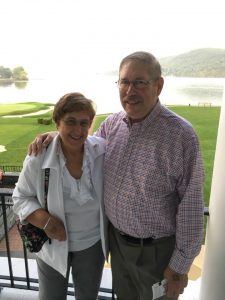
MK: My biggest accomplishment was my career. As a Rabbi, you get involved both in your congregation and in the community as well. I was always involved in both local issues and issues that affected this country and Israel. I was a member of J Street, an organization that supports the two state solution. I was also active in an organization called ARZA, which is the Association of Reform Zionists of America; which concerns the idea of reforming communities and duties in Israel.
BB: What was something you learned at Trinity that helped in your career in general?
MK: First of all, getting a liberal arts education was incredibly helpful, and getting a good overall education and having good study habits. I developed better learning habits. I enjoyed my studies, majored in what was called government, now is political science. I’ve always been interested in government and politics. I originally wanted to become a lawyer but I decided that my personality and character was more of a fit for that of a Rabbi.
BB: Is there anything you’d like Trinity to know about you?
MK: I’ve had a good life. I’ve been happily married for 48 years. I have two children. And again, I am proud of, and have enjoyed, my career.
BB: Is there anything else you’d like to share?
MK: I am retired now, so in the last several years I’ve been volunteer teaching older adults, in an organization called the Osher Lifelong Learning Institute, in various synagogues. I just wrote an article about what I’ve been doing in my retirement. I have also been volunteering in a food pantry. It’s good. I don’t do it every day but I enjoy it and I’m committed to it and it’s an important responsibility.