Interviewed by Emily McLeod ’19
EM: To start off, what have you done since leaving Trinity?
DH: I immediately went to graduate school at The London School of Economics to pursue a degree in Politics and Government of the European Union. I thought I wanted to get into the political world and I didn’t know a lot about international politics, so figured I’d give that a shot. Obama won the election while I was an undergrad and David Cameron successfully borrowed parts of Obama’s political strategy to gain power in the UK. Cameron started leveraging social media to connect with his audience base and engage people, which we see being done so often now. It was eye opening for me to see the ways in which social media was influencing politics and I realized this would be a continuing trend in the future. So I took a break from my immediate focus on politics and started applying to tech companies. I ended up getting a sales role with Google at their headquarters in Mountain View, California. I thought, let’s give this California thing a shot. And I ended up spending three years with Google. I later moved to a company called Glassdoor which is a job review site; I’m not sure if you’ve heard of it.
EM: I think I’ve heard of it before.
DH: It’s awesome for interviews. I still use it all the time; it’s essentially a jobsite for companies with anonymous feedback from employees.I had done sales and marketing roles in the past, and Glassdoor reached out with this opportunity to head their case study program which was essentially about finding all the people who had found the most success with our company and asking to interview them and create case studies on their success. I thought, this sounds amazing, so I set up that program for them. Because it was a startup, it was really fun to get into the video and branding side of things. Later on, LinkedIn reached out to me for the role I have now. LinkedIn liked what I did at Glassdoor and wanted me to do the same thing at their company. I’ve been with them for a little over two years now, and I just moved to New York from San Francisco.
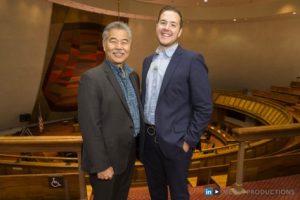
EM: Wow, what a story! Do you like being in New York?
DH: It’s my third week and I’m like Buddy the Elf just walking around this place annoyingly happy. I like that everything is open so late; there’s always so much to do.
EM: That’s awesome. I’m wondering if there’s anything you learned at Trinity that has really helped you with your career.
DH: Trinity opened my eyes to the idea that there’s a whole big world out there; I learned to understand different personalities and audiences. It’s been a very big part of successful marketing and understanding what larger ideas bring people together. Understanding people from different backgrounds and studying abroad totally got me out of my comfort zone. In terms of specifics, there were a few classes that stood out. Stephanie Chambers — I pretty much majored in Stephanie Chambers classes. Urban Politics opened my eyes to the disadvantages people face in different locations, things that you can easily take for granted like access to healthcare systems and grocery stores. Professor Findly, who focused on Buddhism and religion, exposed me to new cultures and new ways of thinking. I also remember Gail Woldu, who taught music and was one of the toughest professors I had. When I got a good grade from her, I thought I was the smartest person on the planet.
EM: I’ve had friends take some of those tough music classes. I’ve always heard it can be really hard, like expecting a breeze and getting hit by a storm.
DH: Oh my. I can clearly remember the first day of the class. She starts every class with a sample of the week in popular music. On the first day, she played Elvis Presley’s “Hound Dog” followed by Frank Sinatra’s “All or Nothing”. Then she played Da Brat’s “All My B*tches”, and I thought how do I react to this? But then she talked all about historical context and understanding music more deeply, considering where it comes from and what the influences are.
EM: It’s interesting to hear you talk about your classes because I’m learning many of the same things in Sustainable Urban Development. It’s super cool that in Liberal Arts schools, even across different disciplines and majors, we’re all learning about the same things. So, one of the big questions: what is your proudest accomplishment since graduating from Trinity?
DH: I recently did a big video case study project with the state government of Hawaii. Everybody knows Hawaii as a tropical beach place, but their businesses struggle to function outside of tourism. Now, the State Government is trying to completely revamp how things are done. They are trying to come out of the stone age where everything is on paper including payroll, which is wasting so many trees and is so delayed and expensive. They’re trying to digitize everything securely — from payroll to taxes, you name it — and they have to attract the right people who have those skills to do that. Unfortunately, Hawaii doesn’t have a lot of people who have the software engineering skills and backgrounds needed for making these changes at a state level. They started by using LinkedIn to recruit people from the mainland and other parts of the world to come to the Hawaiian Islands. It was a pretty clever campaign. They targeted software engineers in New York and the Midwest in December, January, and February and said “hey, would you rather be doing your job in Hawaii?” I was able to interview the Governor of Hawaii and members of his team who successfully used LinkedIn to make real change in their State. I don’t mean to say that one video is my proudest moment, but I think it is symbolic. It received over 2 million views, and the state government started getting a lot more applicants. Shining a light on people who are doing things right — that makes me super happy. I’m proud that I get to highlight people who are doing great things and further amplify their success.