
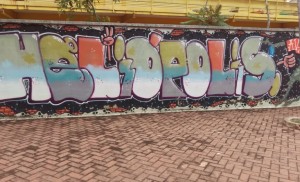
For Alex’s neighborhood day, he explored Heliopolis, which is in the southeast end of Sao Paulo. This neighborhood is the largest favela in Sao Paulo and second largest in Brazil with around 200,000 inhabitants. The people built their houses illegally and as the population grew it became a neighborhood. Heliopolis was known for being a dangerous area, but then slowly that perception has been changing. The government bought a piece of land that was used for parked trucks and dumping waste. In 2004-2005, an architect came into Heliopolis and asked the community what they wanted in that space. He donated the project to the community and even helped with giving extra materials for people to use to build their houses. The land was transformed into a public space for the community and the walls were lowered down. The process was participatory and residents were even able to choose the colors of the walls. Within this public space there is a primary school and middle school. From walking around, the space was well maintained and respected by the community members. A technical school and sports facilities like swimming, basketball, and soccer were also built. City Hall funds the schools and the facilities and since this transformation the quality of the residents has been increasing. Recently two students from Heliopolis were recognized for completing medical school.
An NGO called UNAS also contributes to the community as well. The organization helps students stay away from the streets and get more active in school or sports. The organization built a soccer and basketball facility next to their office for the community to use. Also, UNAS helps fund and collaborates with the only public library in the community who encourages young children to read more. There is a computer lab for residents to learn how the basic of using a computer and they also help with legal issues like divorce. We encountered a project of thirty teenages who have decided that it is okay to go to parties and not drink. They take responsibility of the problems alcohol causes and they speak with each in a safe space.
About ten years ago, the houses finally received legal light and water services from the government. Before it was illegal and residents would have to steal these resources from nearby neighborhoods. The community is growing and most of the families know each other. As I walked around, people would wave to each other and help each other out. A lot of local owned businesses were in the neighborhood and whatever is needed in terms of food, clothing, house materials or mechanics were found within Heliopolis. The neighborhood has gotten a better reputation and it aims to keep progressing forward.
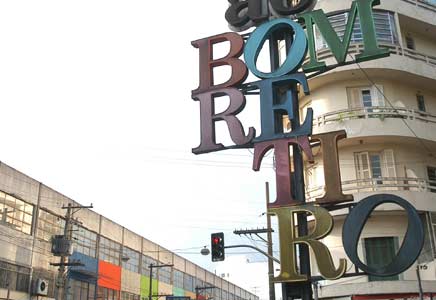
For Eli’s Neighborhood Day, she visited Bom Retiro, a neighborhood that has traditionally been immigrants’ first stop in the city. In the 1960s, Orthodox Jews were the neighborhood’s main residents. Koreans comprised the next wave and now Bolivians. She first learned about the neighborhood through a movie titled “The Year My Parents Went on Vacation,” which took place in the then-Jewish neighborhood when Brazil was under military dictatorship. Because of this film, she was excited to explore Bom Retiro and learn about how today’s immigrants and new political landscape shapes the neighborhood.
When Eli’s group arrived in the neighborhood, they met Angela, a Bolivian woman who immigrated to Brazil nine years ago. She told them that Bolivian immigrants like her typically work in sewing workshops six days a week, working long hours and receiving little pay. She explained that the majority of workshop owners are Korean and that before they began exploiting Bolivian arrivals, Jewish workshop owners exploited them. She also mentioned that today, a handful of Bolivian immigrants, have become workshop bosses, indicating a continuing cycle of exploitation by the exploited. Angela no longer works in a sewing workshop but shared that the most difficult parts of the experience were the effects her work had on her health and her family. Today, Angela suffers from poor vision, back and kidney pains because of the long hours she spent bent over fabric. As for her family, she feels that her children were neglected. She spent little time with them because her priority was earning money for their survival in Brazil. However, Brazil’s economic recession has made it impossible for her to continue living here and she plans to return to Bolivia with her children next month. She does not see this as a happy return but as a defeat. She is unsure of the work she will do in Bolivia, but hopes to open a bakery with her husband. The reason she shares her story with groups like ours is to raise awareness about the conditions immigrants work under in the city.