
In each city we travel to, IHP hosts a social justice panel featuring men and women who view social justice as a core component of their work. In São Paulo, one of our speakers included Paulo Giacomini, the organizer of the first Gay Pride Parade in São Paulo.
In 1997, Giacomini organized the city’s first gay pride parade. As someone who had been involved in the National Network of People Living with AIDS and HIV since its creation two years earlier, he realized that São Paulo’s LGBT community needed the support of the city at large. The first parade he organized had an attendance of five hundred people. Just three years later, over one million Paulistas attended. In 2006, São Paulo’s Gay Pride Parade was named the largest in the world. However, these accomplishments came with struggles along the way. Giacomini said that in the early years of the parade, religious fundamentalists mobbed supporters. Today, members of the LGBT community have become more widely recognized as actors in the city. According to our speaker, their political involvement is large. This is partly due to their occupation of positions that place them near the city’s most powerful leaders.
Although Giacomini is proud of his achievements and those of the LGBT community, he recognizes that disparity exists between the LGBT community living downtown and in the periphery. He said that because those in the periphery are more likely to be poor and black, young black gays are the most vulnerable to AIDS. Although the health system in Brazil is public and free (meaning that expensive HIV medication is readily available to those who need it), those in the periphery struggle the most to benefit from it because of their distance from health care facilities. Giacomini recognizes this and fights to include the voices of the voiceless through his work with the National Network of People Living with HIV and AIDS.
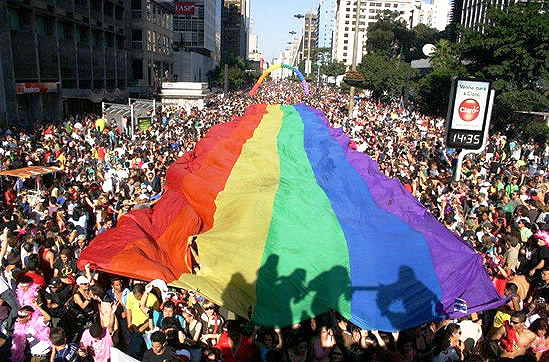
SP Gay Pride Parade 2016