Banned Books Week is one of those moments when libraries are invited to highlight the values at the core of our work. This year, the Libraries and Digital Learning team embraced that opportunity. Over the course of the week, our events offered a shared reminder of why libraries matter: to support access, encourage thoughtful engagement, and ensure that a wide range of ideas remains available to readers.
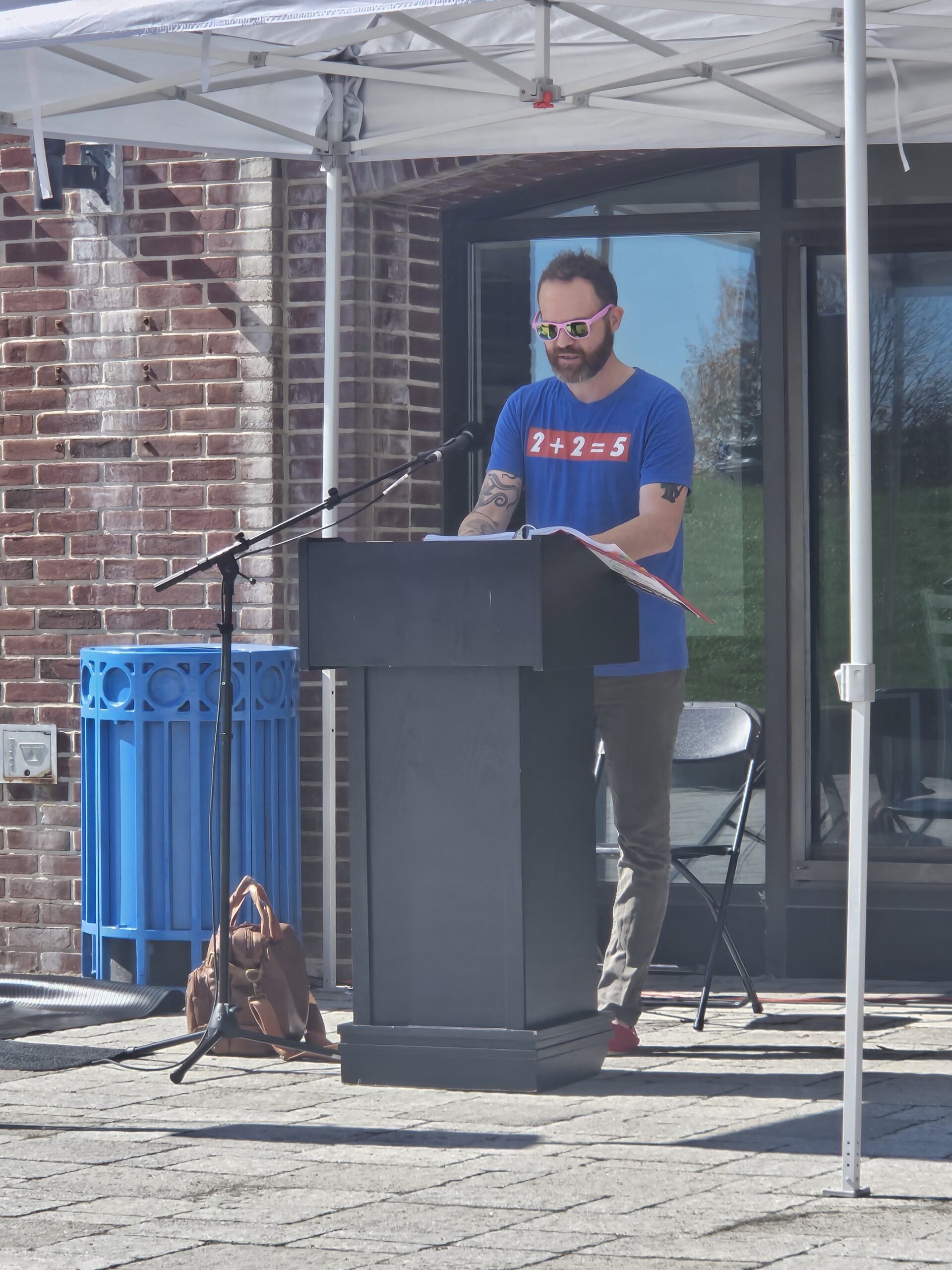
We began with a community reading of 1984. Students, faculty, staff, and community members gathered to read aloud, listen, and talk about surveillance, language, power, and what happens when truth becomes negotiable. It was communal, unsettling, and oddly energizing. Maybe exactly as Orwell intended.
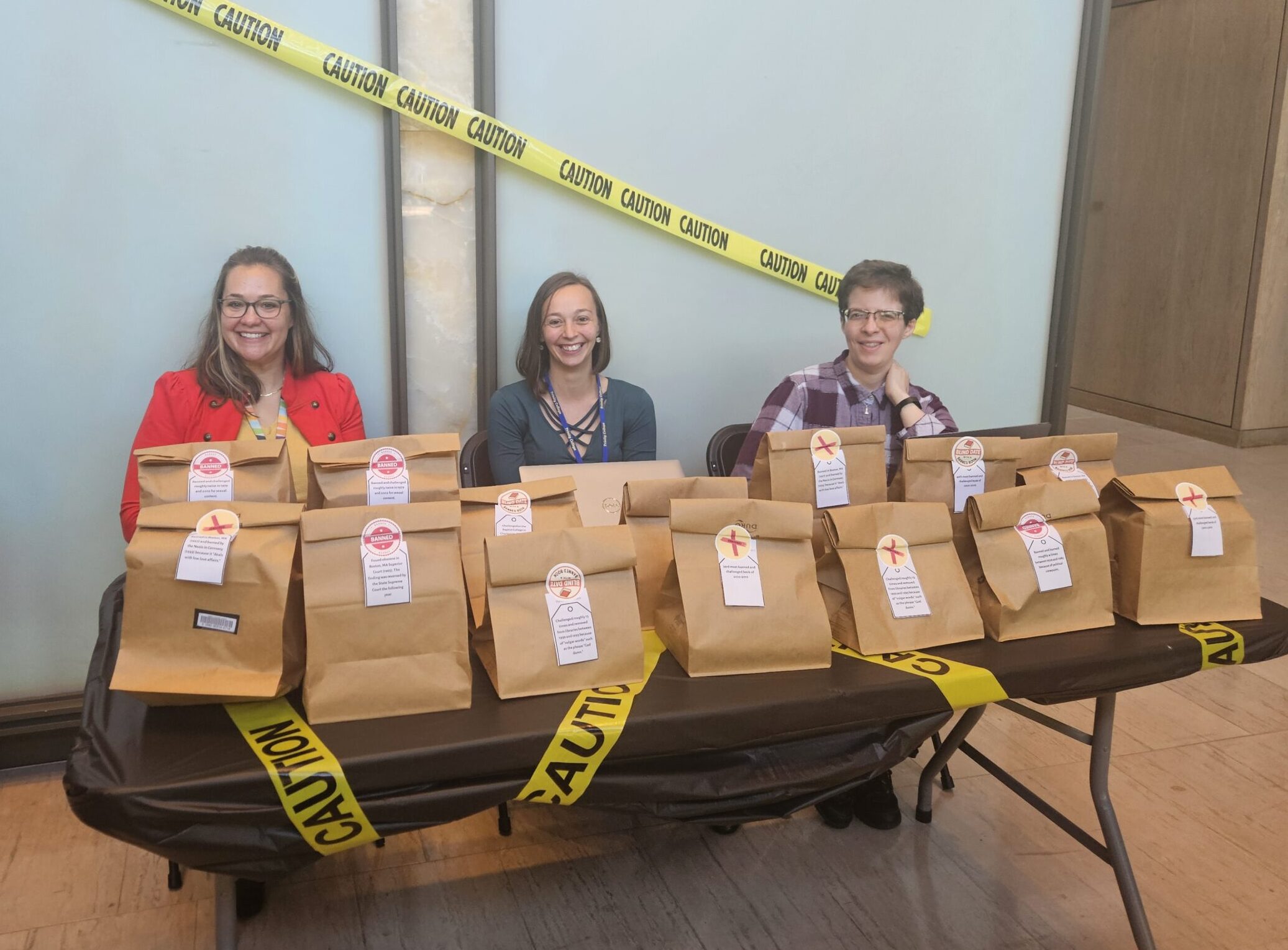 For those who prefer a little mystery with their intellectual freedom, our Blind Date with a Banned Book offered the joy of literary chance. Wrapped books, minimal clues, no spoilers but just the thrill of checking out something that has, at some point, made someone nervous enough to try to erase it.
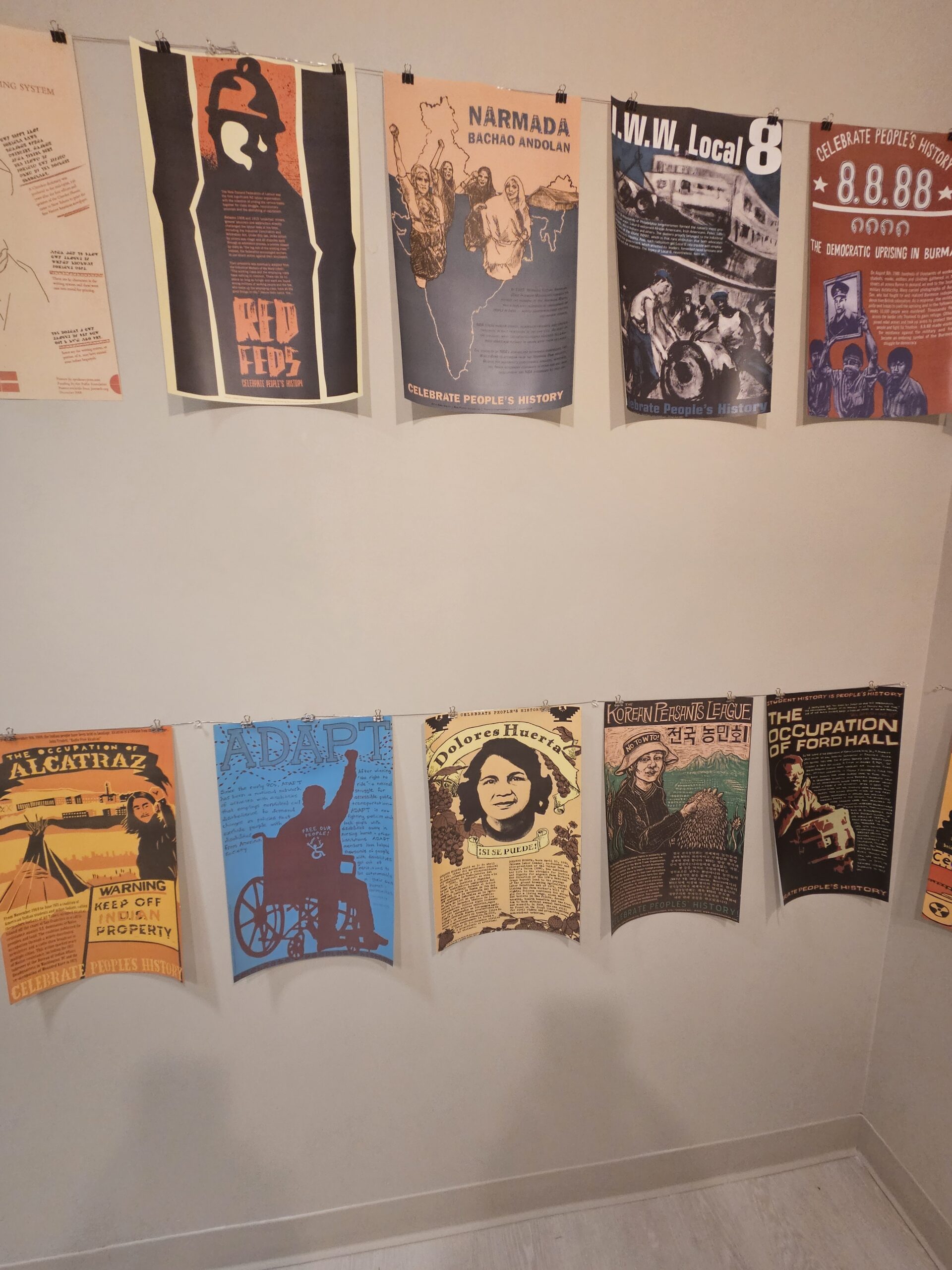 The week also marked the opening of Celebrate the People’s History, featuring powerful prints by Josh MacPhee. The exhibit foregrounds grassroots movements, radical imagination, and visual storytelling as tools of critical thinking and dialogue. Installed in the A level gallery of the library, the work made a clear point: banned ideas do not stay buried. They become posters, pamphlets, and rallying cries.
Next, we turned from reading banned ideas to making them. Our zine-making workshop invited participants to respond creatively to censorship, banned texts, and suppressed histories. Armed with photocopies, markers, and a healthy disregard for polish, students produced zines that were raw, funny, angry, thoughtful, and deeply personal. It was hands-on, low-stakes, and quietly radical…proof that intellectual freedom is not just something you defend; it’s something you practice.
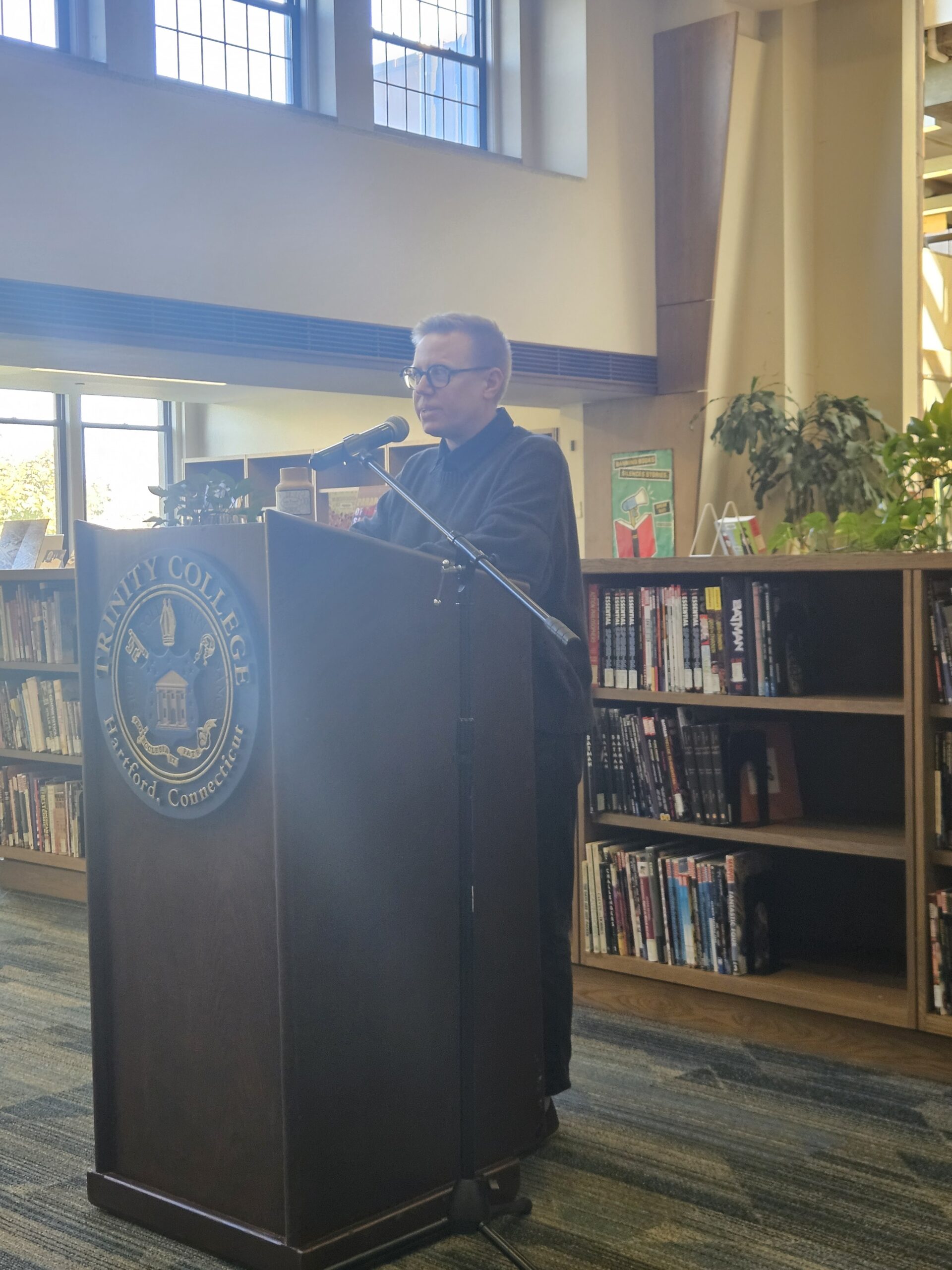 We closed the week with a standout lecture by Emily Drabinski, whose reflections on censorship, classification, and power reminded us that banning books is not just about books. It’s about whose voices are legitimized, whose knowledge is preserved, and who gets to decide. Libraries, she argued are not neutral spaces, but ethical ones.
Taken together, Banned Books Week was less a celebration but more of a commitment to intellectual freedom, to discomfort, to creative resistance, to the belief that ideas are not made safer by silencing them and that libraries remain one of the last, best places where complexity is not only allowed, but enthusiastically made.