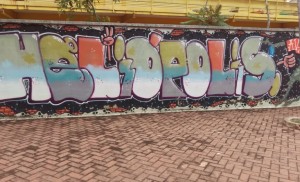
Pixacao can be seen all around Sao Paulo. It is very different from tagging and graffiti. Pixacao has its own symbols and people who do this type of artwork are usually from the peripheries. They use this art form to go into the city and express their minds. The messages are political and pixadores are making it noticeable that their neighborhoods do not have the same resources compared to the people inside the city. Pixacao is not meant to be a beautiful work of art, instead it is intentionally unpleasing to make city officials aware of their existence.
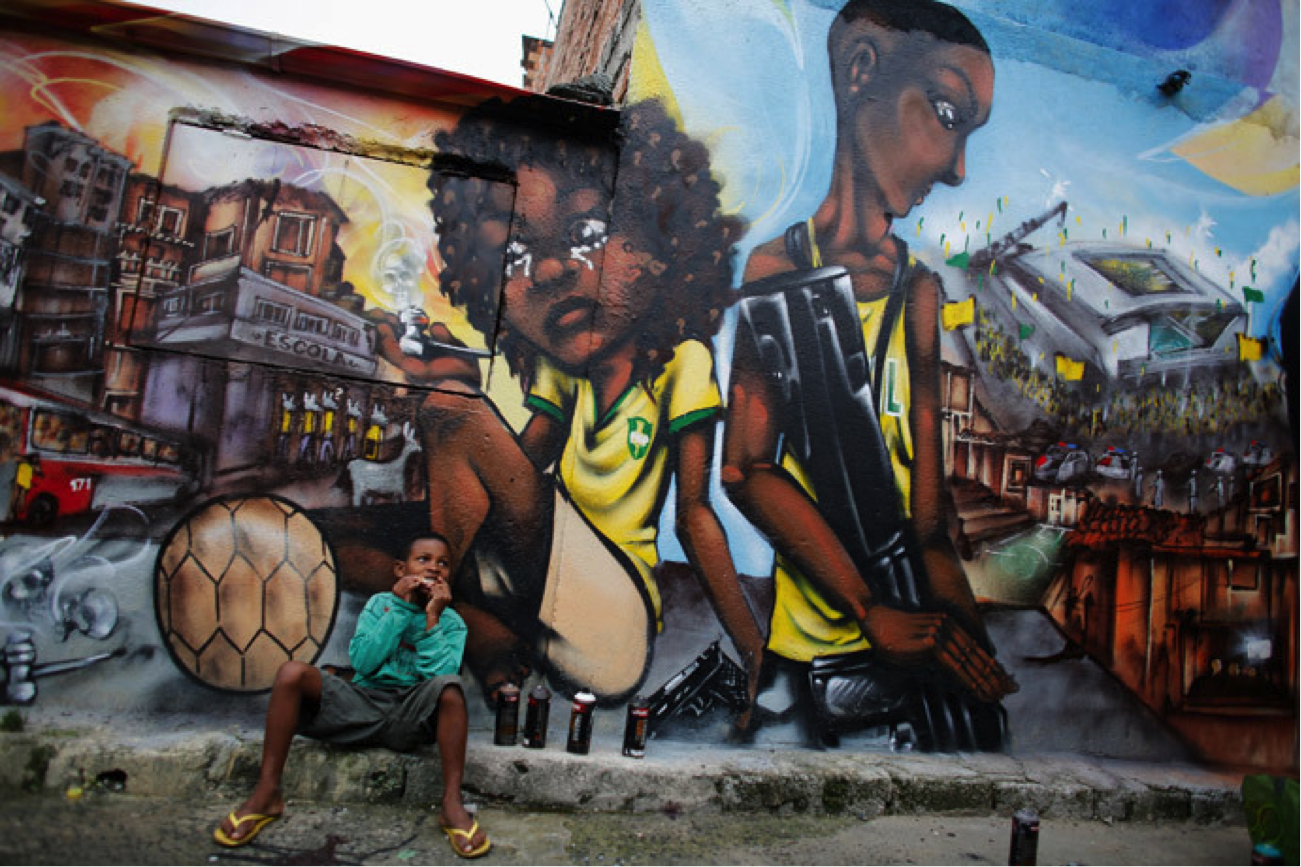
Alex went with Fernando who is a painter, rapper, and actor. Fernando began as a pixador and was a part of the pixacao movement. Fernando took me to Vila Flavia where the neighborhood is filled with amazing murals all around. The murals conveyed all types of powerful messages. There were murals about FIFA and how none of the residents in Vila Flavia were benefited in the new soccer stadium that was built nearby. Many murals were of single mothers who struggle everyday to raise and feed their children. Other graffiti artists from outside the community have came in and contributed their art skills by putting up murals that told a story from within. A graffiti artist from Brooklyn, New York drew a child from the community he met with his dog on a huge wall. Others from Toronto, Canada and other parts of Brazil have collaborated together to bring new artwork into the community. Many of the artwork is done from people who started as pixadores. Some of the houses are completely covered in beautiful murals and it brings a colorful vibrancy to the community.
I got to learn about the project Sao Mateus Movimento, which is a group of young guys who made all the artwork possible. The project has an office in Vila Flavia and aside from the powerful murals, they also create programs to get the community involved. They focus on the children and teach them art and music. One of their goals in the future is to cover a full block filled with murals. As more people start to come into the community, they want outsiders to see the truth of living in the poor conditions they do, but also that the importance that art can have to bring hope to the residents.