The United States has maintained a long history that is deeply intertwined with racism, oppression, and inequity, which has produced an ongoing cycle of disenfranchisement. This cycle is deeply entrenched in America’s core institutions and structures; even its educational institutions. Knowledge is the ultimate cultivator of social mobility and excellence, and yet the current educational systems and practices in place can prohibit students from marginalized groups from fully participating and gaining that knowledge. Critical pedagogy works to combat the systemic inequities within education by providing frameworks in which educators can create shifts within their teaching, curriculum, and educational spaces to better support, educate, and cultivate learning and progress.
In the EDUC323: Critical Pedagogy course, taught by Professor Britney Jones in the Spring of 2023, we reimagined educational spaces using a critical lens. We explored critical theory and pedagogical frameworks to uncover solutions for more equitable, inclusive, and social justice-oriented schools. Existing theories, solutions, and frameworks (such as those listed below) grounded our journey towards understanding how to challenge the status quo. Guided by these theoretical and practical solutions, we developed our own ideas and creative solutions regarding the implementation of critical pedagogy in schools. We crafted this website to share these ideas with others working to create and implement critical solutions for justice, inclusion, and equity.
Frameworks of Critical Pedagogy:
- Ethnic Studies
- Multicultural Education
- Culturally Relevant Pedagogy
- Culturally Relevant Science Teaching
- Critical Literacy/Culturally and Historically Responsive Literacy
- Reality Pedagogy
- Hip Hop/Music x Critical Pedagogy
- Concepts from Pedagogy of the Oppressed
- Classroom Management as a Curriculum of Care
- Abolitionist Teaching
The following essential questions guided our work in the course:
- How can and must schools, as institutions, challenge the marginalization and exclusion of students from culturally and linguistically diverse backgrounds/identities?
- How can educators create learning environments that are more inclusive and relevant for a diverse student body?
- What mindset is required for educators to engage in critical pedagogy?
- How do they navigate the space between policy, theory, and practice?
- What do students desire from schooling?
- How can we ensure that students’ wants/needs are centered in transformative efforts?
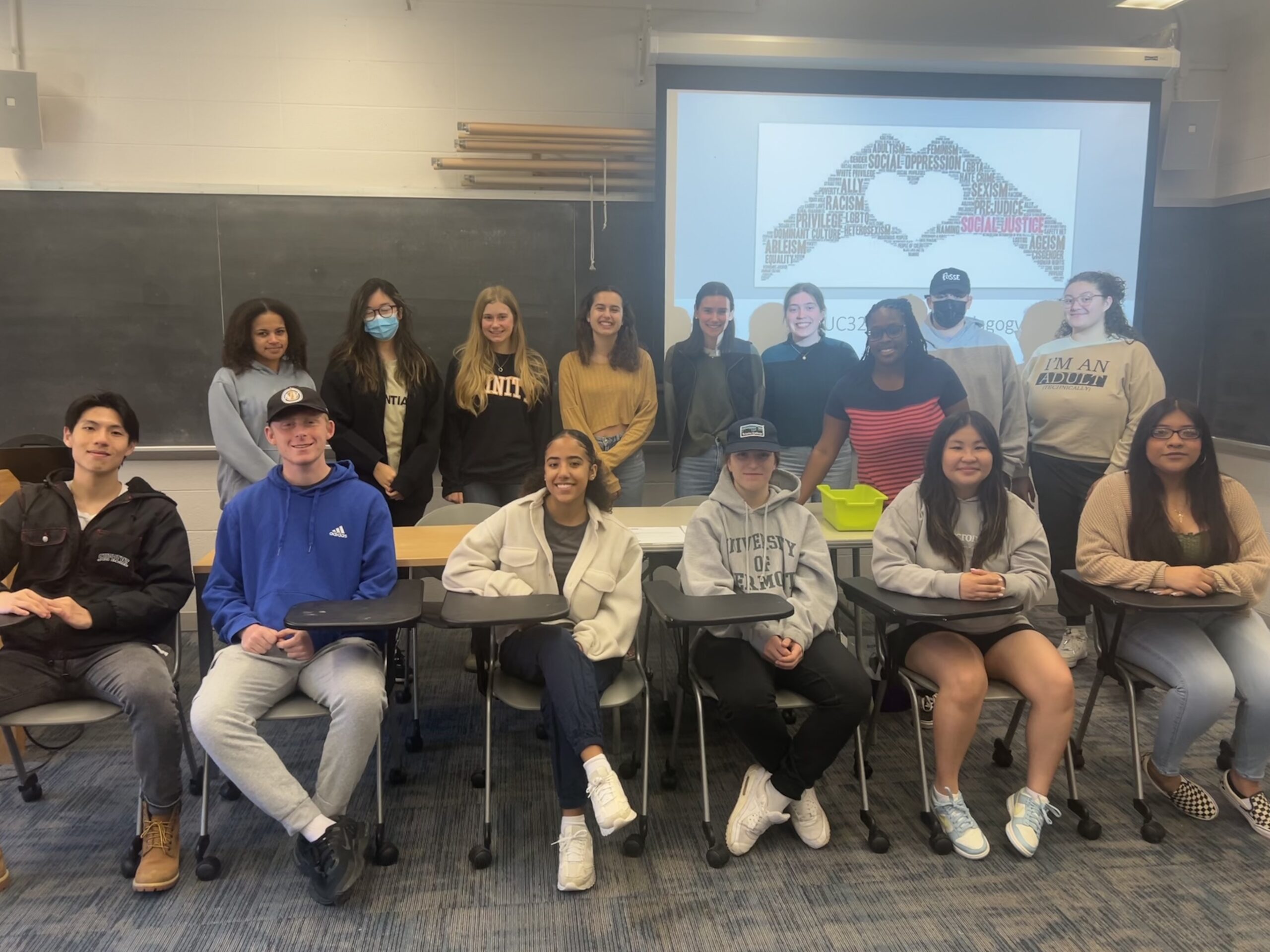
EDUC323 class photo