So just what is Classics? Simply put, Classics is the first, and still the most inclusive, interdisciplinary field. No matter what intrigues you, you’ll find it in Classics. Literature? Homer, the Athenian dramatists, Vergil, Ovid, Greek novels – some of the most profound, riveting, and influential works ever written come out of the Greek and Roman world. History? The first historian was the Greek Herodotus; Rome is a model for studying empires. Psychology? Plato offered the first detailed attempt to describe the human personality; his ideas strongly influenced Freud. Astronomy? Until overthrown by Copernicus, Ptolemy’s was the reigning model of the solar system. Philosophy? The great English philosopher Alfred North Whitehead said, “The European philosophical tradition is. . . a series of footnotes to Plato.” Art? The rediscovery of Greek sculpture and painting in the Renaissance sparked a revolution in European art still playing out today. Race, ethnicity, gender, sexuality? The Greeks worked out the earliest theories on human diversity – and lived stunning sex lives. We could go on and on, but you get the point: whatever you want to learn about, you can study through the Classics.
But we feel obliged to warn you: once you start, you’ll be hooked. The classical world is in itself a compelling, fascinating world to study. The secret key to this world is language: the study of Greek or Latin. The languages open the doors to direct access to the extraordinary intellectual richness Classics keeps ready for you. As you progress in your studies, you will find yourself more and more confident in your ability to walk through that door, more and more delighted at the intellectual diversity available to you. And, it has to be confessed, you’ll find yourself pestering your friends – urging them to “Take Classics!” because you’ll want to share the academic adventure you’ve embarked upon.
Perhaps you – or your parents – worry that Classics isn’t a “practical” major. What about jobs? Well, the fact is that Classics majors are prepared to do anything. The competencies you develop, the evidence of your mastery of a broad body of knowledge, your facility in writing and argument, and the sheer unusualness of your major will make you attractive to employers and professional schools. But don’t take our word for it – explore the stories of our alums and the resources of our Career Development Center, which you can find in links on the left.
So we’ll be looking forward to seeing you in Classics, where there is room for everybody!
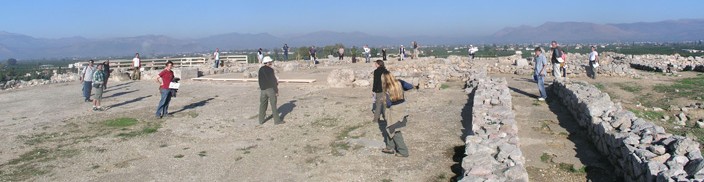
 Since 2002 director of new excavations at Lefkandi in Euboia, Dr. Irene Lemos is professor of classical archaeology at Merton College, Oxford University. On Monday, January 27, 2014, she stopped by Trinity College to give a lecture for the Hartford Society of the Archaeological Institute of America (AIA).